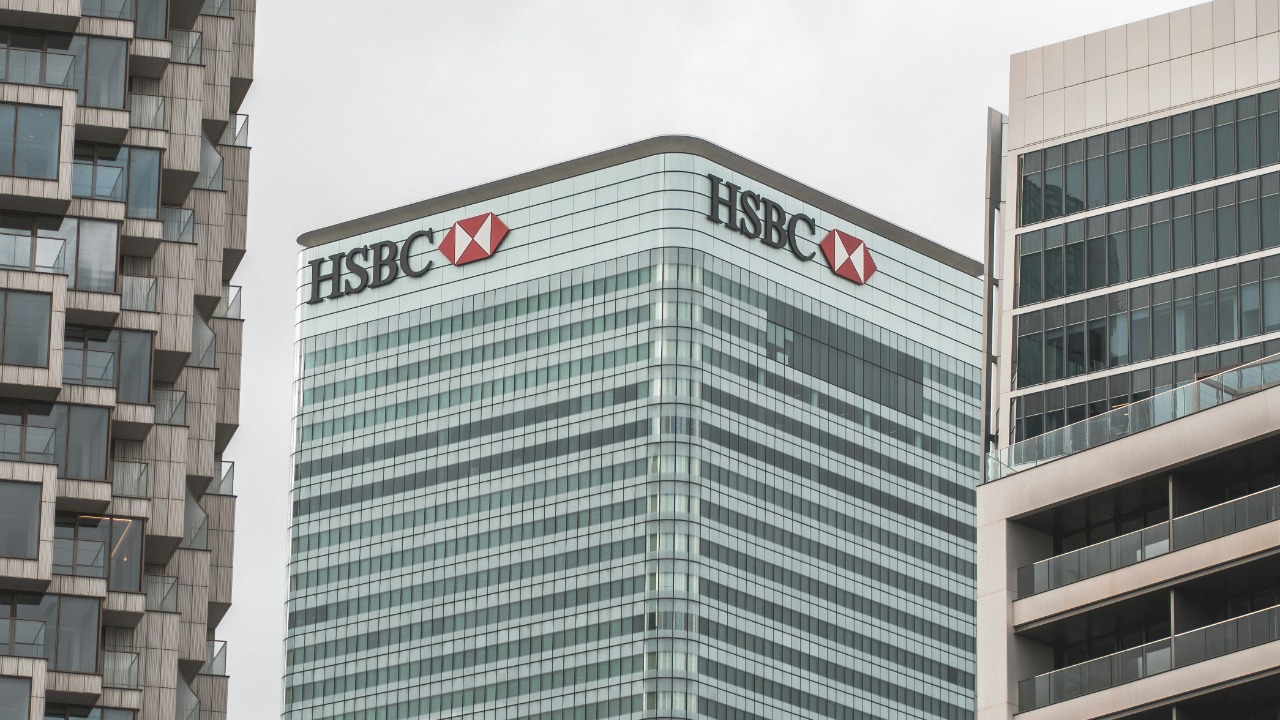
HSBC has vaulted into rarefied territory, with its market value blasting through the $300 billion mark and setting a new benchmark for a European-listed bank. The rally caps a multiyear transformation that has turned a once-lagging giant into one of the market’s most closely watched financial stocks. For investors, the question now is not whether the milestone matters, but how durable this new phase of outperformance will prove to be.
The bank’s surge reflects a potent mix of strategic refocusing, earnings power and investor appetite for global lenders that can still grow. As HSBC’s share price hits all-time highs and its valuation climbs, the stock has become a test case for whether a traditional banking franchise can reinvent itself in a world of higher rates, shifting trade flows and intensifying competition in Asia.
The $300 billion moment and what it signals
The most visible symbol of HSBC’s resurgence is its market capitalization, which has pushed past $300 and into territory that only a handful of global banks occupy. As of January, HSBC is credited with a Market cap of $303.80 Billion USD, a level that underscores how decisively investors have re-rated the group. That $303.80 Billion figure does not just mark a psychological threshold, it places the lender among the world’s most valuable financial institutions and cements its status as a bellwether for European banking.
The share price has been in a strong bull run, with the stock sitting at its all-time high as the valuation crossed the $300 line. Reporting on the recent rally notes that the HSBC share price has continued to climb, reflecting confidence in the bank’s earnings trajectory and capital strength. For a lender that was once treated as a proxy for sluggish European growth, the new valuation signals that markets now see HSBC as a global growth and income story anchored in its strongest regions.
A five-year surge powered by strategic refocus
The current valuation is the culmination of a dramatic five-year turnaround in the stock. Over that period, HSBC has delivered a 292% surge in its share price, a performance that would be eye-catching for a technology company, let alone a century-old bank. Analysts point out that this run-up has coincided with a deliberate strategic refocus on core Asian franchises, with management concentrating capital and attention on markets where the bank’s network and brand give it a structural edge.
Recently, markets have been reacting to HSBC’s ongoing shift toward its Asian operations and its commitment to continued capital returns to shareholders. That pivot has been central to the narrative that the bank is no longer spread too thin across underperforming geographies, but instead is doubling down on the regions that drive growth and fee income. A detailed look at the past few years of performance shows how this strategy has supported sentiment around the stock, with HSBC increasingly defined by its Asian footprint rather than its legacy as a broad-based European lender.
Earnings power and the appeal of steady income
Behind the share price, HSBC’s earnings profile has strengthened in ways that matter to long-term investors. Earlier in the current cycle, the bank reported a higher than expected profit of $9.5 billion in the first quarter, a result that highlighted both the benefit of higher interest rates and the discipline of its cost base. That $9.5 billion figure, disclosed by HSBC, came even as management warned of heightened uncertainty in the global outlook, underlining the resilience of its core businesses.
Income investors have also been drawn to the stock’s dividend profile and relatively low volatility. Key Stats for the shares show a Market Cap of 303.967B, Shares Out of 3.44B, a 10 Day Average Volume of 1.62M, a Dividend of 3.30 and a Dividend Yield of 3.73%, alongside a Beta of 0.49. Those numbers, detailed in the Key Stats section for the stock, paint a picture of a large, liquid bank that offers a 3.73% yield with a Beta of 0.49, a combination that is rare among global lenders. For portfolio managers seeking both income and relative defensiveness, that mix has become a powerful draw.
Why the bull run has gathered pace
The latest leg of HSBC’s rally has been driven by a perception that the bank is finally aligning its structure with its strengths. Analysts tracking the stock note that the HSBC share price continued its strong rally as the market digested improvements in net income margin and overall income, reinforcing the view that the bank is not just benefiting from cyclical tailwinds but also from internal reforms. The fact that the share price is now sitting at its all-time high has amplified momentum, attracting additional interest from investors who screen for technical breakouts and large-cap leaders.
Another factor behind the bull run is the bank’s geographic and business diversification, which gives it exposure to trade flows and wealth creation across multiple continents. Coverage of the recent rally highlights how HSBC has been able to grow income across different regions while maintaining a solid net income margin, a combination that reassures investors wary of single-market risk. As long as that operational performance holds, the market is likely to give the bank the benefit of the doubt on valuation, even after such a pronounced run-up.
What the milestone means for European banking
HSBC’s ascent above the $300 billion threshold carries symbolic weight for Europe’s financial sector, which has spent much of the past decade lagging US peers on profitability and market value. The bank’s new scale, reflected in its Market cap of $303.80 Billion USD, shows that a European-listed institution can still command a premium valuation if it delivers growth, capital returns and a clear strategic story. For regulators and policymakers, the rise of Market leaders of this size also raises questions about competition, systemic importance and the future shape of cross-border banking in the region.
For rival banks, the message is more straightforward. Investors are rewarding scale, focus and credible capital allocation, not just cost cutting or one-off restructuring charges. HSBC’s ability to pair a 292% five-year share price surge with a 3.73% dividend yield and a Beta of 0.49 has set a new benchmark for what a European bank can deliver when it leans into its strongest franchises. As the stock trades at record highs and its valuation sits comfortably above $300, the onus is now on peers to show that they too can adapt their business models to a world where growth is shifting toward Asian markets and where capital markets demand both resilience and returns.
More From TheDailyOverview
*This article was researched with the help of AI, with human editors creating the final content.

Elias Broderick specializes in residential and commercial real estate, with a focus on market cycles, property fundamentals, and investment strategy. His writing translates complex housing and development trends into clear insights for both new and experienced investors. At The Daily Overview, Elias explores how real estate fits into long-term wealth planning.

