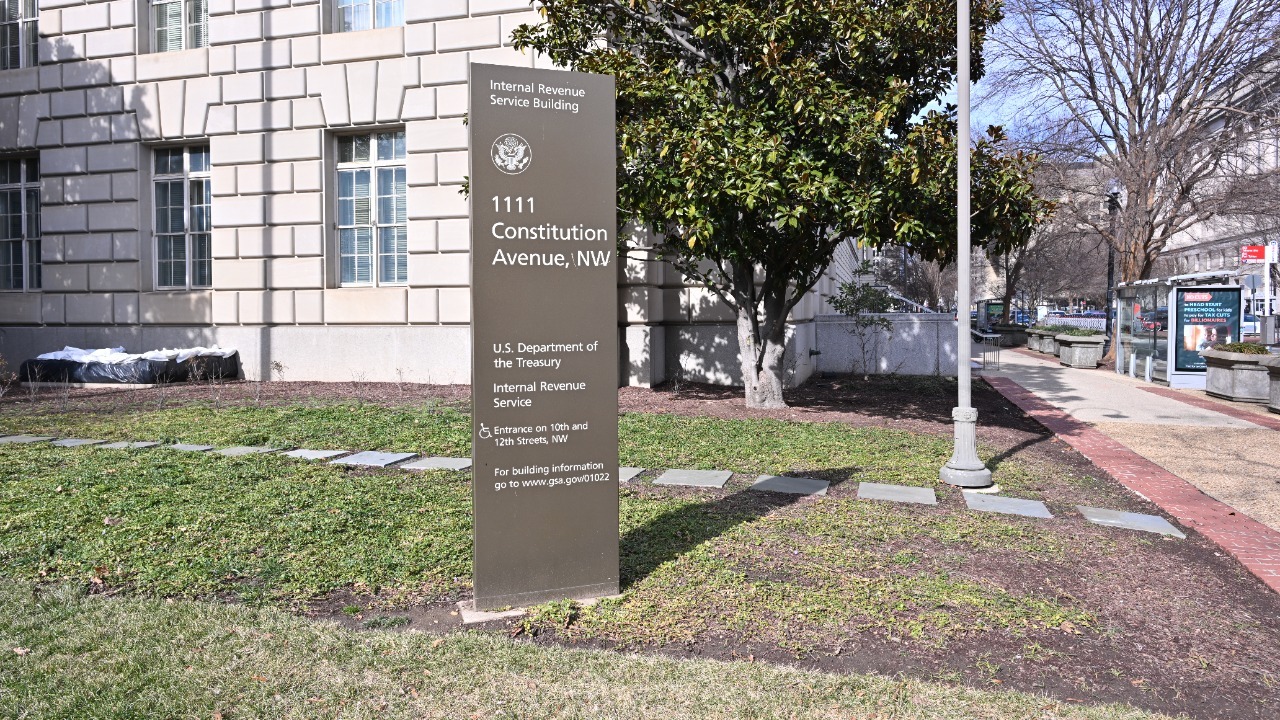
Owners of individual retirement accounts are getting a new formal way to ask the IRS to fix certain account mistakes, but it will not be cheap. Under a revenue procedure released October 22, a new IRA correction program opens May 1, 2027, and a standard request carries a $3,500 user fee.
Until now, IRA owners caught by an error such as a missed required minimum distribution or a botched rollover had limited options, and some had to request a private letter ruling from the IRS. The new program, modeled on a long-running fix-it system for workplace retirement plans, targets mistakes that happened by accident, including errors made by banks and brokerages that hold the accounts.
What Treasury and the IRS announced
In news release IR-2026-126, Treasury and the IRS issued two pieces of guidance. One updates the Employee Plans Compliance Resolution System, the program employers use to correct errors in 401(k), 403(b), SEP and SIMPLE IRA plans; that update, Revenue Procedure 2026-34, took effect October 22.
The other, Revenue Procedure 2026-33, creates the IRA Compliance Resolution System. For now it has one piece, the IRA Voluntary Correction Program, which lets either an IRA owner or the financial firm that serves as custodian ask the IRS to approve a correction. The program takes effect May 1, 2027, and the IRS release describes it as covering certain inadvertent failures caused by service-provider errors.
Before a mistake needs fixing: A missed required distribution is one of the four errors the new program covers, and the RMD schedule calculator, one of four calculators in the planner, along with the account withdrawal order, keeps yearly distribution amounts and timing in view in The Retirement Tax & Withdrawal Planner.
The four IRA errors the program covers
Revenue Procedure 2026-33 lists four types of eligible failures:
- A required minimum distribution failure, when the required amount was not taken
- An IRA establishment failure, when an account was set up incorrectly
- A nonspouse beneficiary distribution or rollover failure, which involves heirs who inherit an IRA from someone other than a spouse
- A 60-day rollover failure, when money taken out was not redeposited within the 60-day window
The failures must be inadvertent. The procedure excludes egregious failures, cases involving the diversion or misuse of IRA money, and abusive tax-avoidance transactions. Owners who are under IRS examination are generally not eligible, and applicants must be current on their tax return filings.
How much the program costs
The fee schedule in the procedure applies to submissions made before January 1, 2028. A regular request costs $3,500. Custodians can file group submissions for a systemic error that hit at least 10 IRA owners, at $10,000 for the first 10 owners plus $250 for each additional owner, capped at $50,000. Fees for later years will be set in a future revenue procedure.
There is no do-it-yourself version. The procedure says self-correction of IRA failures is not available under the new system at this time. Requests are filed through Pay.gov on Form 15443, and anonymous submissions are not allowed. Once the IRS signs off, the correction generally has to be carried out within 90 days of the compliance statement.
Changes for missed 60-day rollovers
The biggest practical change may be for rollovers. People who miss the 60-day deadline to put retirement money back into an account have generally had to ask for a private letter ruling. The procedure moves those waiver requests into the new system: during 2027, taxpayers can use either route, and starting in 2028 the IRS expects to accept the requests only through the new program. Only the IRA owner, not the custodian, can file a 60-day rollover request.
Free relief has not gone away. The IRS release says the automatic waiver and self-certification procedures already on the books remain available at no cost. Those existing procedures, set out in Revenue Procedures 2020-46, 2016-47 and 2003-16, are worth checking before paying the user fee for the new program.
Deadlines and the public comment period
Timing rules apply. An IRA establishment failure cannot be submitted after December 31 of the year after the incorrect account was opened. Filing a request does not extend the statute of limitations, and refunds are available only for tax years that remain open.
Treasury and the IRS are also taking public comments on the program until January 20, 2027, under docket IRS-2026-1387 on regulations.gov. The rules could still change before the May 1 start, and the companion Revenue Procedure 2026-34 sets out the updated procedures for workplace plans.
The cost of a missed distribution
The new program gives IRA owners a path to fix a missed required distribution or a late rollover, but outside the existing automatic waivers that path runs through Pay.gov, Form 15443, a user fee and an IRS review. For most retirees, the better outcome is keeping each year’s required distribution on schedule so the program is never needed.
The Retirement Tax & Withdrawal Planner includes four calculators, among them an RMD schedule, plus the account withdrawal order for mapping which account to draw from and when.
See the RMD schedule calculator in The Retirement Tax & Withdrawal Planner.
This article was created with AI assistance and reviewed for accuracy against Treasury and IRS guidance.

Julian Harrow specializes in taxation, IRS rules, and compliance strategy. His work helps readers navigate complex tax codes, deadlines, and reporting requirements while identifying opportunities for efficiency and risk reduction. At The Daily Overview, Julian breaks down tax-related topics with precision and clarity, making a traditionally dense subject easier to understand.