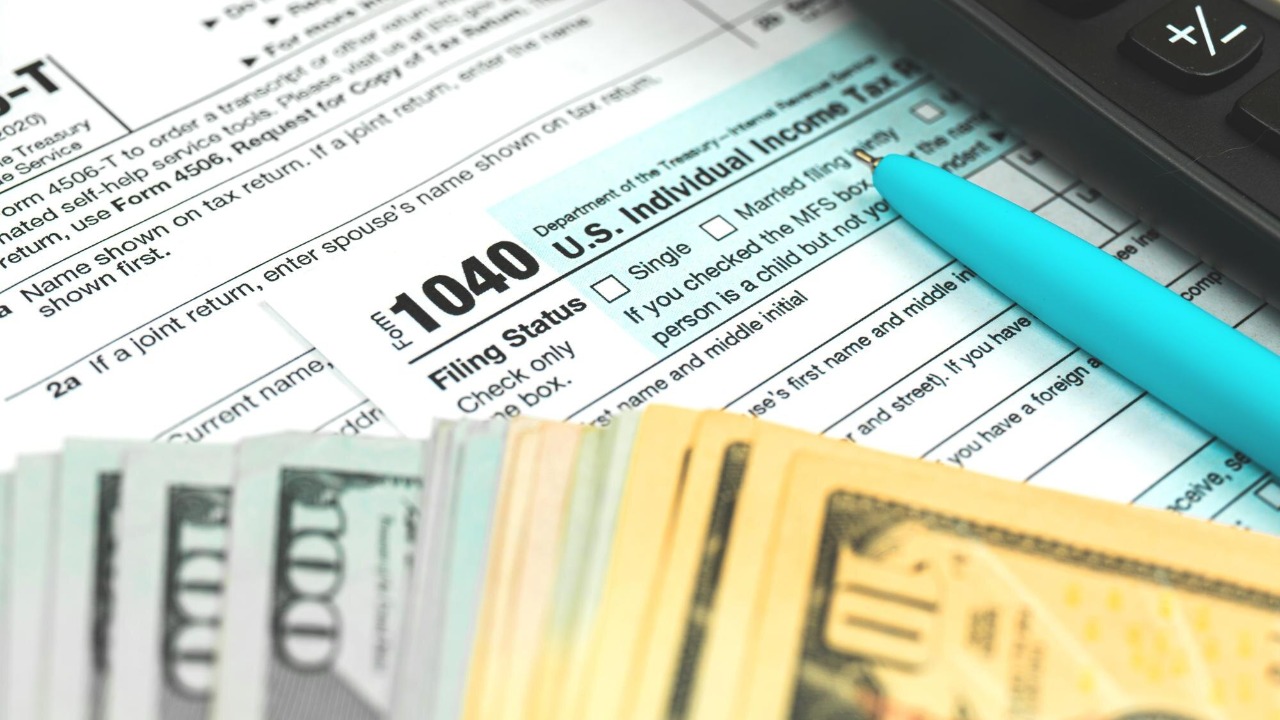
The Internal Revenue Service began sending automatic payments of up to $1,400 each to roughly 1 million taxpayers who filed 2021 returns but failed to claim the Recovery Rebate Credit they were owed. Those payments, part of a program totaling approximately $2.4 billion, started going out in December 2024 and were expected to arrive by late January 2025. But the bigger, less-reported story is that more than 1.1 million additional people who never filed a 2021 return at all still have a narrow window to claim an IRS refund, including the Recovery Rebate Credit and other refundable credits, before the money vanishes permanently.
Automatic Payments Fix a Common Filing Mistake
The IRS identified about 1 million taxpayers who completed their 2021 tax returns but either left line 30 of Form 1040 blank or entered $0 for the Recovery Rebate Credit, even though agency records showed they qualified. Rather than wait for amended returns, the IRS chose to send payments automatically in December 2024, with most arriving by late January 2025. The maximum individual payment was $1,400, matching the third-round Economic Impact Payment that many of these filers had originally missed, and the agency emphasized that recipients did not need to file amended returns or take any additional steps to receive the money.
That decision reversed a longstanding IRS policy. The agency’s own guidance had explicitly stated that it would not compute or correct the credit when line 30 was left blank or at zero, placing the burden on taxpayers to notice the error and file amended returns. The reversal likely reflected the sheer scale of the problem: with roughly $2.4 billion sitting unclaimed by people who had already filed, as noted in IRS communications and contemporaneous reporting, the administrative cost of waiting for individual corrections outweighed the cost of simply cutting checks. For the million recipients, the correction arrived as an unexpected payment rather than a time-consuming paperwork exercise.
Non-Filers Face a Hard April 15 Deadline
The automatic payments, however, only helped people who had already filed. A separate and larger group of non-filers remains on the outside looking in. The IRS has estimated that over 1.1 million people are owed more than $1 billion in unclaimed 2021 refunds, with a median potential refund of $781 per person. These individuals never submitted a 2021 return at all, which means the IRS has no filing on record to correct automatically and no way to issue a refund unless a return is filed before the statutory deadline.
The deadline to claim those refunds is April 15, 2025, driven by the federal three-year refund statute. After that date, any unclaimed money becomes permanent property of the U.S. Treasury, and the right to a refund expires even if the taxpayer was fully eligible. There is no extension of this three-year window and no appeal once it closes. The IRS has also stressed that there is no penalty for failure to file when a refund is due, which means the only consequence of filing late in this situation is receiving money. Yet millions of dollars go uncollected every cycle because eligible taxpayers either do not realize they qualify, assume they will face penalties for a late return, or believe that not having been required to file originally means they cannot benefit from credits tied to that year.
Why So Many People Missed the Credit
The Recovery Rebate Credit exists because the third Economic Impact Payment, distributed starting in March 2021, was based on prior-year tax data that often did not capture people’s latest circumstances. Anyone whose situation changed in 2021, such as earning less income, gaining a dependent, or aging into eligibility, may not have received the full amount they were owed through the advance payment. The credit on line 30 of the 2021 return was designed to close that gap by letting people reconcile what they received with what they should have received. Families who added a child or dependent in 2021, for example, could claim up to $1,400 for that dependent through the credit, as explained in IRS guidance that accompanied stimulus documentation.
The confusion partly traces back to paperwork and the complexity of reconciling payments. The IRS issued Letter 6475 in early 2022 to document each taxpayer’s total third Economic Impact Payment and any “plus-up” adjustments. Taxpayers needed that letter, or Notice 1444-C issued earlier in the process, to accurately calculate their credit and avoid double-claiming amounts already received. Many people who received full stimulus payments correctly entered $0 on line 30. But others who were owed additional money did the same thing out of confusion, lost paperwork, or uncertainty about how to use the letter, creating the mass of unclaimed credits that the IRS eventually decided to pay out automatically. For non-filers, the problem is simpler but harder to fix: they never filed a 2021 return at all, so the IRS has no line 30 to correct and no way to deliver the Recovery Rebate Credit or any related refund until a complete late return is submitted.
The Real Opportunity Most Coverage Misses
Most coverage of the IRS initiative has understandably focused on the automatic $1,400 payments, which make for a straightforward story: a surprise check arriving in the mail or as a direct deposit. But the more significant financial opportunity sits with non-filers who could stack the Recovery Rebate Credit alongside other refundable credits on a late 2021 return. The Earned Income Tax Credit alone was worth up to $6,728 for tax year 2021 for qualifying families, and the Child Tax Credit for that year included an enhanced refundable portion that could generate a substantial refund even for households with little or no tax liability. A non-filer eligible for all three (Recovery Rebate, Earned Income, and Child Tax) could receive a combined refund well above the $781 median the IRS has cited for unclaimed returns, especially if they have multiple qualifying children or experienced a drop in income that year.
Because these credits are refundable, they can generate a refund even if no income tax was withheld and no tax is owed, which is why the IRS continues to encourage people who are below the normal filing threshold to consider filing. The agency highlights that many low- and moderate-income workers, students, part-time employees, and retirees with modest earnings may qualify for one or more of these benefits but never file because they assume filing is only for people who owe tax. For 2021 specifically, the combination of pandemic-era relief and expanded credits makes the potential payoff unusually high, but only for those who act before the April 15, 2025 deadline closes the door on that tax year for good.
How to Check Your Status and Claim What You’re Owed
For anyone unsure whether they received their full 2021 stimulus or are eligible for a refund, the first step is to gather information. Taxpayers can use the IRS’s online account tool to review their payment history, confirm whether a third Economic Impact Payment was issued, and see any 2021 credits already applied to their account. Those who no longer have Letter 6475 or Notice 1444-C can often reconstruct the key figures from this online record, which helps avoid errors and speeds processing when a late return is filed. Community tax clinics, volunteer preparer programs, and many commercial software providers can also assist in reconstructing 2021 income and credit eligibility for people who did not keep complete records.
Once a taxpayer determines they may be eligible, the next step is to complete a 2021 Form 1040, making sure to calculate the Recovery Rebate Credit accurately on line 30 and to evaluate eligibility for other refundable credits. The IRS continues to provide detailed explanations of how the credit works and how to compute it correctly in its technical guidance, which can be used alongside 2021 instructions and reputable tax software. The return must be filed on paper or electronically in a format the IRS accepts for prior-year filings, and it has to be postmarked or transmitted by April 15, 2025, to fall within the three-year refund window. For millions of non-filers, that filing could be the difference between letting hundreds or even thousands of dollars revert to the Treasury and finally collecting money they were entitled to all along.
More From The Daily Overview
*This article was researched with the help of AI, with human editors creating the final content.

Julian Harrow specializes in taxation, IRS rules, and compliance strategy. His work helps readers navigate complex tax codes, deadlines, and reporting requirements while identifying opportunities for efficiency and risk reduction. At The Daily Overview, Julian breaks down tax-related topics with precision and clarity, making a traditionally dense subject easier to understand.

