Jared Kushner’s private equity vehicle has abruptly stepped away from one of the most contentious media takeover fights in years, leaving Paramount’s pursuit of Warner Bros Discovery looking far more fragile. The withdrawal removes a politically connected source of capital from an already polarizing bid and sharpens the contrast with Warner Bros Discovery’s preferred path, a merger with Netflix.
By backing out just as pressure on the deal’s financing and politics intensified, Kushner’s Affinity Partners has turned a high-stakes corporate drama into a test of how much risk investors are willing to shoulder in a Hollywood landscape already reshaped by streaming and consolidation.
The shock exit: how Kushner’s Affinity Partners walked away
I see Jared Kushner’s decision to pull his money from Paramount’s campaign for Warner Bros Discovery as the moment the takeover battle shifted from audacious to exposed. His private equity firm, Affinity Partners, had been positioned as a key backer of Paramount’s hostile push for Warner Bros Discovery, yet within days of mounting scrutiny it informed partners that it would no longer support the deal, a move confirmed in detailed accounts of how Jared Kushner’s Affinity Partners pulls out. The reversal undercut the narrative that Paramount had locked in deep-pocketed allies willing to ride out a bruising contest for control of one of Hollywood’s “big five” studios.
The retreat did not come in isolation. Reporting on the same decision underscores that Jared Kushner’s Affinity Partners pulls out of Paramount’s bid for Warner Bros Discovery after internal deliberations about the risks of being tied to a hostile offer that was already facing resistance from the target’s board. By stepping back at this stage, Affinity signaled that the reputational and financial costs of staying in the fight outweighed the potential upside of owning a piece of a reconfigured Warner Bros Discovery.
Inside the Paramount Skydance play for Warner Bros Discovery
Paramount’s strategy hinged on presenting itself as the superior alternative to Warner Bros Discovery’s planned merger with Netflix, and Affinity Partners was central to that pitch. The firm, founded by President Trump’s son-in-law Jared Kushner, had aligned with the Paramount Skydance consortium that was trying to wrest control of Warner Bros Discovery through a hostile offer, a role described in detail when Affinity Partners, the private equity firm founded by President Trump’s son-in-law Jared Kushner, said Tuesday that it was backing away from the Paramount Skydance bid. That alignment had given Paramount a politically connected investor base and suggested that sovereign wealth capital could be mobilized behind the takeover.
From the outset, Paramount framed its proposal as a bold, all-cash alternative to a stock-based streaming merger, and it leaned on the idea that its backers, including Affinity Partners, could fully support the financing. The decision by Affinity to exit the deal therefore did more than remove one investor, it punctured the perception that Paramount’s offer was underwritten by unshakable capital and left other partners, including those referenced alongside the Public Investment Fund and Qatar Investment Authority, reassessing how exposed they wanted to be to a fight that was turning increasingly political.
What the Warner Bros Discovery board really wants
While Paramount and its allies tried to frame their bid as a rescue plan, the Warner Bros Discovery Board of Directors has been explicit that it prefers the Netflix path. In a formal communication to investors, the board unanimously urged shareholders to reject the Paramount tender offer, stressing that the company had already agreed to a Netflix transaction that it viewed as strategically superior, a stance laid out when the Warner Bros Discovery Board of Directors Unanimously Recommends Shareholders Reject Paramount Tender Offer. That recommendation framed the Paramount Skydance proposal as inferior on both value and certainty.
In my view, that board stance is crucial to understanding why Affinity Partners’ exit matters so much. When a target’s directors are already telling investors to turn down a hostile bid, any sign of wavering among the bidder’s financiers reinforces the board’s argument that the offer is risky. By doubling down on the Netflix merger and explicitly contrasting it with the PSKY offer, the Warner Bros Discovery board made clear that it saw the Paramount-backed route as a distraction from what it called the compelling benefits of its chosen combination.
Paramount’s $30 per share gambit versus Netflix’s $27.75
Paramount has tried to keep the focus on price, insisting that its cash-heavy proposal beats the Netflix alternative on headline value. The company has publicly affirmed that it is offering $30 per Warner share, a figure it repeatedly describes as superior to Netflix’s $27.75, a comparison that has been central to coverage of how Paramount is offering $30 per Warner share to Netflix’s $27.75. That framing is designed to appeal to shareholders who might be tempted by a higher immediate payout, especially in a sector where stock prices have been volatile.
Paramount has reinforced that message in its own communications, stressing that it remains committed to a superior $30 per share all-cash tender offer and urging Warner Bros Discovery investors to send a clear signal by tendering their stock, language that appears in a corporate statement where Urges WBD shareholders to send a message about preferring Paramount’s proposal. Yet price is only one dimension of the contest. The board’s skepticism about financing and integration risk, combined with Affinity Partners’ withdrawal, has made it harder for Paramount to argue that a higher sticker price automatically translates into a better deal.
Netflix, WBD and the “Checkmate” merger agreement
Behind the scenes, Warner Bros Discovery has been moving to lock in its preferred future with Netflix, and that context helps explain why the board has been so dismissive of Paramount’s advances. After a period of negotiations, Warner Bros Discovery entered into a Netflix Merger Agreement that executives have described as a strategic fit for the streaming era, a turning point captured in a detailed account noting that Later in the evening on December 4, 2025, WBD entered into the Netflix Merger Agreement, a move some insiders have described as “Checkmate” for Paramount. That agreement gave Warner Bros Discovery a clear alternative path that did not depend on the goodwill of a hostile suitor.
The Netflix deal is not just about price, it is about combining two streaming-heavy portfolios in a way that Warner Bros Discovery’s leadership believes can compete globally. Coverage of the board’s recommendation to investors emphasizes that directors see the Netflix merger as offering more compelling benefits than the PSKY offer, a view reinforced when Follow your favorite stocksCREATE FREE ACCOUNT. The Paramount bid is contrasted with what the board calls the compelling benefits of its chosen combination. In that light, Affinity Partners’ exit looks less like an isolated investor decision and more like a recognition that the strategic tide inside Warner Bros Discovery has already turned toward Netflix.
Trump, politics and the pressure on Kushner’s capital
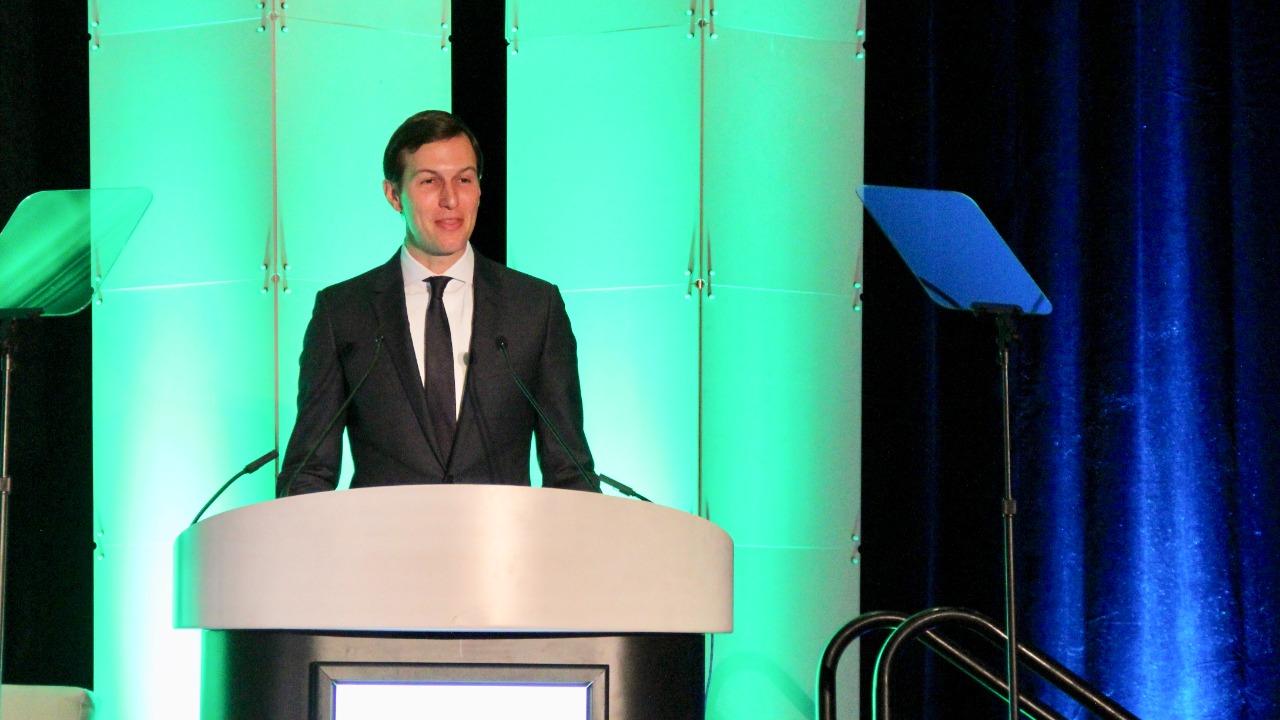
Jared Kushner’s role in the saga cannot be separated from his political ties, and those ties have added a combustible layer to an already sensitive media deal. Affinity Partners is led by Jared Kushner, who is described as Founder & CEO in coverage of his appearances at high-profile investment events, including one account that notes how Follow your favorite stocksCREATE FREE ACCOUNT. Jared Kushner, Founder of Affinity Partners, has been pitching his firm as a major player in global private equity. That prominence meant his involvement in a takeover of a storied Hollywood studio was always going to draw scrutiny.
The political dimension intensified when President Trump publicly criticized CBS and its flagship news program, with one account highlighting how Donald Trump Complains That ’60 Minutes’ Has “Treated Me Far Worse” Since David Ellison took control of CBS and Paramount. Another report describes how almost immediately after Trump’s post circulated, Affinity announced it was exiting the deal, with coverage noting that Almost immediately after Trump ( Donald Trump ) weighed in, Affinity’s withdrawal added to concerns about the financing of Paramount’s hostile bid. I read that sequence as a sign that the firm recognized how quickly a corporate investment could become entangled in the president’s running feud with major media brands.
Financing doubts, “full backstop” claims and WBD’s counterattack
Even before Affinity Partners stepped back, Warner Bros Discovery was openly questioning whether Paramount’s offer was as solid as advertised. The company has accused Paramount of misleading its shareholders by suggesting that the proposed transaction had a “full backstop” from the Ellison family, a charge laid out in a detailed account that notes how Paramount “has consistently misled WBD shareholders that its proposed transaction has a ‘full backstop’ from the Ellis family. Those accusations go to the heart of whether the hostile bid could truly be funded on the terms Paramount was promising.
Warner Bros Discovery’s leadership has also highlighted the role of Affinity Partners in those financing assurances, pointing out that the firm’s exit undermines claims that the PSKY offer had firm commitments behind it. In a pointed statement, the company referenced how Jared Kushner’s Affinity Partners Drops Out Of Paramount Bid For Warner Bros Discovery and questioned whether there was sufficient capital left to backstop the PSKY offer. From my perspective, once a target starts publicly casting doubt on a bidder’s financing, and one of the marquee investors walks away, the psychological advantage in a takeover battle shifts decisively.
How Affinity framed its retreat and what it signals to other investors
Affinity Partners has tried to present its withdrawal as a rational response to a crowded field rather than a retreat under pressure. In a carefully worded statement, the firm said that with two strong competitors vying to secure the future of this unique American asset, Affinity had decided to step aside, language captured in a report that quotes, “With two strong competitors vying to secure the future of this unique American asset, Affinity has decided to withdraw. By invoking the idea of a “unique American asset,” the firm signaled that it saw Warner Bros Discovery as more than just another media company, but also implied that the contest could proceed without its capital.
Other coverage has emphasized that Jared Kushner’s firm is exiting the takeover battle following scrutiny of his involvement, with one account noting that Jared Kushner’s firm exits takeover battle for Warner Bros Discovery Jared Kushner after questions were raised about the intersection of politics and media ownership. I read Affinity’s language as an attempt to reassure future partners that it can walk away from controversial deals when the strategic rationale changes, while also acknowledging that the optics of a presidential relative bankrolling a hostile bid for a major news and entertainment conglomerate had become increasingly fraught.
Paramount’s insistence on staying the course despite mounting headwinds
Even as Affinity Partners departs and Warner Bros Discovery’s board urges shareholders to reject the hostile offer, Paramount is publicly insisting that it remains committed to the fight. The company has reiterated that it views its $30 per share all-cash proposal as superior and has framed the Netflix merger as less attractive on both value and structure, a stance that aligns with its broader messaging that Paramount, Netflix battle over WBD in a contest of competing visions for the company’s future. That insistence is meant to reassure investors that the bid is not collapsing simply because one high-profile backer has stepped aside.
At the same time, the broader market context is not on Paramount’s side. Analysts have pointed out that Companies have been walking away from announced transactions amid changed deal conditions and high levels of uncertainty, a pattern described in a wider look at how Companies have been walking away from announced mergers when financing or strategic logic no longer holds. In that environment, Paramount’s determination to press ahead without Affinity’s backing may be read less as a sign of strength and more as a test of how far it is willing to go to block Warner Bros Discovery from joining forces with Netflix.
What comes next for Hollywood’s power map
With Affinity Partners out, the Warner Bros Discovery board firmly behind Netflix, and Paramount still clinging to its hostile bid, the industry is staring at a rare moment when three giants are trying to redraw the same map at once. One detailed account of the situation notes that Paramount’s offer followed news that WBD and Netflix had agreed to an $82.7bn sale for the former’s studio assets, highlighting that Paramount’s offer followed news on December 5 that WBD and Netflix had agreed to an $82.7 billion transaction. That scale underscores why every move in this battle, from Kushner’s exit to Trump’s commentary, reverberates far beyond a single studio lot.
For now, Warner Bros Discovery’s directors are telling shareholders to side with Netflix, Paramount is urging them to embrace a higher cash payout, and Affinity Partners is positioning itself as a disciplined investor that walked away from a politicized fight over a unique American asset. Another account of the contest captures how The Paramount logo now sits at the center of a tug-of-war between legacy Hollywood power and streaming-era consolidation. However the dealmaking ultimately shakes out, Jared Kushner’s decision to pull Affinity Partners from Paramount’s Warner Bros Discovery bid has already reshaped the narrative, turning a straightforward takeover attempt into a referendum on politics, financing credibility and the future structure of global entertainment.
More From TheDailyOverview

Grant Mercer covers market dynamics, business trends, and the economic forces driving growth across industries. His analysis connects macro movements with real-world implications for investors, entrepreneurs, and professionals. Through his work at The Daily Overview, Grant helps readers understand how markets function and where opportunities may emerge.