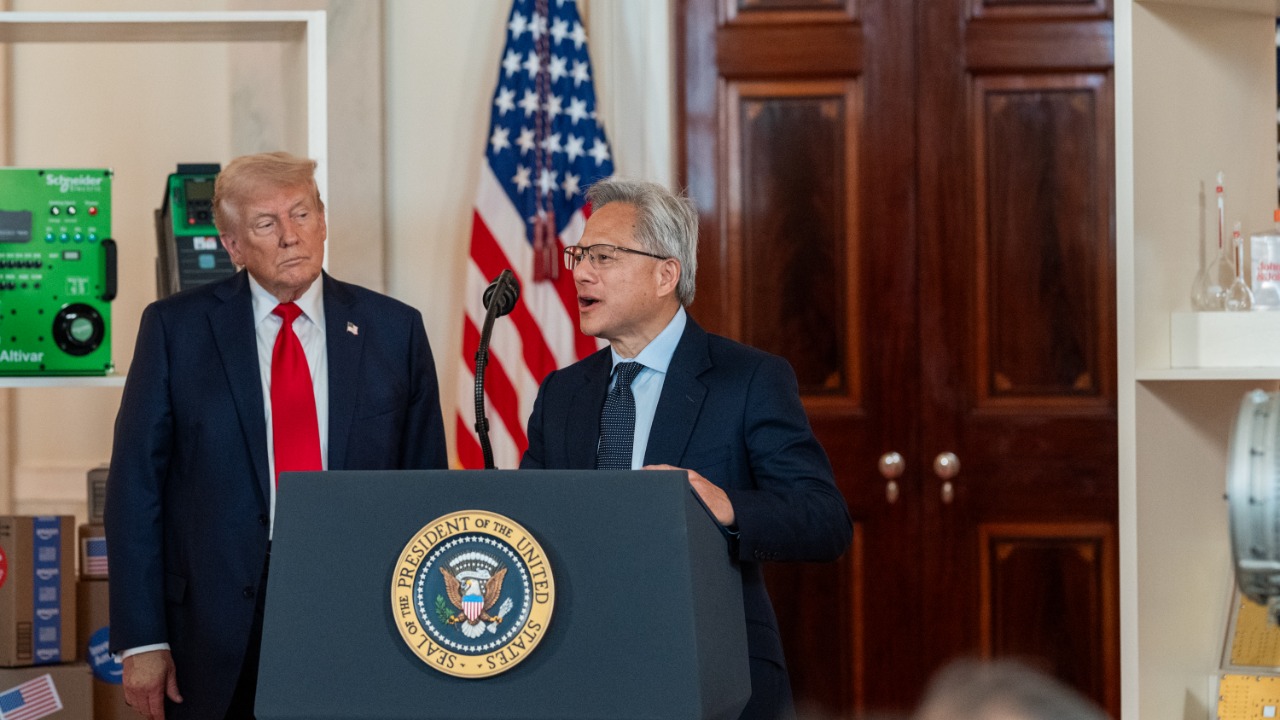
Jensen Huang, CEO of Nvidia, is deepening ties with President Donald Trump as the company navigates escalating fallout from U.S.-China trade tensions over semiconductor exports. This development, reported on November 4, 2025, signals a strategic pivot for Huang amid restrictions that have severely impacted Nvidia’s access to the Chinese market, potentially worth billions in revenue. The move underscores Huang’s efforts to align with U.S. policy priorities on technology and national security.
Escalating US-China Tech Restrictions
The U.S. government has imposed stringent export controls on advanced AI chips to China, significantly affecting Nvidia’s business operations. These restrictions have blocked sales of high-end GPUs like the H100 and A100 series, which are crucial for Nvidia’s revenue stream. Jensen Huang has publicly stated that the revenue impact from these restrictions is substantial, with lost sales estimated at over $8 billion annually from the Chinese market. These measures, which began in late 2024 and were tightened in 2025, are part of broader policies spanning the Biden and Trump administrations. As a result, Nvidia has been forced to redesign lower-spec chips to comply with these regulations, highlighting the core tensions driving Huang’s alignment with U.S. policy priorities.
The restrictions are a response to national security concerns and the desire to maintain technological superiority. This has forced Nvidia to adapt its strategy, focusing on compliance and innovation within the constraints of U.S. policies. The redesign of chips not only aims to meet regulatory requirements but also to maintain a competitive edge in a rapidly evolving market. The stakes are high, as these changes could redefine Nvidia’s position in the global semiconductor industry.
Huang’s Strategic Outreach to Trump
Jensen Huang has recently engaged in meetings and communications with Trump administration figures, aiming to secure favorable policies on AI and chip manufacturing. This outreach is part of a broader strategy to align Nvidia with U.S. interests, particularly in expanding domestic production capabilities. Huang has emphasized Nvidia’s commitment to building more fabrication plants in Arizona and Texas, reducing reliance on Asian supply chains amid the risks associated with China. This move is seen as a proactive step to bolster U.S. tech sovereignty and mitigate the impact of geopolitical tensions.
Huang has praised Trump’s “America First” approach, positioning Nvidia as a key player in the U.S. tech landscape. By aligning with Trump’s policies, Nvidia hopes to benefit from potential subsidies and incentives aimed at boosting domestic manufacturing. This strategic alignment not only supports Nvidia’s growth but also reinforces its role in strengthening U.S. technological leadership. The implications for Nvidia are significant, as this partnership could lead to eased domestic regulations and accelerated growth in AI data centers across the U.S.
Implications for Nvidia and Global Tech
Deepening ties with Trump could lead to eased domestic regulations for Nvidia, potentially accelerating AI data center growth in the U.S. despite ongoing losses in the Chinese market. Investors have reacted positively to these developments, with Nvidia shares rising amid expectations of Trump-era subsidies. This optimism reflects confidence in Nvidia’s ability to navigate the challenges posed by U.S.-China tensions and capitalize on opportunities within the U.S. market.
The broader impacts on the semiconductor industry are also noteworthy. Jensen Huang’s alignment with U.S. policy may influence competitors like AMD and Intel as they navigate the complexities of U.S.-China decoupling. The strategic shifts by Nvidia could set a precedent for other companies, prompting them to reevaluate their own strategies in light of evolving geopolitical dynamics. As the industry adapts to these changes, the focus will likely remain on innovation, compliance, and strategic partnerships to ensure long-term success.
For more details on Jensen Huang’s strategic moves and their implications, visit the full report.
More From TheDailyOverview
- Dave Ramsey warns to stop 401(k) contributions
- 11 night jobs you can do from home (not exciting but steady)
- Small U.S. cities ready to boom next
- 19 things boomers should never sell no matter what

Grant Mercer covers market dynamics, business trends, and the economic forces driving growth across industries. His analysis connects macro movements with real-world implications for investors, entrepreneurs, and professionals. Through his work at The Daily Overview, Grant helps readers understand how markets function and where opportunities may emerge.