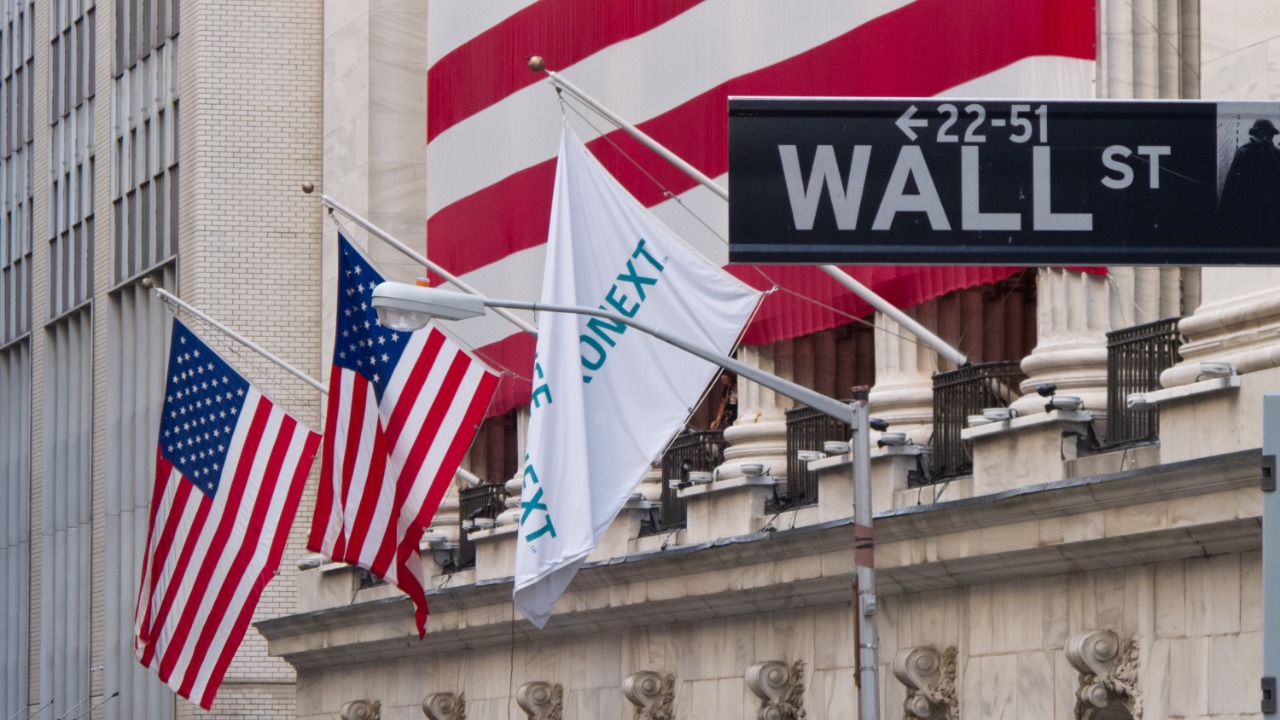
Wall Street’s last major holdout has finally put a number on where it thinks the S&P 500 is headed in 2026, and the call points to a fresh leg higher rather than a tired bull market running on fumes. With every big bank now projecting double-digit upside, the debate has shifted from whether the rally can last to how bumpy the path will be and which forces will drive the next phase.
I see a rare moment of alignment taking shape across the largest investment houses, with forecasts that cluster around robust earnings growth, persistent enthusiasm for artificial intelligence and a still-supportive Federal Reserve. The new 2026 target from the last big Wall Street bank slots into that consensus, but the details of how it gets there matter just as much as the headline number.
The final big-bank target locks in a bullish 2026 consensus
With the final major Wall Street institution now publishing a 2026 S&P 500 target, investors are looking at a fully formed map of where the largest strategists think the index is headed. I view that as significant because it removes the information vacuum that had allowed skeptics to argue that the bullish narrative was incomplete or fragile. Once the last big bank steps up with a forecast that implies double-digit gains, the center of gravity on the Street clearly tilts toward a continuing bull market in the benchmark 500.
That new target does not exist in isolation. It lands in a landscape where broad market commentary already describes how Wall Street Lifts Targets as conviction in a “Bull Market Conviction Strengthens” narrative builds and where strategists emphasize that “Over the” medium term, the “Outlook” for the S&P 500 has brightened. When I line up those views with the latest forecast, the message is straightforward: the big banks are no longer hedging their bets on whether the rally survives into 2026, they are arguing over how far it can run.
How Wells Fargo’s call frames the upside
I see the most recent forecast from Wells Fargo as the keystone that completes this picture. Strategists there are not just calling for a modest grind higher, they explicitly expect the S&P 500 to deliver a double-digit gain in 2026, powered by stronger profits and healthier household balance sheets. Their thesis leans heavily on artificial intelligence lifting corporate margins and on tax refunds giving consumers more room to spend, a combination that would support both earnings and revenue growth across the index.
That view is consistent with the broader guidance coming out of the firm’s research arm. In its latest capital markets blueprint, the Wells Fargo Investment Institute highlights that its U.S. economic baseline includes a GDP growth target of 2.4% for 2026, a pace that would be fast enough to support earnings without stoking runaway inflation. When I connect that macro backdrop with the equity call that Wells Fargo sees S&P 500 clocking double-digit gain in 2026, the logic is clear: a steady economy, AI-driven productivity and a consumer tailwind are the pillars of its bullish stance.
JPMorgan’s 7,500–8,000 roadmap and what it implies
The new target from the last big bank also has to be read alongside JPMorgan’s already detailed roadmap for the index. Strategists there have laid out a base case in which the S&P 500 reaches 7,500 in 2026, with a more optimistic scenario that sees the index surging past 8,000 if the Federal Reserve continues to cut interest rates and financial conditions stay loose. I interpret that range as a statement that policy, not just earnings, will be decisive in determining how far valuations can stretch.
Those numbers matter because they anchor the upper band of what many investors now see as plausible. The call that JPMorgan sees S&P 500 reaching 7,500 in 2026 or potentially topping 8,000 if the Fed keeps easing effectively sketches a corridor for the index that lines up with the double-digit upside now embraced by its peers. When I place that forecast next to the bank’s broader positioning as a global financial powerhouse, reflected in its sprawling operations at JPMorgan Chase, it underscores how central rate policy and liquidity conditions remain to any 2026 bull case.
Goldman Sachs and Bank of America set the high bar
On the more aggressive end of the spectrum, Goldman Sachs has already planted a flag with a forecast that the S&P 500 could hit 7,600 by the end of 2026. I see that as a statement of confidence in both earnings growth and the durability of the AI and cloud computing themes that have powered the current cycle. The projection, highlighted in a Blog section of Gotrade News that sits alongside “News,” “Market Outlook,” “Insider” and “Legal” content, effectively tells clients that Goldman expects the bull market to keep rewarding risk takers who stay in equities.
Bank of America’s equity team is not far behind. Savita Subramanian, who leads strategy there, has publicly argued that the S&P 500 will end 2026 at 7,100, a level that implies solid double-digit appreciation from current prices. In the same breath, she has been set against the expectations of Citi and Oppenheimer, with “Subraman” and her colleagues penciling in roughly 15 percent earnings growth to justify that 7,100 target. When I line up those two calls, Goldman at 7,600 and Bank of America at 7,100, they bracket the upper tier of Wall Street optimism and help explain why the final big bank’s new target still fits comfortably inside a bullish consensus.
Citi’s “continuing but volatile” bull market thesis
Not every strategist is promising a smooth ride, even if they agree on the destination. Citi has framed 2026 as the fourth year of the current bull cycle, a phase in which gains can remain strong but volatility tends to pick up as valuations stretch and policy risks multiply. I read that as a warning that investors should expect sharper pullbacks and more frequent rotations, even as the overall trend in the S&P 500 remains higher.
The firm’s messaging, shared in a social media update that tagged “Dec” and highlighted that Citi expects double-digit gains in 2026, leans heavily on artificial intelligence as a key driver of earnings growth. In my view, that aligns with the broader Street narrative but adds a crucial nuance: the same AI enthusiasm that has pushed mega-cap valuations higher could also amplify swings if sentiment turns. By describing a “continuing but volatile bull market,” Citi is effectively telling clients to stay invested but to be more tactical about how they ride the next leg up.
Morgan Stanley’s macro lens on U.S. leadership
While some banks focus on index levels, Morgan Stanley has framed its 2026 view through a macro and asset allocation lens. Its latest investment roadmap argues that U.S. equities should outperform global peers in 2026, with the S&P500 expected to rise as part of a broader pattern of “Higher Gains for U.S. Stocks.” I see that as a vote of confidence in the structural advantages of the U.S. market, from its tech leadership to its deep capital pools and flexible labor markets.
The firm’s Key Takeaways section explicitly highlights “Higher Gains for” domestic “Stocks” and stresses that the long term earnings story is intact. When I connect that with the index-level targets from peers, it reinforces the idea that the S&P 500 is not just expected to climb, it is expected to lead. For investors, that means the last big bank’s new 2026 target is not an outlier, it is another data point in a broader argument that the U.S. remains the core engine of global equity returns.
What the median target and stock-picking angles reveal
Stepping back from individual banks, the median S&P 500 target across Wall Street now points to solid double-digit upside, and that aggregate view is starting to shape how strategists talk about stock selection. I find it telling that some analysts are already translating index-level optimism into concrete ideas for investors with modest sums to deploy. One widely circulated breakdown, for example, highlights how someone with $2,500 to put to work “Right Now” might focus on a handful of “Brilliant Stocks” that stand to benefit from themes like AI infrastructure, digital advertising and cloud computing.
That perspective is laid out in a piece that frames Wall Street’s 2026 Outlook and 4 Brilliant Stocks to Buy With $2,500 Right Now, tying the “Outlook and” index forecasts directly to individual names. When I connect that stock-picking lens with the broader consensus that the S&P 500 still has room to run, it underscores a key point: the new 2026 target from the last big bank is not just an abstract number, it is a backdrop that is already influencing how professionals suggest ordinary investors allocate capital.
How the bull case fits into the broader S&P 500 narrative
All of these forecasts sit within a larger story about how the S&P 500 has behaved in the current cycle. Recent analysis has emphasized that, over the past several weeks, strategists have steadily raised their targets as the index has broken to new highs and as earnings have come in stronger than expected. I see that pattern as a classic case of Wall Street chasing the tape, but it also reflects genuine shifts in the macro data and in corporate guidance that justify higher valuations.
One detailed breakdown of the S&P 500 “Outlook” notes that “Over the” recent period, “Wall Street Lifts Targets” as “Bull Market Conviction Strengthens,” capturing how sentiment has evolved from cautious optimism to something closer to full-throated belief in the rally. That narrative, laid out in depth at this S&P 500 outlook, helps explain why the final big bank’s 2026 target lands where it does. In my view, the new forecast is less a bold contrarian call and more the logical endpoint of a year in which the data kept nudging strategists toward more bullish assumptions.
What investors should watch as 2026 approaches
With every major bank now on record expecting the S&P 500 to post double-digit gains in 2026, the burden of proof has shifted. I think the key question for investors is no longer whether the index can rise, but what could derail the consensus. The most obvious swing factors are the pace of Federal Reserve rate cuts, the durability of AI-driven earnings growth and the resilience of the U.S. consumer, all of which are embedded in the forecasts from Wells Fargo, JPMorgan, Goldman Sachs, Bank of America, Citi and Morgan Stanley.
At the same time, the institutional machinery behind these calls is formidable. The research platforms at firms like Wells Fargo and their peers are drawing on deep macro, sector and quantitative expertise to build these scenarios, even if they ultimately converge on a similar conclusion. As I weigh the new 2026 target from the last big Wall Street bank against that backdrop, I see a market entering the next year with unusually aligned expectations. For investors, that alignment is both an opportunity and a risk: if the bullish script plays out, staying invested in the S&P 500 could be rewarding, but if any of the core assumptions crack, the unwind from such a crowded consensus could be just as dramatic.
More From TheDailyOverview

Elias Broderick specializes in residential and commercial real estate, with a focus on market cycles, property fundamentals, and investment strategy. His writing translates complex housing and development trends into clear insights for both new and experienced investors. At The Daily Overview, Elias explores how real estate fits into long-term wealth planning.

