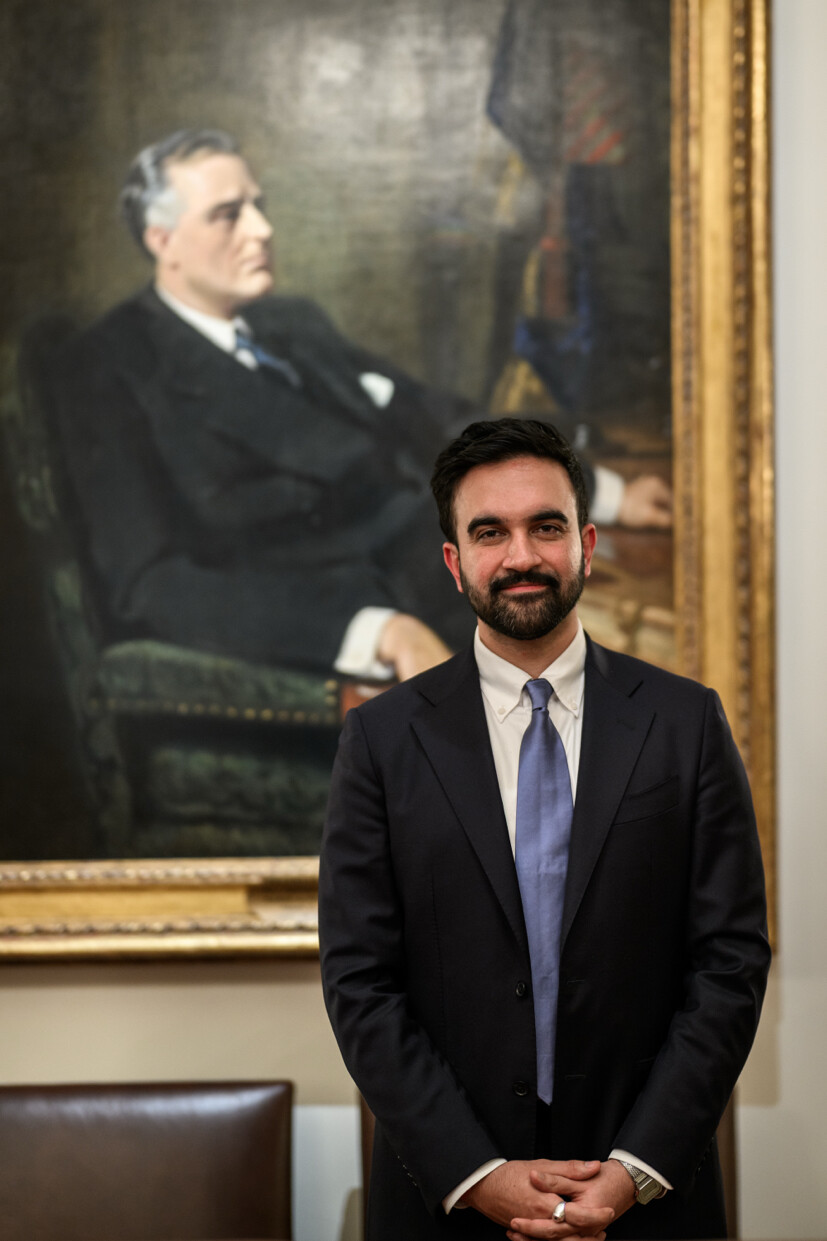
New York City Mayor Zohran Mamdani is betting that a sharp tax hike on the wealthiest residents is the only way to keep the city from what he calls “staring into the abyss.” In prepared testimony for state lawmakers, he urged a 2% increase in personal income tax on the most affluent New Yorkers, arguing that the current trajectory of the city’s finances is unsustainable. His warning frames a stark choice: ask more of the top earners or accept deeper cuts to public services.
The stakes became even clearer when Mamdani stepped before cameras after the budget hearing and pointed to a multibillion-dollar revenue shortfall, including about $3 billion tied to weakening revenue trends. He cast the proposal not as a symbolic gesture, but as a direct answer to a hole in the city’s finances that standard belt-tightening cannot fill. The question now is whether this strategy is a lifeline for the city’s budget or a gamble that could reshape its economic base.
‘Staring into the abyss’ at Albany
Mayor Mamdani arrived at the 2026 Joint Legislative Budget Hearing on Local Government and General Government with a blunt message for state legislators. In testimony prepared for delivery and hosted by the New York State Assembly, he described a city whose finances are approaching a breaking point and called for a 2% personal income tax increase on the most affluent residents as part of the fix. The written remarks, submitted as an official document to the hearing and posted by the Assembly, framed the request as a response to mounting fiscal strain rather than an abstract debate over tax philosophy, and identified him explicitly as the Honorable Zohran Mamdani, Mayor, City of New York.
Held on February 11, 2026, the hearing gave the mayor a formal stage to argue that state lawmakers must sign off on changes to the city’s tax structure if New York is to avoid a deeper crisis. His testimony, prepared for that specific joint budget session and posted in full by the Assembly, shows a mayor leaning on the authority of the legislative process to make the case that the city’s current revenue mix cannot support its obligations indefinitely. By tying his “staring into the abyss” language to that official record, Mamdani signaled that he wants the looming shortfall treated as a shared responsibility between City Hall and Albany, not a problem the city can quietly manage on its own.
The 2% tax hike on the affluent
At the core of Mamdani’s pitch is a simple, high-stakes request: raise the personal income tax rate on the city’s most affluent taxpayers by 2%. In his prepared testimony to the joint budget hearing, the mayor framed this increase as targeted, aimed only at the upper tier of earners rather than the broad base of wage workers and small-business owners. The official hearing document filed with the New York State Assembly is explicit that he is asking for a 2% personal income tax increase on the most affluent, positioning it as a way to protect core services without shifting the burden onto middle- and lower-income residents.
By putting a specific figure on the table, Mamdani moved beyond vague calls for “the rich to pay more” and into the realm of concrete fiscal policy. The written testimony, which the Assembly has posted as an official PDF of his remarks, links that 2% request to the city’s wider budget strategy and states that without such a measure, the gap between recurring costs and recurring revenues will continue to widen. That framing allows him to argue that the tax hike is not an ideological statement but a practical response to a documented shortfall, even as it invites sharp debate over how much the city can safely ask from its highest earners.
Breaking down the $3 billion slide
If the 2% tax hike is the proposed remedy, the problem Mamdani describes is a worsening revenue slide that has already carved billions out of the city’s financial plan. Speaking at a media availability after the joint budget hearing, he pointed to a reduction in projected resources and specified that approximately $3 billion of that drop is attributed to increased revenue weakness. The figure appears in the official transcript of his remarks and question-and-answer session, released by the NYC Office of the Mayor, and serves as a key number in his argument that the city cannot simply “grow its way” out of the problem under current policies.
The same transcript, published by City Hall as an official record of what the mayor told reporters, shows him linking the $3 billion figure directly to the need for new revenue measures. By highlighting that portion of the reduction as tied to softer revenue rather than one-time shocks, Mamdani argues that the city is facing a structural problem, not a temporary blip. In his telling, without a change in tax policy or some other durable source of income, the city will either have to keep trimming services or accept persistent gaps between what it promises and what it can afford, which is the “abyss” he says New York is now staring into.
Why Mamdani wants Albany on the hook
Mamdani’s decision to make his case at a joint legislative budget hearing is not just a matter of protocol; it is a way of pulling state lawmakers into the center of the debate. The prepared testimony, formally submitted to the New York State Assembly for the 2026 Joint Legislative Budget Hearing on Local Government and General Government, makes clear that any change to the city’s personal income tax structure requires Albany’s cooperation. By placing his 2% proposal in that setting, he is effectively telling legislators that they cannot demand balanced books from New York City while denying it the tools he argues are necessary to balance them.
The Assembly-hosted document also reinforces that this is not an off-the-cuff idea floated in a press conference, but a formal request embedded in the state’s budget process. That gives the proposal a different weight than a policy white paper or campaign speech. It also means that if lawmakers reject the 2% increase on the most affluent, they will be doing so in the context of a record that already acknowledges the city’s fiscal squeeze. In that sense, Mamdani is spreading political ownership of the “abyss” he describes, inviting criticism of his tax plan but also making it harder for Albany to distance itself from the consequences of inaction.
Media availability: from rhetoric to numbers
After the hearing, Mamdani shifted from written testimony to a more freewheeling exchange with reporters, where he tried to translate the dense budget talk into plainer terms. The official transcript of that media availability, published by the NYC Office of the Mayor on NYC.gov, captures him moving back and forth between big-picture warnings and specific figures, including the claim that approximately $3 billion of the reduction in projected resources is tied to weaker revenue. That number, which appears in the transcript as part of his explanation of the city’s financial slide, is central to his push for a tax increase on the wealthiest New Yorkers.
In that setting, the mayor also had to field questions about how his proposal might affect the city’s competitiveness and whether higher taxes could drive affluent residents and their income elsewhere. The transcript is primarily a record of his remarks rather than a detailed economic study, and it shows him arguing that the cost of doing nothing is greater than the risk of asking more from those at the top. By anchoring his argument in an official City Hall document that lays out both the $3 billion figure and his case for the 2% increase, Mamdani is effectively saying that anyone who opposes the tax plan must offer a different way to close a shortfall that is already on the public record.
Economic fears and the ‘soak the rich’ label
Mamdani’s proposal lands in a long-running debate over whether cities can safely raise taxes on their wealthiest residents without eroding their tax base. Critics often describe such measures as “soak the rich” policies and warn that they could push high earners to relocate, taking their income and spending power with them. That concern surfaced again in questions to the mayor during his media availability, where he was pressed on whether a 2% personal income tax increase on the most affluent might backfire if it prompts those taxpayers to leave or shift their income in ways that reduce the city’s haul.
The official record of his remarks, however, suggests that Mamdani sees those fears as less pressing than the immediate budget gap. By tying his call for higher taxes to the documented reduction in projected resources, including the approximately $3 billion portion he attributes to revenue weakness, he argues that the status quo is already unsustainable. From his perspective, the risk of erosion in the tax base is a challenge to be managed, not a reason to avoid asking more from those at the top. That stance puts him at odds with business groups and fiscal conservatives who argue that higher top-end taxes are self-defeating, but it aligns with his broader message that without new revenue, the city will face ongoing pressure on public services.
What ‘the abyss’ means for city services
When Mamdani says the city is “staring into the abyss,” he is not only talking about numbers on a spreadsheet. The budget hearing testimony and the subsequent media transcript both tie the fiscal shortfall to the city’s ability to fund core services, from basic operations to social programs. While the official documents do not spell out a line-by-line list of potential cuts, the framing is clear: without new revenue, the city will have to weigh reductions that could touch areas such as public safety, sanitation, housing, and youth programs. The 2% personal income tax increase on the most affluent is presented as a way to avoid those choices, or at least blunt their severity.
That argument also helps explain why Mamdani chose such stark language. By describing the situation as an abyss, he is signaling that the city is approaching a point where small, incremental adjustments may no longer be enough. The prepared testimony filed with the New York State Assembly and the transcript released by City Hall both show a mayor trying to convince skeptical audiences that the cost of inaction is not abstract, but likely to show up in closed programs, thinner services, and a city that feels less functional for residents who rely on public systems. How lawmakers and the public respond to that framing will shape the debate over the 2% tax proposal and the broader choices in the next budget cycle.
More From The Daily Overview
*This article was researched with the help of AI, with human editors creating the final content.

Grant Mercer covers market dynamics, business trends, and the economic forces driving growth across industries. His analysis connects macro movements with real-world implications for investors, entrepreneurs, and professionals. Through his work at The Daily Overview, Grant helps readers understand how markets function and where opportunities may emerge.

