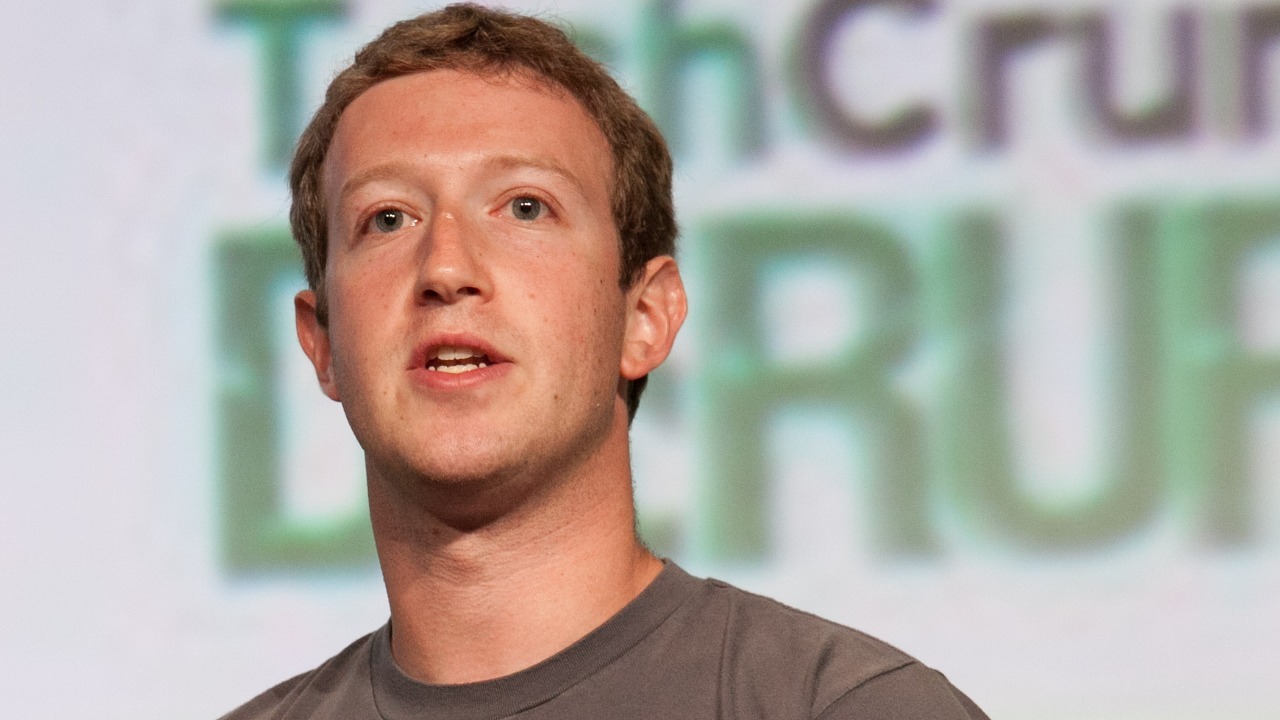
Mark Zuckerberg is adding a new trophy address to his already sprawling real estate portfolio, this time on Miami’s ultra-exclusive Indian Creek island. The waterfront mansion, on nearly two acres with wraparound terraces, a private dock, and a resort-style pool, is expected by local agents to command somewhere between $150 million and $200 million. The move plants one of Silicon Valley’s most famous figures squarely in the middle of Florida’s billionaire boom, even as he keeps pouring money and attention into California.
His decision captures a broader shift in how the ultra-wealthy are hedging against political and tax uncertainty. Rather than a clean break from the West Coast, Zuckerberg appears to be building a bi-coastal hedge, using luxury property as both lifestyle upgrade and policy insurance. The question is not just why he is buying in Florida, but what it signals about the next phase of America’s tech geography.
The Indian Creek prize and what we actually know
The property Zuckerberg and his wife, Priscilla Chan, are buying sits on Indian Creek, a tiny island village in Biscayne Bay that has long marketed itself as a “billionaire bunker” with its own police force and golf course. The enclave, reachable only by a single bridge from Surfside, has drawn a roster of ultra-wealthy residents who prize privacy as much as waterfront views, and its limited number of parcels has helped turn it into one of the most expensive zip codes in the country, as a quick look at Indian Creek makes clear. For a tech executive used to scrutiny over everything from data privacy to neighborhood disputes, the island’s controlled access and security are part of the appeal.
Local real estate agents say the newly completed mansion is likely to trade in a range between $150 m and $200 m, although it is not yet clear if the deal has formally closed or what the final number will be. That price band would put the home among the most expensive residential sales in Miami history, reflecting both the scarcity of buildable land on Indian Creek and the surge of tech wealth into South Florida. The house’s features, including a private dock and expansive landscaping, match what agents describe as the new standard for ultra-luxury waterfront estates in the area, a level of amenity that helps justify valuations that would have seemed outlandish even a decade ago, according to local agents.
From California fixture to Miami regular
For years, Zuckerberg has been synonymous with California’s tech corridor, from Meta’s headquarters in Menlo Park to his cluster of homes in Palo Alto. That is why his decision to secure a base in Miami is being read as part of a larger pattern, not a one-off whim. In market terms, he is the latest high-profile name in what some brokers now casually call “THE MARKET” of California billionaires who are buying in Florida, a group that already includes hedge fund managers, crypto founders, and other tech executives who have shifted their primary residence or at least their winter lives to the Atlantic coast, a trend that market watchers have been tracking closely.
At the same time, Zuckerberg has not been acting like someone eager to sever ties with the Golden State. Earlier this year, California Gov Gavin Newsom publicly unveiled a gift tied to a major redevelopment of three vacant state office buildings in downtown Sacramento, a philanthropic commitment from Zuckerberg and Chan valued at more than $110 million that effectively doubles down on their California footprint. That project, highlighted in state redevelopment, suggests he is not preparing a clean geographic break but rather layering Florida into an already complex map of influence and assets.
The billionaire tax backdrop and Miami’s pull
The timing of Zuckerberg’s Miami move is impossible to separate from California’s political climate. The proposed 2026 Billionaire Tax Act would impose a one-time 5 percent levy on residents with net worth of $1 billion or more if voters approve the measure, a plan described in detail in an explainer on the Billionaire Tax Act. For someone whose net worth fluctuates in the tens of billions, even a one-time 5 percent hit is not just a line item, it is a structural change in how much the state can claim from future gains.
Voters in California have signaled they are comfortable with that trade-off. A survey cited by a Luxury real estate agent found that a majority of respondents backed a wealth tax on billionaires even when they were told about potential economic risks, a result that has been framed as a tipping point for ultra-rich residents who feel increasingly targeted. That same agent, Julian John of The Corcoran Group, has described Miami as the primary destination for those looking to relocate, arguing that the city’s combination of zero state income tax, warm weather, and growing tech ecosystem is irresistible to clients at the very top of the market, a view laid out in survey findings.
South Florida’s new tech archipelago
Zuckerberg’s arrival in Miami is not happening in a vacuum. South Florida has continued to attract wealthy technology executives from California, with recent buyers including Google’s co-founders and other industry heavyweights who have snapped up waterfront estates and penthouse condos. That influx has turned neighborhoods from Miami Beach to Brickell into a kind of archipelago of tech wealth, where private jets and superyachts are as common as Teslas in Palo Alto, a pattern chronicled in coverage of South Florida.
In that context, Zuckerberg looks less like an outlier and more like a late adopter. Reports describing how Mark Zuckerberg is the latest California billionaire to buy a Florida home emphasize that he and Chan are purchasing a newly completed waterfront mansion on Indian Creek, joining a roster of peers who have already made similar moves. One account notes that Mark Zuckerberg is the latest California billionaire to buy a Florida home and that THE DEAL involves a property whose details have been closely guarded, with only a handful of people with knowledge of the property willing to discuss it, as reflected in deal reporting.
A portfolio built for policy volatility
To understand why this purchase matters, it helps to zoom out on Zuckerberg’s broader property strategy. His holdings already include a high-profile mansion in Washington, D.C., where The Whites enlisted architect Robert Gurney to design a red-brick home made up of three structures joined together by glass walkways, a configuration that blends privacy with a campus-like feel, as detailed in coverage of the D.C. mansion. He also owns extensive land in Hawaii, including properties that have been described as a kind of “doomsday bunker,” as well as Lake Tahoe estates and multiple homes in Silicon Valley.
One analysis of Mark Zuckerberg’s luxury homes notes that Mark Zuckerberg’s property portfolio is diverse and sprawling, reflecting his ability to balance work and personal life with strategic real estate investments across the United States. That framing, in a piece on Mark Zuckerberg, suggests that the Indian Creek estate is less a radical pivot and more an incremental extension of a long-running strategy: spread risk across jurisdictions, climates, and political regimes. For everyday readers, it is the billionaire version of keeping savings in multiple banks and a mix of index funds, except the diversification happens in eight-figure parcels of land.
More From The Daily Overview
*This article was researched with the help of AI, with human editors creating the final content.

Elias Broderick specializes in residential and commercial real estate, with a focus on market cycles, property fundamentals, and investment strategy. His writing translates complex housing and development trends into clear insights for both new and experienced investors. At The Daily Overview, Elias explores how real estate fits into long-term wealth planning.

