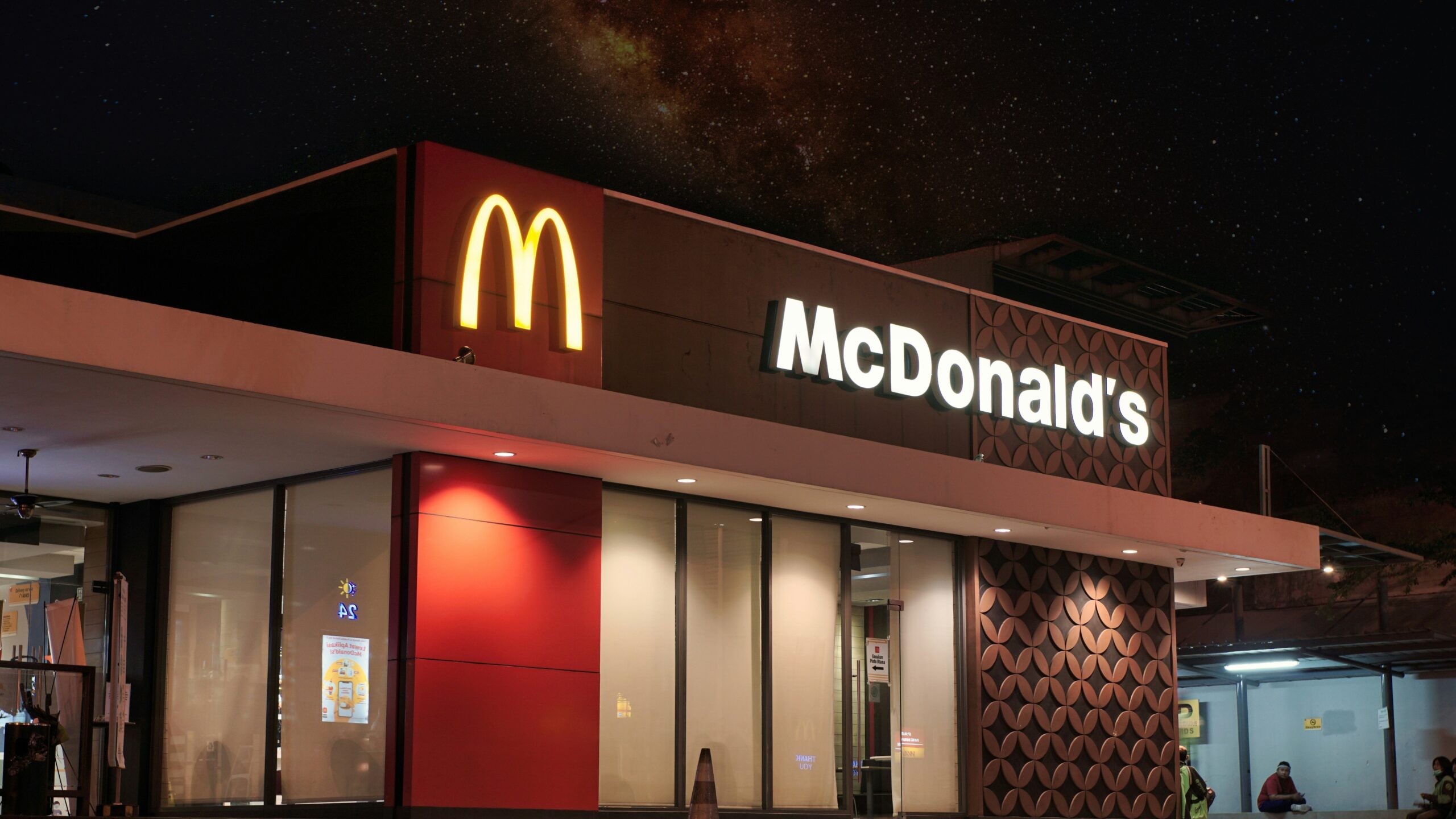
McDonald’s is preparing to test a new beverage lineup across more than 500 U.S. restaurants, marking the chain’s most aggressive push yet into the fast-growing specialty drink category and a booming menu craze. The expanded test draws directly from lessons learned at CosMc’s, the company’s smaller beverage-focused concept, and will feature cold coffees, fruity refreshers, crafted sodas, and energy-style drinks. The move arrives as McDonald’s rides strong financial momentum, with systemwide sales exceeding $139 billion, and signals that the company sees drinks as a major growth engine alongside its value-driven food menu.
CosMc’s Lessons Hit the Big Stage
McDonald’s spent months experimenting with unconventional drink formats through CosMc’s, a spinoff concept built around customizable beverages. That pilot generated enough positive data for the company to bring its best ideas into the main McDonald’s system. The chain described the expanded test as a first glimpse at how beverages could evolve in its restaurants, with cold coffees, fruity refreshers, crafted sodas, and energy-style drinks all making the cut. Rather than launching a separate brand to chase the specialty drink trend, McDonald’s is folding those innovations directly into its existing restaurants, a strategy that gives the company instant scale.
The decision to absorb CosMc’s playbook rather than expand the spinoff itself tells a clear story about priorities. McDonald’s has roughly 13,000 U.S. locations, and even a test at 500-plus stores gives the company a sample size that most beverage startups could never match. If the drinks perform well in those markets, a national rollout could happen quickly, putting McDonald’s in more direct competition with Starbucks, Dutch Bros, and the wave of regional drive-through drink chains that have grown rapidly over the past several years. It also shows that the company is willing to use limited concepts like CosMc’s as laboratories, then rapidly scale the winning ideas into the core brand where the financial impact is far greater.
What Is on the Test Menu
The drink roster is designed to cover multiple dayparts and customer preferences. According to industry reporting, the test includes a Creamy Vanilla Cold Brew and a Toasted Vanilla Frappe for coffee drinkers, a Strawberry Watermelon Refresher for those who want something fruity, and a Sprite Lunar Spl among the crafted soda options. Energy-style drinks round out the lineup, targeting afternoon and evening customers who might otherwise skip McDonald’s entirely after the breakfast rush. The mix echoes CosMc’s emphasis on customization and bold flavors, but adapts it to the more streamlined environment of a traditional McDonald’s restaurant.
The test is set to begin on September 2, with locations concentrated mostly in Colorado, Wisconsin, and surrounding areas. That geographic spread is notable because it avoids the coasts, where specialty drink culture is already saturated, and instead targets middle-American markets where McDonald’s brand loyalty runs deep and competition from boutique drink chains is thinner. Pricing details have not been disclosed publicly, which leaves open the question of whether these drinks will carry a premium or stay within the value range that has been central to the company’s recent customer recovery strategy. Without confirmed price points, any projection about per-store revenue lift from the beverage test would be speculative, but the company is clearly betting that incremental drink sales can boost average checks without scaring off price-sensitive guests.
Financial Tailwinds Behind the Bet
McDonald’s is not making this move from a position of weakness. The company’s fourth quarter and full year 2025 results showed systemwide sales exceeding $139 billion, with comparable sales performance improving across segments. The earnings release also highlighted growth in loyalty program sales and active users, which matters here because beverage purchases tend to be high-frequency, low-friction transactions that reward repeat visits. A customer who comes in for a Strawberry Watermelon Refresher several times a week is worth far more to the loyalty ecosystem than one who visits occasionally for a burger, and those repeat drink trips can easily lead to add-on food purchases.
The financial results also suggest that McDonald’s value-focused strategy has been effective at bringing traffic back through the door. As coverage from the Associated Press noted, the company credited its focus on affordability for the customer recovery, emphasizing bundles and price points aimed at budget-conscious diners. Adding specialty beverages to that mix creates an interesting tension: these are products that feel premium and often command higher margins, but McDonald’s will need to price them accessibly enough to avoid alienating the very guests it just won back. If the drinks are perceived as too expensive, they could reinforce broader concerns about fast-food affordability; if they are priced too low, the company may leave profit on the table in a category that competitors use precisely because of its rich margins.
Why Beverages Are the Battleground Now
The broader fast-food industry has watched specialty drink chains grow at a pace that outstrips traditional restaurant categories. Concepts like Dutch Bros, 7 Brew, and Swig have all expanded aggressively, proving that consumers will make dedicated trips for customized drinks in a way they rarely do for a burger or chicken sandwich. Starbucks, meanwhile, has leaned harder into cold beverages, personalization, and eye-catching limited-time flavors to defend its position. McDonald’s entry into this space is less about invention and more about recognition that it was leaving money on the table by treating drinks as an afterthought, typically confined to soft drinks, basic coffee, and the occasional seasonal shake or McCafé promotion.
The CosMc’s experiment gave McDonald’s something its competitors already had: real data on what flavors, formats, and price points work for a beverage-first customer, rather than a guest who sees drinks as a side item. Most coverage of this test has framed it as a simple menu expansion, but the strategic implications run deeper. If McDonald’s can turn its drive-through lanes into credible competitors for the afternoon and evening drink occasion, it effectively extends the revenue-generating hours of each restaurant without adding significant labor or equipment costs beyond the initial investment. That kind of margin improvement at scale, across thousands of locations, would dwarf the impact of any single food item launch and could reposition beverages as a core pillar of growth instead of a supporting category.
The Risk McDonald’s Cannot Ignore
For all the upside, there is a real execution risk that deserves scrutiny. McDonald’s kitchens are already optimized for speed and simplicity, with standardized procedures designed to keep drive-through times low. Adding a full beverage program with cold brews, frappes, refreshers, crafted sodas, and energy drinks introduces complexity at the preparation station. If drink orders slow down the drive-through line or require equipment that takes up valuable counter space, franchisees may push back. The company has not publicly detailed how it plans to handle the operational load, leaving open questions about whether new equipment, staffing adjustments, or revised workflows will be required to keep service times within acceptable limits.
There is also a brand management risk in pushing too far into a category that, for many consumers, is associated with indulgence and customization rather than speed and value. McDonald’s will need to communicate clearly that these drinks are an extension of its existing promise (convenient, affordable, and familiar), rather than a pivot toward a boutique café identity. If the test markets show that customers embrace the new beverages without sacrificing throughput or eroding perceptions of affordability, the company will have a powerful new growth lever. If not, the experiment could reinforce why McDonald’s historically kept its beverage menu relatively simple, underscoring that even a brand with enormous scale cannot ignore the operational realities that underpin its success.
More From The Daily Overview
*This article was researched with the help of AI, with human editors creating the final content.

Grant Mercer covers market dynamics, business trends, and the economic forces driving growth across industries. His analysis connects macro movements with real-world implications for investors, entrepreneurs, and professionals. Through his work at The Daily Overview, Grant helps readers understand how markets function and where opportunities may emerge.

