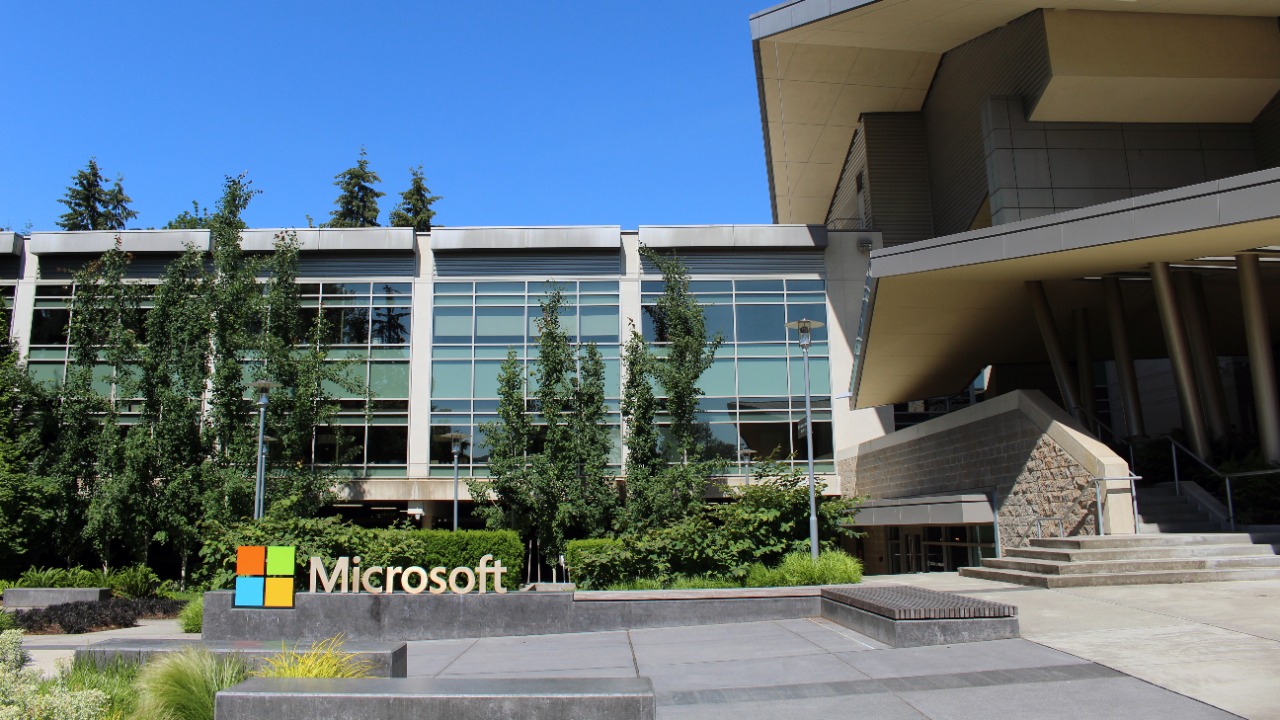
Microsoft is racing to contain a growing backlash against the power-hungry data centers that fuel its artificial intelligence ambitions. After months of local anger over rising utility demands and generous subsidies, the company is now pledging to shoulder more of the financial burden itself and rethink how it plants massive server farms in communities. The shift signals that the social license for AI infrastructure is no longer guaranteed. What once looked like a straightforward buildout of cloud capacity has turned into a political and economic flashpoint, forcing Microsoft to recalibrate its playbook in real time.
From quiet buildouts to open revolt
The revolt against AI data centers has been building in suburbs and small towns where residents suddenly find themselves living next to industrial-scale power users. In places like the Fairwater complex near Atlanta, neighbors have watched land values, traffic patterns, and grid plans change around them as Microsoft pushes to expand its AI footprint at unprecedented speed. The company’s decision to publicly address concerns around the Fairwater site reflects how intense that local resistance has become. These fights are not unique to Microsoft. Across the United States, large facilities that power artificial intelligence are colliding with communities that do not want heavy infrastructure next door, or even near them, as Tech developers run into classic “not in my backyard” politics. What makes the current wave different is scale: AI systems require far more computing power, and therefore far more electricity and cooling, than earlier generations of cloud services, magnifying every concern about noise, water use, and grid strain.
Microsoft’s new promises on power and bills
Under pressure, Microsoft is now promising to insulate ordinary ratepayers from the cost of feeding its AI appetite. The company has committed to cover the full power costs associated with some of its new data centers, rather than relying on utilities to socialize those expenses across households and small businesses. In public remarks, Microsoft President Brad Smith has framed this as a responsibility that comes with being one of the largest customers on the grid, signaling that the company will pay for the necessary transmission and distribution capabilities as needed instead of letting those upgrades quietly flow into monthly bills for everyone else, a pledge he tied to protecting utility customers. That promise is as much about politics as it is about economics. Regulators and local officials have grown wary of mega-projects that require new substations, high-voltage lines, and backup generation, only to leave residents with higher rates and little say. By explicitly vowing to shield customers from those costs, Microsoft is trying to defuse a central argument of the revolt, namely that AI profits are being subsidized by people who never asked for these facilities. The company’s willingness to spell out that it will absorb grid-related expenses, rather than hiding behind opaque utility rate cases, marks a notable shift in how it talks about the true price of AI infrastructure.
Walking away from local tax breaks
Microsoft is also moving to neutralize another flashpoint: the rich tax incentives that have long accompanied data center deals. Microsoft President Brad Smith has said the company will stop seeking local tax breaks for new facilities, a striking reversal for a firm that has historically negotiated aggressively for abatements and exemptions. By pledging to forgo these subsidies, Smith is effectively conceding that the political cost of being seen as a corporate free rider now outweighs the financial benefit, and he has tied that stance directly to a broader effort to convince people that the buildout of AI infrastructure can still be a net positive for their communities, a commitment he outlined while discussing tax breaks. Walking away from local incentives is not just a public relations move, it reshapes the bargaining dynamics between Microsoft and host cities. For years, officials have justified generous packages by pointing to jobs and prestige, even when data centers employed relatively few people compared with factories or offices. Now, with residents questioning whether AI facilities are worth the land, water, and power they consume, Microsoft is signaling that it will compete on infrastructure and innovation rather than on how much tax revenue it can avoid. That could ease some resentment among existing taxpayers who have watched their governments cut deals for global giants while schools and basic services struggle.
National politics and the AI arms race
The local backlash is unfolding against a national backdrop in which the United States is racing to keep up with China in artificial intelligence. The federal government and big tech corporations are accelerating data center infrastructure to compete with China in AI, even as local communities warn about water depletion and damage to their living environment. That tension between national strategy and neighborhood impact is now central to the politics of AI infrastructure, and it helps explain why Microsoft is so eager to show that it can expand without overwhelming local resources. At the same time, President Trump is pursuing an energy and regulatory agenda that could slow parts of the AI buildout, even as he casts the technology as vital to American power. Analysts at Piper Sandler have warned that Trump’s power play risks slowing the United States in the AI arms race, citing growth risks for companies such as Synopsys and Bentley Systems and pointing to broader headwinds for firms like Novo that depend on global competition and supply chains, concerns that surfaced in a Trump-focused market analysis. For Microsoft, that means navigating not only local zoning boards and utility commissions, but also a shifting federal landscape in which energy policy, trade tensions, and AI competition are tightly intertwined.
What Microsoft’s pivot means for the next wave of AI
Microsoft’s scramble to reset its approach to AI data centers is an early test of whether the industry can grow at the pace executives want without triggering a full-scale political backlash. By promising to cover power costs, stop chasing local tax breaks, and speak more directly about the tradeoffs of facilities like Fairwater near Atlanta, the company is trying to prove that AI infrastructure can be built in a way that feels fair to neighbors as well as shareholders. The question is whether those concessions will be enough once the next round of projects hits the permitting process and communities realize how much land, water, and grid capacity is at stake. For now, Microsoft is setting a benchmark that other cloud and AI players may be forced to match. If one of the sector’s biggest names is willing to pay for its own grid upgrades and walk away from subsidies, it will be harder for rivals to argue that they cannot afford to do the same. Yet the underlying pressures that sparked the revolt, from fears about environmental damage to skepticism that data centers deliver broad-based prosperity, are not going away. As AI systems grow more powerful and more resource intensive, the politics of where and how they are housed will become as central to the technology’s future as any breakthrough in algorithms or chips, a reality that even veteran observers like Jan and Todd Bishop are now watching unfold in real time, alongside Microsoft President Brad Smith and the communities that must live with the consequences. More From The Daily Overview

Grant Mercer covers market dynamics, business trends, and the economic forces driving growth across industries. His analysis connects macro movements with real-world implications for investors, entrepreneurs, and professionals. Through his work at The Daily Overview, Grant helps readers understand how markets function and where opportunities may emerge.

