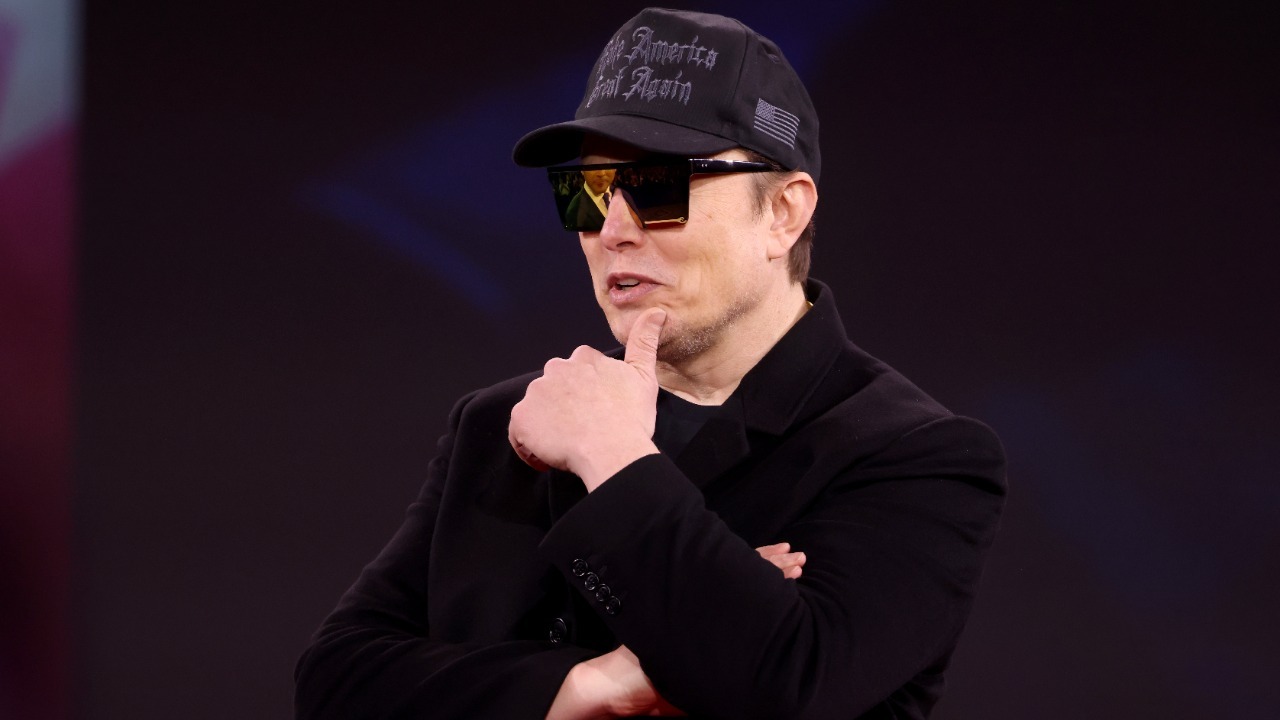
Elon Musk’s artificial intelligence company xAI is undergoing a major internal reset, and the fallout is already visible. Musk has changed the firm’s leadership and reorganized teams, moves he links to ambitious plans for space-based data centres and a push for faster execution. The same shakeup, he has now acknowledged, triggered surprise layoffs, raising questions about how far he is willing to go to align people with his technical vision.
The tension between Musk’s long-term projects and the immediate human cost is not new, but xAI’s restructuring makes it sharper. The company is trying to combine cutting-edge AI research with infrastructure that may extend beyond Earth’s surface, a bet that demands unusual speed and discipline. The way this reorganization unfolded suggests that, inside xAI, the pressure is falling most heavily on staff whose roles no longer fit Musk’s latest design. For many workers, the trade-off between big goals and day‑to‑day security is now impossible to ignore.
Inside xAI’s leadership overhaul
The leadership reset at xAI is more than a minor reshuffle. Musk has overhauled the company’s top ranks, replacing or reallocating senior figures as part of a shakeup meant to change how decisions are made and how quickly projects move. Reporting on the company’s internal structure links this directly to Musk’s desire to improve execution speed. The idea is that a smaller leadership group can approve designs, allocate computing power and shift priorities more quickly than a wider committee of senior voices. In practice, people who once had broad authority over research or product direction may now find their role narrowed or handed to new lieutenants.
Nor is this just about names on an org chart. External coverage connects xAI’s strategic direction to space-based data centres, suggesting that leadership roles are being redefined around that goal rather than around general AI product lines. Musk is effectively saying that the right leaders are those who can help him build and operate AI infrastructure that reaches into orbit. According to the Financial Times, this leadership shakeup, the focus on execution speed and the emphasis on orbital data facilities are part of a single plan, not separate efforts. That framing makes it easier to see who is likely to rise or fall inside the company as the strategy unfolds.
Reorganization and Musk’s layoff admission
The leadership overhaul has not been a paper exercise. Musk has said that xAI was reorganized and that this reorganization led to some layoffs, acknowledging that people lost their jobs as a direct result of the new structure. He made that statement on a Wednesday in February, telling a reporter that the company had been through a reorganization and that there had been job cuts, without spelling out which teams were affected or how many roles disappeared. The timing and wording suggest he was responding to questions about internal churn, rather than announcing a planned reduction in force in advance or offering a detailed timeline.
His admission matters because there are no official internal records or public filings that describe the scale of these layoffs. The clearest description comes from a short statement reported by Reuters, which notes that Musk said xAI was reorganized and that the reorganization led to some layoffs. The phrase “some layoffs” leaves wide room for interpretation, and there is no corroborating data on which roles were cut, how staff were chosen or what severance terms, if any, were offered. That vagueness is striking for a company that presents itself as a long‑term technical bet, because workers and potential recruits must infer job security and internal culture from a single brief comment rather than from clear policies.
Space-based data centres as strategic anchor
Behind the management churn sits a bold technical idea: Musk wants xAI to be closely tied to space-based data centres. Reporting on the company’s strategy describes how xAI’s direction is linked to these facilities and how Musk has set lofty ambitions for what they might do. In simple terms, the concept is to move part of the data storage and computing backbone for AI systems off the ground and into orbit. Satellite-based infrastructure could, in theory, offer different cost, security or latency profiles than Earth‑bound server farms. This is not yet a detailed engineering blueprint, but it is a clear signal that xAI does not plan to rely only on conventional data centre build‑outs.
The same reporting states that Musk has set high space data centre ambitions and connects these goals directly to the leadership overhaul and to the stress on execution speed. That suggests a company where the central question is not only how to train better models, but also how to design the physical infrastructure that will host them. By describing xAI’s strategic direction as centred on space-based data centres, external accounts make clear that this is not a side project. It is the backbone around which leadership roles, hiring decisions and project priorities are being reorganized, with orbital capacity treated as a core asset rather than a distant experiment.
Speed, opacity and internal trust
One of the most striking details in the reporting is the stated reason for the leadership shakeup: execution speed. Musk is described as pushing for faster decision‑making and implementation, and the overhaul is presented as a way to achieve that. In a company trying to build AI systems tied to space infrastructure, speed can mean beating rivals to key partnerships, securing scarce hardware or hitting tight launch windows. Yet when speed becomes the dominant value, it can collide with transparency and predictability for employees who want to understand how decisions will affect their roles.
The way the layoffs surfaced shows that tension. Instead of a clear internal roadmap followed by a formal announcement, the public first heard that the reorganization led to some layoffs through Musk’s brief comment to a reporter. There are no detailed public accounts from laid‑off staff and no official breakdown of which roles were removed. That opacity can erode trust, especially in a sector where senior engineers and researchers can choose among many employers. When a leadership shakeup is justified in terms of execution speed and the only public confirmation of job cuts is a short remark from Musk, staff may reasonably infer that stability ranks lower than agility in xAI’s priorities, and that similar surprises could happen again.
What the shakeup signals for xAI’s future
Even with limited data, several implications follow from the facts that Musk overhauled xAI’s leadership, tied strategy to space-based data centres and acknowledged that the reorganization led to some layoffs. First, xAI appears to be concentrating authority in a smaller group aligned closely with the space data centre vision. That kind of consolidation can make it easier to pursue a demanding goal that cuts across AI research, hardware procurement and space operations. It can also narrow the range of internal debate, since people who question the feasibility or timing of space-based data centres may find themselves with less influence or outside the company altogether, especially if future reorganizations follow the same pattern.
Second, the combination of lofty space data ambitions and surprise layoffs is likely to shape how competitors and investors read xAI’s prospects. If Musk follows through on the space-based data centre strategy and the leadership team he has installed can deliver, xAI could become a key player in AI infrastructure that spans Earth and orbit. If, instead, the reorganization and layoffs signal deeper instability, rivals may see an opportunity to recruit talent who leave xAI and to pursue similar ideas with different governance models. Given how little detail Musk has offered about the layoffs and how tightly he has framed the leadership changes around execution speed, the next phase of hiring and product announcements will be watched closely as a test of whether this shakeup has strengthened or weakened the company’s long‑term position.

Grant Mercer covers market dynamics, business trends, and the economic forces driving growth across industries. His analysis connects macro movements with real-world implications for investors, entrepreneurs, and professionals. Through his work at The Daily Overview, Grant helps readers understand how markets function and where opportunities may emerge.

