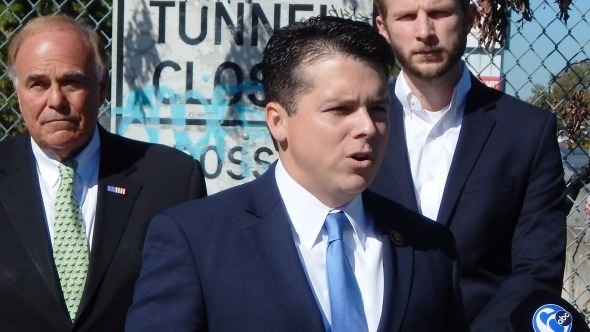
Personal bankruptcies are climbing again in the United States, and the latest numbers are not a blip. New data highlighted by Rep. Brendan Boyle shows filings rising to their highest levels in years under President Donald Trump, with an 11 percent jump in a single year that added roughly 55,000 more cases to the system. The spike cuts against the image of a booming Trump economy and instead points to a widening gap between headline growth and household reality.
The core story in Boyle’s findings is not just that more Americans are going broke, but who is being left behind and why. His argument is blunt: Trump-era economic policy is enriching a narrow slice of billionaire donors while pushing ordinary families closer to the edge. Taken together with new local cost-of-living data and his public warnings about “tariff taxes,” the picture that emerges is of an economy that looks strong from 30,000 feet yet feels like a slow-moving financial emergency on the ground.
The numbers behind Boyle’s warning
At the center of Boyle’s case is a simple, stark data point: personal bankruptcy filings increased by 11 percent nationwide over the last year, which translates into approximately 55,000 more Americans seeking court protection from their creditors. That kind of year-over-year jump is not the sort of marginal fluctuation economists chalk up to noise, it is the kind of move that signals a structural problem in how households are absorbing costs. When bankruptcies climb at that pace during a period the White House touts as an economic success, it suggests the benefits of growth are not reaching the people who need them most.
Boyle’s committee framed the trend as a direct indictment of Trump’s economic stewardship, arguing that the only people clearly winning in this environment are those already at the top. In the committee’s own language, the report finds that “the only people benefiting in Donald Trump’s economy are his billionaire donors,” while everyone else is “falling further behind,” a conclusion laid out in the official committee analysis. That framing matters because it shifts the conversation from abstract macro indicators to a moral question about who policy is designed to serve.
From national spike to local strain
National statistics can feel distant until they are broken down into the grocery aisle, the rent bill, or the medical statement that arrives after a child’s emergency room visit. Anticipating that gap, Boyle has tried to translate the bankruptcy surge into something voters can see in their own communities. Earlier this year he launched a new online hub that compiles local data on how rising costs are hitting families across major household expenses, including groceries, housing, health care, electricity, and other essentials. The site is designed to let residents plug in their own state or district and see how the cost-of-living squeeze lines up with the broader bankruptcy trend.
That local lens is crucial because it reveals that the 11 percent rise in filings is not just a story about individual misfortune, it is a map of where Trump-era pressures are biting hardest. In manufacturing-heavy regions, for example, higher input prices can ripple quickly into layoffs or reduced hours, while in high-rent metro areas, even modest increases in food and utility costs can push already stretched budgets into the red. Boyle’s office has framed this as part of a broader “cost of living crisis,” and his new local data tool is meant to show that the bankruptcy spike is not an abstract legal statistic but the end point of a long chain of rising bills.
Tariff “taxes” and the household budget
Boyle has zeroed in on one policy lever in particular as a driver of this financial stress: Trump’s tariffs. He has taken to calling them “tariff taxes,” a deliberate choice that reframes trade policy as a direct hit to family budgets rather than a distant geopolitical chess move. In a recent public statement, he argued that Donald Trump’s “reckless tariff taxes are driving up prices, hurting the economy, and leaving families to pay the price,” language that underscores his view that these levies function like a stealth sales tax on everything from imported electronics to basic household goods. When tariffs raise costs along the supply chain, retailers pass those increases on, and it is the shopper at the checkout line who ultimately absorbs them.
The political contrast Boyle draws is sharp. While Trump and his allies celebrate the tariffs as a show of toughness and a boon to favored industries, Boyle argues that the real effect is to widen the gap between those who can shrug off higher prices and those who cannot. He has linked the bankruptcy surge to this dynamic, suggesting that the combination of stagnant wages and tariff-driven price hikes is a key reason more families are turning to the courts for relief. His critique, laid out in detail through his comments reported by progressive outlets, is that Trump’s economic nationalism has been sold as a populist project but is, in practice, a regressive tax on consumption that hits lower and middle income households hardest.
Who is actually going broke?
Behind every bankruptcy filing is a story that does not fit neatly into a spreadsheet. While Boyle’s report focuses on aggregate numbers, his broader messaging hints at a demographic pattern: the people showing up in court are not just the chronically poor, but also working and middle class families who thought they were doing everything right. These are households with steady jobs, car payments on a 2019 Honda Civic, student loans from regional universities, and mortgages in exurban subdivisions, suddenly tipped into insolvency by a medical emergency, a lost shift, or a rent hike. The 55,000 additional filings in the last year represent tens of thousands of such stories, each one a reminder that a single shock can topple a carefully balanced budget.
In an exclusive video interview, Boyle has tried to put faces to those numbers, walking through examples of Americans pushed into bankruptcy under Trump and explaining how rising costs intersect with stagnant incomes. The segment, promoted as an exclusive breakdown, underscores his argument that the surge is not confined to any one region or profession. Instead, it is showing up in manufacturing towns hit by supply chain disruptions, in service sector hubs where wages lag rent, and in rural communities where hospital closures and long drives to work magnify every dollar of gas and medical spending. The common thread is that the margin for error has shrunk, and more families are discovering that a few months of bad luck can erase years of careful planning.
Turning data into a political weapon
Boyle is not just releasing numbers, he is weaponizing them in a broader fight over what Trump’s economic record really means. By tying the 11 percent rise in bankruptcies to a narrative about billionaire donors thriving while ordinary Americans sink, he is challenging one of the central assumptions of the current coverage: that strong stock markets and low headline unemployment automatically translate into broad-based prosperity. His argument is that those metrics are like a glossy real estate brochure that hides the mold in the basement, and that personal bankruptcy data is one of the clearest signs of what is happening behind the walls.
That framing is likely to shape the coming policy debate. If bankruptcies continue to climb at anything like the recent pace, it is reasonable to predict that Democrats will push harder for targeted relief on medical debt, tighter rules on predatory lending, and a rollback of tariffs that function as consumer taxes. Republicans, for their part, may argue that the spike reflects temporary adjustment pains or unrelated factors, and they are already signaling that they see Boyle’s report as partisan. What is clear from the committee’s own detailed findings is that the trend is real, not rhetorical, and that ignoring it would be a political choice as much as an economic one.
More From The Daily Overview
*This article was researched with the help of AI, with human editors creating the final content.

Grant Mercer covers market dynamics, business trends, and the economic forces driving growth across industries. His analysis connects macro movements with real-world implications for investors, entrepreneurs, and professionals. Through his work at The Daily Overview, Grant helps readers understand how markets function and where opportunities may emerge.

