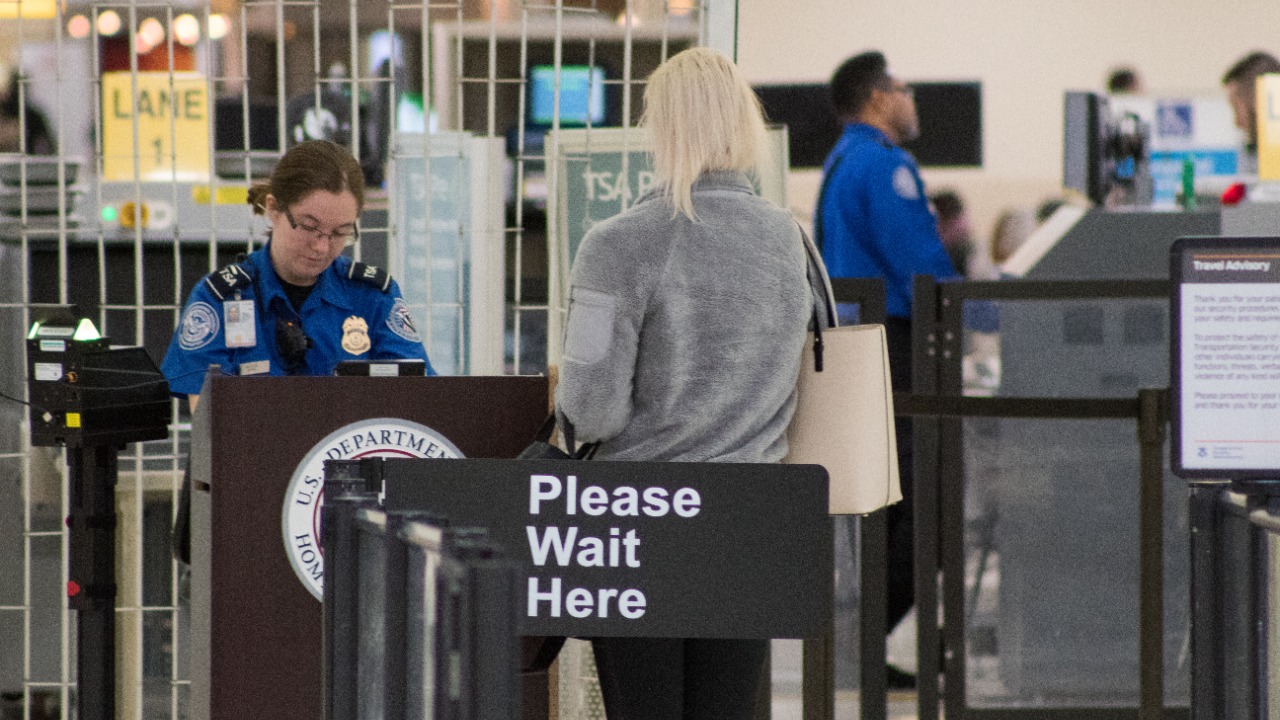
Air travelers are being warned that showing up at the checkpoint without a Real ID compliant license or another acceptable document could soon carry a very real price tag. The figure that keeps surfacing is $45, a single-use fee tied to private identity verification services that some airports are already promoting as a fallback for people caught short at security. The emerging system effectively turns identification into a paid upgrade, raising hard questions about who gets to fly smoothly and who pays extra just to stand in the same line.
At the center is a simple but consequential shift: instead of a clean divide between “you fly” and “you do not,” the Real ID rules are creating a third lane where money can substitute for paperwork. That might sound like a convenient safety valve for forgetful travelers, yet it also risks cementing a two-tier experience in which those with time and documents glide through, while those without are nudged toward a $45 fix or face missed flights and stressful delays.
How Real ID turned into a $45 problem
The Real ID Act was sold as a security upgrade, but in practice it has become a paperwork stress test for anyone who flies. Federal rules mean that at airport checkpoints, standard state licenses that are not Real ID compliant will no longer be enough on their own, and travelers who show up with the wrong wallet contents can be denied boarding or pushed into lengthy secondary checks. Reporting on the looming deadline makes clear that people who do not have a Real ID, and who also lack a passport or other backup, are being warned they could face exactly that kind of disruption.
Into that anxiety steps a very specific number: $45. Some airports and travel experts are already pointing to private services such as CLEAR, which offers a single-use option priced at $45 that can help travelers move through security more quickly even if they are scrambling with documentation. The fee is not a government charge and it does not replace the legal requirement for acceptable ID, but in practice it is being framed as a way to smooth over the chaos that Real ID confusion can create at the checkpoint.
What TSA actually says about IDs and “Confirm” checks
It is important to separate what the Transportation Security Administration formally requires from the paid workarounds that orbit around it. TSA’s own identification rules spell out a list of acceptable documents, including Real ID compliant licenses, passports and certain military or trusted traveler cards, and they also describe what happens if a traveler arrives with no ID at all. In that scenario, officers can use additional questioning and database checks to confirm identity, a process that is free but can be time consuming and uncertain.
The agency has also begun describing a more structured identity verification pathway, sometimes referred to in agency materials as a confirm identity process, that relies on biographic data and other checks rather than a physical card. Official language about this option appears in a TSA press release, and a follow up agency update describes when the program is expected to begin for air travelers who arrive without a Real ID or another acceptable document. The mechanics are still being phased in, but the key point is that TSA is formalizing a pathway for people who fail the Real ID test, even as it continues to maintain a separate, no-cost identity verification track for those willing to endure extra questioning.
Where the $45 actually goes
While the Real ID rules are federal, the $45 figure that travelers keep hearing about is tied to specific services and payment flows. For the government-run confirm identity option, TSA directs travelers to an online payment portal where the fee can be processed in advance or at the airport, and the form associated with that process is hosted on Pay.gov. That setup underscores that this is not a tip jar at the checkpoint but a formal transaction routed through the same federal payment infrastructure used for taxes and other official fees.
On the private side, companies that specialize in expedited screening have been quick to position themselves as a safety net for people who are anxious about Real ID. One major provider has rolled out a single-use option priced at $45, and coverage of that offering explains how a traveler can enroll on the spot, verify their identity through biometrics and then be escorted to the front of the security line. Analysis of this model in travel industry reporting, including a detailed look at TSA’s evolving relationship with such services in one explainer, suggests that the line between government screening and private identity verification is becoming more porous, with money acting as the lubricant.
Uneven burdens from California to small regional airports
The impact of this new landscape is not evenly distributed. In states where Real ID uptake has lagged, such as California, local reporting has documented long Department of Motor Vehicles waits, confusion over which documents are needed and a patchwork of outreach campaigns at major hubs like San Francisco International Airport and Oakland International Airport. One detailed guide for California residents spells out how people flying from SFO or OAK without a Real ID will either need a passport or face the prospect of paying a fee at the airport, and it notes that the process can be especially daunting for low income residents and those juggling multiple jobs who cannot easily carve out time for DMV appointments, as described in California-focused coverage.
Smaller airports are also bracing for the fallout, but with fewer resources and less redundancy in their operations. In North Carolina, for example, Asheville Regional Airport has used its social channels to warn that beginning on a specified date, travelers who do not present a Real ID or another acceptable document may need to use a paid identity verification option in order to proceed through security. The airport’s messaging on its Facebook page highlights that staff are preparing to explain the new rules at the ticket counters and checkpoints, but it also hints at a coming divide between those who can absorb a surprise $45 charge and those for whom that amount is a serious hit to the travel budget.
Who pays, who benefits and what happens next
The emerging Real ID enforcement regime is often framed as a neutral security upgrade, yet the pattern of fees and workarounds tells a more complicated story. Financial coverage of the new identity verification charges has emphasized that the $45 figure is not trivial for families or frequent travelers, especially when layered on top of rising fares and baggage fees. One analysis of the program’s rollout argues that the structure effectively turns air travel into a pay to play system, where those who cannot easily secure Real ID compliant documents, including some older adults and people with unstable housing, are more likely to end up paying at the checkpoint, a concern laid out in business reporting on the fee.
TSA, for its part, has tried to present the confirm identity pathway as a neutral option rather than a penalty. The agency’s own guidance on acceptable documents and backup procedures, available on its identification page, stresses that travelers can still be screened without any ID at all if they are willing to undergo additional questioning and verification. At the same time, TSA has created a dedicated portal describing its confirm identity program, including references to how the process works and how it interacts with existing screening lanes, which can be seen on the agency’s program overview. The coexistence of a free but uncertain path and a paid, more predictable one is what turns this from a simple security rule into a broader equity issue.
More From The Daily Overview
*This article was researched with the help of AI, with human editors creating the final content.

Cole Whitaker focuses on the fundamentals of money management, helping readers make smarter decisions around income, spending, saving, and long-term financial stability. His writing emphasizes clarity, discipline, and practical systems that work in real life. At The Daily Overview, Cole breaks down personal finance topics into straightforward guidance readers can apply immediately.
