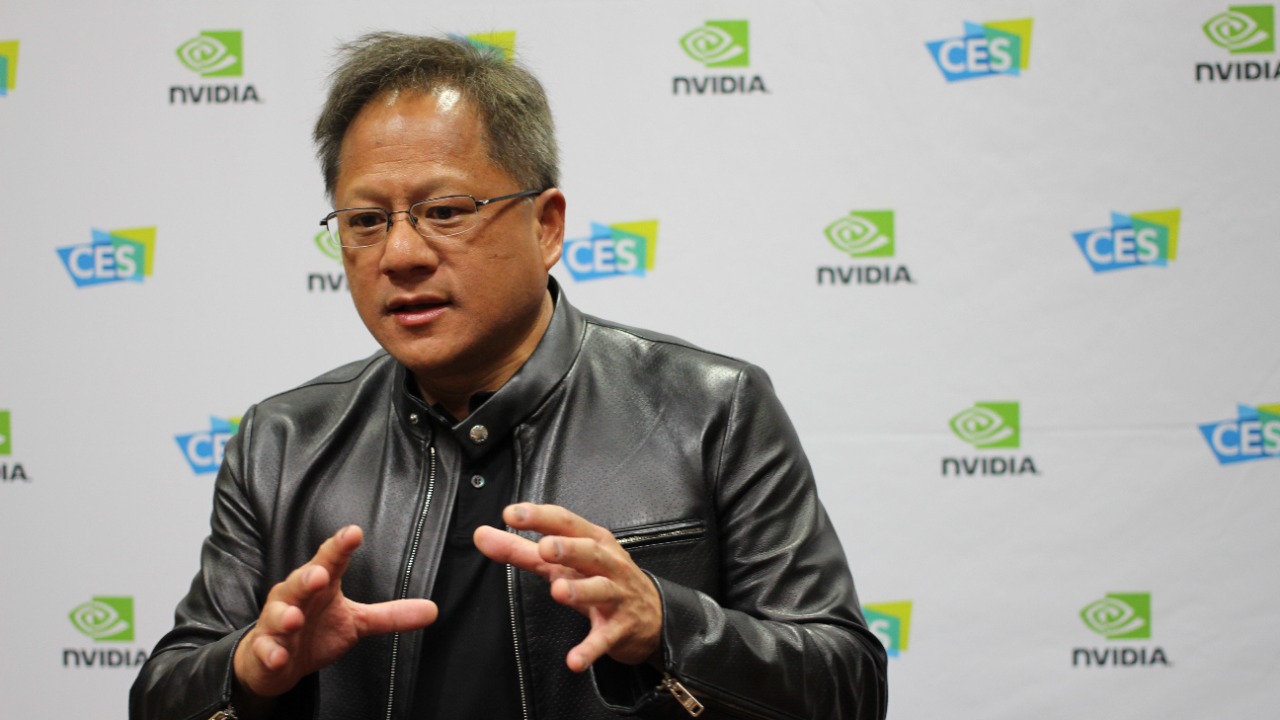
Nvidia’s latest earnings fireworks have collided with a wall of investor anxiety, leaving its chief executive acknowledging that the company is trapped in what he calls a no-win situation. As markets debate whether artificial intelligence is in bubble territory, he is trying to convince Wall Street that record demand for Nvidia’s chips reflects a structural shift in computing, not a speculative fever that will soon break.
I see a leader trying to walk a tightrope: admitting that sentiment has turned fickle while insisting the underlying story is stronger than ever. That tension, between market mood and long-term transformation, is now central to how investors, customers, and regulators interpret Nvidia’s role at the heart of the AI boom.
The “no-win” bind behind a blowout quarter
The most striking part of the recent disclosures is not that Nvidia delivered another blockbuster quarter, but that its chief executive framed the aftermath as a lose-lose proposition. In a leaked internal meeting, the Nvidia CEO said the company is in a “no-win situation” because if it posts a spectacular quarter, skeptics dismiss the results as peak-cycle exuberance, and if growth slows, the same voices will declare the AI party over. That candid assessment, reported on Nov 20, 2025, came even as he described how the firm is “basically holding the world’s data centers on our shoulders,” a vivid way of underscoring how central Nvidia’s accelerators have become to modern AI infrastructure, according to the leaked meeting.
From my vantage point, that “no-win” framing is as much about psychology as it is about numbers. Nvidia has become the de facto barometer for AI enthusiasm, so every earnings print is treated as a referendum on the entire sector. When the Nvidia CEO told employees that the market’s reaction says more about how investors price future demand than about the company’s actual performance, he was effectively arguing that sentiment has decoupled from fundamentals. The fact that this message surfaced right after a blowout quarter, rather than during a slump, underlines how wary he is of being cast as the face of an AI bubble that he insists does not exist.
Huang’s frustration with Wall Street’s reaction
The internal candor spilled into more public comments as well. In another account dated Nov 20, 2025, Huang said on a Thursday call that “the market did not appreciate our incredible quarter,” a pointed way of saying that the share price failed to reflect what he viewed as exceptional execution. He went further, explaining that if Nvidia delivered a great quarter, critics would say it was unsustainable, and if it delivered a softer one, they would claim demand had evaporated. That is the essence of the no-win scenario he described, and it shows how Huang believes Nvidia is being judged against an impossible standard set by its own past success, as reflected in his remarks about the quarter.
To me, this frustration reveals a deeper concern: Nvidia’s valuation has become so tightly bound to macro narratives about AI that even stellar operational performance cannot easily move the needle. Huang’s comments suggest he sees a disconnect between the company’s role supplying critical hardware to hyperscalers and enterprises, and the way traders toggle between euphoria and panic at the first hint of changing growth rates. By emphasizing that Nvidia, not the market, is the one actually shipping products and building systems, he is trying to re-anchor the conversation in tangible progress rather than stock chart volatility.
Dismissing AI bubble fears while arguing for a structural shift
At the same time, the Nvidia CEO has been explicit that he does not buy the idea that AI is in a speculative bubble. In an interview reported on Nov 22, 2025, he argued that what Nvidia sees on the ground is “something very different” from a passing mania, pointing to how AI workloads are forcing companies to rethink the entire stack of computing infrastructure. He described a world in which data centers, networking gear, and software are being redesigned around accelerated computing, and he framed Nvidia’s GPUs as the engines of that shift, a stance captured in his dismissal of bubble talk.
I read that argument as an attempt to reframe AI not as a product cycle, but as an infrastructure transition comparable to the rise of cloud computing or the shift from mainframes to PCs. By insisting that AI is transforming how data centers are built and how software is written, the Nvidia CEO is effectively saying that even if valuations swing wildly, the underlying demand for accelerated computing will persist. That is a crucial distinction for investors trying to separate hype from durable change: a bubble can inflate around a real technology, but if the technology is rewiring the foundations of computing, the long-term trajectory may still be upward even after any speculative excess is wrung out.
Why the “no-win” narrative matters beyond Nvidia
The way Huang describes Nvidia’s predicament has implications far beyond one company’s stock chart. When the chief supplier of AI accelerators says it is “basically holding the world’s data centers on our shoulders” while also claiming that markets are misreading its trajectory, he is highlighting a broader tension between how quickly AI infrastructure is scaling and how cautiously capital markets are now treating that growth. If Nvidia’s leadership is right that AI is a structural shift, then the current skepticism may say more about investor fatigue after a long run-up than about the health of the underlying buildout.
From my perspective, the no-win framing also serves as a warning to other companies riding the AI wave. If even Nvidia, with its dominant position and record-setting quarters, cannot escape accusations of froth, smaller players will find it even harder to convince investors that their gains are grounded in fundamentals. That dynamic could shape which firms can raise capital on favorable terms, which projects get funded, and how aggressively enterprises move ahead with AI deployments. In that sense, Huang’s comments are not just a complaint about Wall Street, but a signal that the narrative around AI is entering a more skeptical, and perhaps more discerning, phase.
Balancing short-term sentiment with long-term bets
Ultimately, I see Nvidia’s current moment as a case study in how market narratives can diverge from operational reality. On one side, there is a company that continues to report what its own chief executive calls an “incredible quarter,” with demand from cloud providers and enterprises that still appears robust. On the other, there is a market that reacts to each new data point through the lens of bubble or bust, leaving Huang to argue that no matter what numbers he delivers, critics will find a way to fit them into a preexisting story about AI excess or exhaustion.
For long-term investors and industry watchers, the key question is whether to take the Nvidia CEO at his word when he says AI is fundamentally reshaping computing infrastructure, or to side with those who see current spending as overextended. The answer will not come from a single quarter or a single comment in a leaked meeting, but from watching whether data centers, software stacks, and real-world applications continue to evolve in the direction he describes. If they do, then the current no-win narrative may eventually give way to something more straightforward: a mature, if volatile, market built on technologies that have moved from hype to habit.
More From TheDailyOverview
- Dave Ramsey warns to stop 401(k) contributions
- 11 night jobs you can do from home (not exciting but steady)
- Small U.S. cities ready to boom next
- 19 things boomers should never sell no matter what

Grant Mercer covers market dynamics, business trends, and the economic forces driving growth across industries. His analysis connects macro movements with real-world implications for investors, entrepreneurs, and professionals. Through his work at The Daily Overview, Grant helps readers understand how markets function and where opportunities may emerge.

