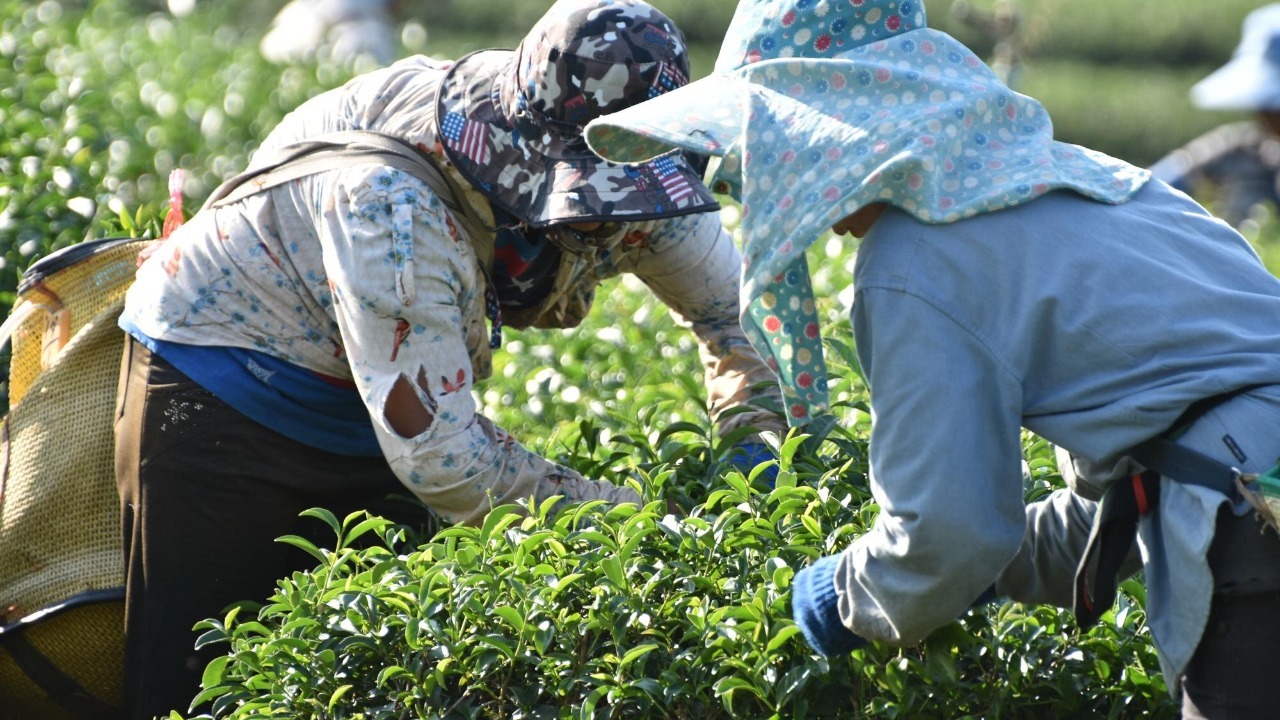
Japan’s finely milled green tea has become a global wellness symbol, and the United States is now its hungriest customer. As American demand accelerates, a roughly 3.5 billion dollar matcha industry built on meticulous farming and limited terroir is straining to keep pace, forcing growers, traders, and brands to rethink how much “authentic” matcha the world can realistically drink.
I see a market caught between premium tradition and mass-market appetite: U.S. consumers want more matcha in everything from lattes to protein bars, yet the supply chain that gives the powder its cachet was never designed for this scale. The tension between scarcity and growth is reshaping how matcha is grown, priced, and marketed, with ripple effects across Japan’s tea heartlands.
America’s matcha boom meets Japan’s finite fields
The United States has turned matcha from a niche tea-ceremony ingredient into a mainstream flavor, and that shift is now driving the fastest growth in Japan’s export market. U.S. buyers are snapping up matcha for coffee chains, ready-to-drink beverages, and supplements, pushing Japan’s green tea exports to record levels and making matcha a central pillar of a roughly 3.5 billion dollar industry. The surge is especially visible in higher grade powders used for lattes and specialty drinks, where American consumers have shown a willingness to pay more for perceived health benefits and “ceremonial” quality.
Yet the farmland that produces true Japanese matcha is limited, concentrated in prefectures such as Uji in Kyoto, Nishio in Aichi, and parts of Shizuoka and Kagoshima. Growers in these regions already operate near capacity, and expanding acreage is constrained by geography, aging farmers, and the years it takes to establish shaded tea fields that can yield high-grade tencha leaves. As exports to the United States climb, producers report tighter supplies and more intense competition for top lots, a pattern reflected in rising export values and the growing share of matcha within Japan’s overall tea shipments to North America, according to agricultural trade data.
Quality pressures and the risk of “matcha dilution”
As demand outstrips the most prized supply, I see a clear risk that the definition of matcha in the U.S. market will stretch to accommodate volume. Authentic Japanese matcha is made from shade-grown tencha that is stone-milled into a fine powder, a process that is slow and capital intensive. To serve a booming café and consumer packaged goods sector, some suppliers are turning to faster mechanical milling, lower grade leaf, or blends that mix Japanese powder with cheaper green tea from other countries. Industry analysts have flagged a widening gap between what American consumers think they are buying and what is actually in many “matcha” products on shelves, a concern echoed in recent trade reporting.
Japanese producers are responding by tightening origin labeling and promoting geographic indications that tie matcha to specific regions and cultivation standards. Some cooperatives in Kyoto and Aichi are pushing stricter definitions for ceremonial and premium grades, while exporters emphasize traceability and lab testing to reassure overseas buyers about purity and pesticide levels. At the same time, lower priced “culinary” matcha is being positioned more openly as a blended or industrial ingredient for ice cream, confectionery, and energy drinks, a segmentation strategy that shows up in export product codes and pricing tiers tracked by Japan’s customs statistics. The result is a two-speed market: a narrow, tightly controlled top tier and a sprawling mass segment where the word matcha is far more elastic.
Rising costs, climate stress, and the limits of expansion
Even if Japan wanted to flood the world with more matcha, the economics and climate realities of tea farming are pushing in the opposite direction. Producers face higher labor costs as rural populations age, increased energy expenses for shading and processing, and more volatile yields linked to warmer winters and erratic rainfall. Tea-growing regions have reported earlier budding and greater frost risk, which can damage the tender first flush leaves that are most prized for matcha, a pattern consistent with broader climate impacts documented in government climate assessments. These pressures raise production costs just as overseas buyers, including large U.S. chains, negotiate aggressively on price.
To cope, some Japanese tea companies are investing in mechanization, from automated shading systems to optical sorters that reduce manual labor in processing tencha. Others are experimenting with new cultivars that can better tolerate heat or deliver higher yields under shade, though any shift in plant variety risks altering the flavor profile that has made Japanese matcha distinctive. There is also a gradual move toward consolidating small family plots into larger, more efficient operations, a trend visible in farm structure statistics. Yet these adaptations take time and capital, and they cannot fully offset the structural limits of Japan’s tea-growing geography, which means supply growth is likely to remain incremental rather than explosive.
How U.S. brands are reshaping the matcha value chain
On the demand side, American brands are not just buying matcha, they are reshaping how it is produced and marketed. Large café chains and beverage companies now sign multi-year contracts with Japanese suppliers, locking in volumes and sometimes co-developing custom grades tailored to latte foam, ready-to-drink stability, or specific color targets. This kind of forward contracting, described in recent industry coverage, gives growers more predictable revenue but can also concentrate power in a handful of big buyers. Smaller specialty tea shops in the U.S. report tighter access to top ceremonial lots as exporters prioritize high-volume corporate clients.
At the same time, U.S. wellness and food brands are pushing matcha into new product categories, from collagen powders to canned “focus” drinks, which changes the economics of the ingredient. In many of these products, matcha is one component among many, which encourages formulators to seek cheaper grades or blends that still deliver a green hue and caffeine hit. Japanese exporters have responded by creating more granular quality tiers and offering pre-formulated blends that meet specific cost targets, a shift that shows up in the growing diversity of matcha SKUs in export data. The result is a value chain where a small slice of ultra-premium matcha commands high margins, while a much larger volume of industrial-grade powder competes on price in a crowded functional food market.
What scarcity means for the future of “Japanese” matcha
Looking ahead, I see scarcity as both a threat and a branding asset for Japan’s matcha industry. On one hand, limited supply and rising costs could price some consumers out of authentic Japanese powder, especially if cheaper alternatives from China or other producers fill the gap in mass-market products. Trade statistics already show robust growth in green tea exports from multiple Asian countries to the United States, suggesting that American shoppers are increasingly exposed to non-Japanese matcha-like products, even when packaging leans heavily on Japanese imagery, a pattern highlighted in recent reporting.
On the other hand, the very constraints that limit volume can reinforce the aura of Japanese matcha as a premium, place-specific product, closer to single-origin coffee or appellation-controlled wine than a generic green powder. If Japanese producers succeed in tightening standards, improving traceability, and communicating the labor and land behind each tin, they can justify higher prices and carve out a defensible niche even as global competition intensifies. For U.S. consumers and brands, that would mean a clearer split: truly Japanese matcha as a luxury ingredient with transparent provenance, and a broader universe of green tea powders that trade on the flavor and health halo without the same connection to Japan’s fields. The strain of today’s demand may ultimately force that distinction into the open.
More From TheDailyOverview
- Dave Ramsey warns to stop 401(k) contributions
- 11 night jobs you can do from home (not exciting but steady)
- Small U.S. cities ready to boom next
- 19 things boomers should never sell no matter what

Grant Mercer covers market dynamics, business trends, and the economic forces driving growth across industries. His analysis connects macro movements with real-world implications for investors, entrepreneurs, and professionals. Through his work at The Daily Overview, Grant helps readers understand how markets function and where opportunities may emerge.

