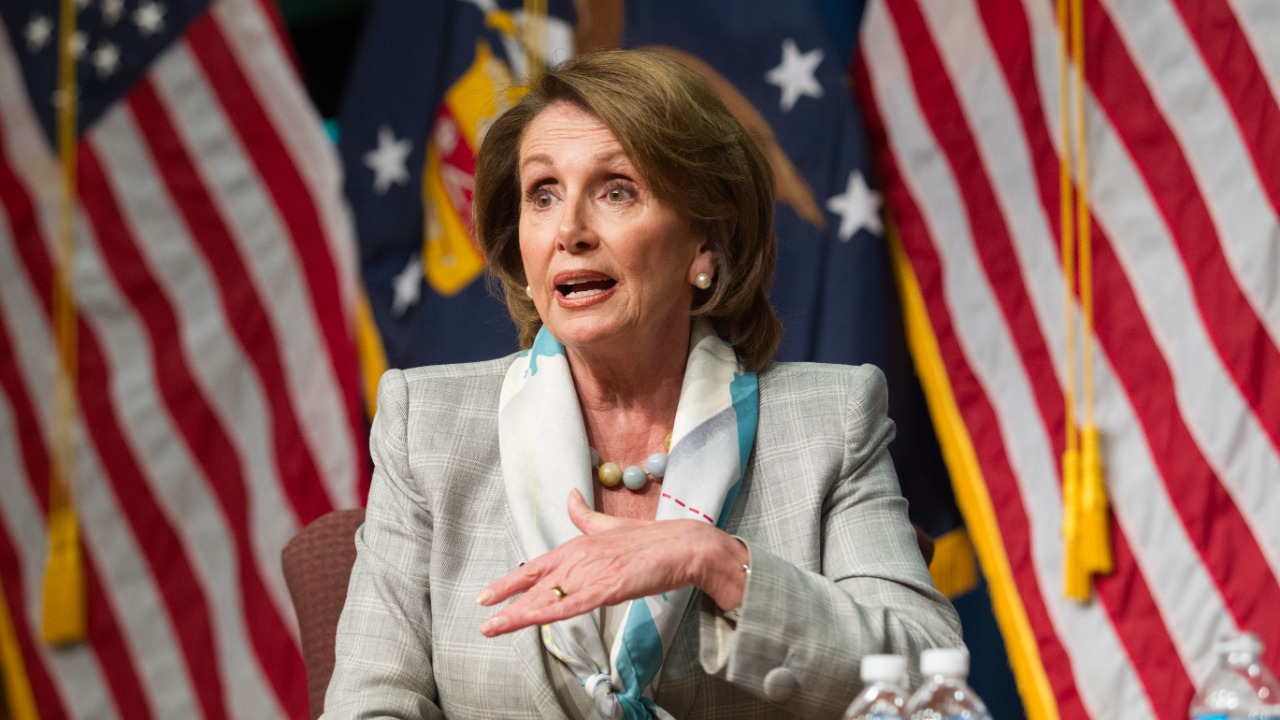
Nancy Pelosi’s increasingly tense exchanges with CNN over stock trading have crystallized a long‑simmering question in Washington: should members of Congress be allowed to buy and sell individual shares while they write the laws that move markets. The clash has unfolded against a backdrop of bipartisan bills, viral trading trackers, and seven‑figure bets that have turned the former House speaker into a symbol of the broader fight over insider trading rules on Capitol Hill.
I see the confrontation not as a one‑off media dust‑up, but as the latest flashpoint in a structural conflict between public trust and personal wealth. The arguments Pelosi is making on air, and the scrutiny CNN is applying in response, now sit at the center of a national debate over whether the current ethics regime can credibly police lawmakers’ access to market‑moving information.
The CNN confrontation that lit up the stock‑trading debate
The most recent friction between Pelosi and CNN captured how raw the stock‑trading issue has become for Congress. In an interview that aired in Aug, Nancy Pelosi was pressed on whether lawmakers should still be allowed to trade individual stocks while serving in office, and the questioning quickly turned to allegations that she and her husband had benefited from insider knowledge. When the anchor raised the idea that her trades might be driving public cynicism, Pelosi snapped back that such accusations were “ridiculous,” insisting that she followed all disclosure rules and that critics were distorting her record.
That Aug 19, 2025 exchange, described in detail in one account of how Nancy Pelosi clashed with CNN, showed her bristling at the suggestion that she had personally profited from privileged information while serving in Congress. A separate write‑up of the same Aug 19, 2025 interview notes that she also tried to pivot from the personal to the systemic, stressing that she “very much” supports efforts to halt trading by lawmakers, even as she rejected the premise that current members are abusing their positions, a stance reflected in coverage of Congress stock‑trading limits.
Pelosi’s on‑air temper flare with Jake Tapper
The tension with CNN did not start in that August sit‑down. Earlier in the summer, Former House Speaker Nancy Pelosi had already lost her patience on air when Jake Tapper pressed her on similar insider trading allegations. During that interview, Tapper walked through a series of high‑profile trades that had drawn public attention and asked whether she understood why voters might see a conflict of interest. According to one account, Nancy Pelosi, who now serves as a senior House Democratic leader, “blew up” at the line of questioning and shot back that she and her husband had complied with all legal requirements.
The description of that Jul 30, 2025 encounter, in which Nancy Pelosi blows up at Jake Tapper, underscores how personal the accusations have become for her. Tapper’s questions echoed the broader public narrative that her family’s portfolio has outperformed the market in ways that look suspicious to critics, while Pelosi’s sharp response reflected her view that the coverage has veered into character attack rather than policy debate. That emotional edge is part of why her clashes with CNN have resonated far beyond a single interview segment.
Why Pelosi’s trades became a political lightning rod
Pelosi’s anger on camera is rooted in a simple reality: her stock trades, and those of her husband, Paul Pelosi, have become a political Rorschach test. Over the past several years, ethics watchdogs and retail traders alike have zeroed in on her disclosures, arguing that a powerful lawmaker with access to sensitive briefings should not be making large, targeted bets on individual companies. Former House Speaker Nancy Pelosi, whose husband Paul Pelosi is described as a wealthy investor, has been singled out as one of the most prominent examples of this perceived conflict, especially after trades that appeared to anticipate regulatory or legislative developments.
Reporting on how Former House Speaker Nancy Pelosi would be affected by a stock‑trading ban notes that Paul Pelosi has executed complex options trades and large equity positions that sometimes coincided with congressional action. Those patterns have fueled a cottage industry of social media accounts and newsletters that track every disclosure she files, turning her into a meme for both critics who see corruption and traders who see opportunity. The result is that any new trade, no matter how routine it might look on paper, now lands in a political environment primed to assume the worst.
The NVIDIA bet and accusations of a “deceptive tactic”
One trade in particular crystallized the backlash. Around Christmas, Nancy Pelosi disclosed a seven‑figure bet on NVIDIA, a chipmaker at the center of the artificial intelligence boom, and critics immediately accused her of trying to bury the news during the holidays. The position, which involved a large options play, was exactly the kind of high‑stakes, high‑information trade that fuels suspicion that lawmakers or their spouses might be acting on insights gleaned from closed‑door briefings or regulatory conversations.
A detailed account of that Jan 1, 2024 disclosure describes how Nancy Pelosi disclosed a 7‑figure bet on NVIDIA over Christmas, prompting one critic to label the timing “a deceptive tactic.” The report notes that the trade was flagged by the trading news site Unusual Whales, which has built a following by surfacing lawmaker transactions that look unusually well‑timed. For opponents of congressional stock trading, the NVIDIA move became a shorthand example of why they argue that no amount of disclosure can fully neutralize the appearance of self‑dealing.
The rise of a Pelosi‑tracking investor cottage industry
As the controversies piled up, a parallel phenomenon emerged on Wall Street and social media: investors who openly copy Pelosi’s trades. Rather than treating her disclosures as evidence of corruption, these traders see them as a kind of unofficial research signal, betting that a household with deep political connections might have a better read on which sectors will benefit from federal policy. The practice has grown so widespread that it now shapes how some retail investors talk about congressional ethics, with “Pelosi tracker” portfolios marketed alongside meme stocks and thematic exchange‑traded funds.
One CNN‑linked post describes how There is a cottage industry of investors who monitor former House Speaker Nancy Pelosi’s disclosed trades, match her positions, and then promote those moves on social platforms. That same ecosystem is now grappling with her decision to retire, which threatens to cut off a high‑profile source of trading ideas. The very existence of this cottage industry underscores how intertwined political power and market speculation have become, and why televised confrontations over her portfolio land with such force.
Pelosi’s evolving stance on banning congressional stock trades
Pelosi’s defenders often point out that she has, at least in recent years, moved toward supporting tighter rules on lawmaker trading. Under intense public pressure, she shifted from an earlier defense of the status quo to backing bipartisan efforts to restrict or ban individual stock ownership by members of Congress. That evolution reflects both the political cost of being seen as out of touch on ethics and the growing sense within both parties that the current patchwork of disclosure rules is not enough to restore public trust.
Coverage of her retirement notes that Amid public pressure, Pelosi announced her supportCongress and stock trading. The tension between her rhetorical support for reform and her family’s ongoing activity in the markets is precisely what CNN’s anchors have been probing on air.
The PELOSI Act and bipartisan efforts to tighten the rules
While Pelosi has become the face of the controversy, the legislative response has come from both parties, often using her name as political shorthand. On the Republican side, Senator Josh Hawley has repeatedly introduced a bill known as the PELOSI Act, a pointed acronym that seeks to permanently bar members of Congress and their spouses from trading individual stocks. In Hawley’s telling, the solution is straightforward: if lawmakers want to serve, they should be willing to park their money in diversified vehicles like index funds or blind trusts.
When Hawley reintroduced the measure, he argued that “the solution is clear” and called for an immediate and permanent ban on all members of Congress trading stocks, a position laid out in his announcement of the PELOSI Act. In the House, Representative Mark Alford has pushed a similarly named proposal, arguing that “gross violations of the public trust” require Congress to finally bar members and their spouses from trading. His office framed the May 13, 2025 introduction of the measure as a necessary step to restore confidence, as detailed in his statement that Alford introduces the PELOSI Act to ban members of Congress and their spouses from buying and selling individual stocks.
The free‑market defense and arguments against a trading ban
Not everyone in Washington accepts the case for a sweeping ban, and Pelosi’s own rhetoric has sometimes echoed those reservations. Opponents argue that lawmakers should not be forced to give up participation in the stock market simply because they hold public office, especially if they comply with disclosure rules and avoid trading on nonpublic information. They frame the issue as a matter of basic economic freedom, warning that overly strict rules could deter qualified people from running for Congress or punish spouses who have independent careers in finance.
One report on how an insider trading technicality lets members of Congress profit millions captures this resistance in a single quote: “This is a free market and people – we are a free market economy. They should be able to participate in that,” a line that appears in a section labeled Arguments against stock trading ban. The same report notes that They, meaning lawmakers and their spouses, are already deeply embedded in the markets, and that any ban would have to grapple with complex questions about existing holdings, retirement accounts, and family businesses. Pelosi’s own insistence that she has followed the rules fits neatly into this free‑market defense, even as she now says she backs tighter limits going forward.
What the Pelosi–CNN clash reveals about trust in Congress
When I step back from the individual interviews and trades, what stands out is how much the Pelosi–CNN clashes have become a proxy for a deeper crisis of confidence in Congress. Viewers are not just watching a former speaker spar with Jake Tapper or a CNN anchor in Aug, they are watching a broader argument over whether the political class plays by the same rules as everyone else. Each time Pelosi bristles at a question about NVIDIA or Paul Pelosi’s options, and each time a host presses her on the optics, the subtext is the same: can voters trust lawmakers to regulate markets they personally invest in.
The fact that one of the most powerful Democrats of the past generation is now the namesake of multiple PELOSI Acts, the subject of a thriving trader cottage industry, and the focus of pointed CNN segments about insider trading shows how far the debate has shifted. The AOL account of how Nancy Pelosi clashed with CNN over insider trading captures that dynamic, describing how Don Lemon and other anchors have pressed her on whether lawmakers should be allowed to trade at all. As Pelosi retires and new reform bills work their way through Congress, the unresolved tension between personal wealth and public duty that her story embodies will continue to shape how Americans judge their representatives, and how aggressively journalists challenge them on air.
More From TheDailyOverview
- Dave Ramsey warns to stop 401(k) contributions
- 11 night jobs you can do from home (not exciting but steady)
- Small U.S. cities ready to boom next
- 19 things boomers should never sell no matter what

Julian Harrow specializes in taxation, IRS rules, and compliance strategy. His work helps readers navigate complex tax codes, deadlines, and reporting requirements while identifying opportunities for efficiency and risk reduction. At The Daily Overview, Julian breaks down tax-related topics with precision and clarity, making a traditionally dense subject easier to understand.

