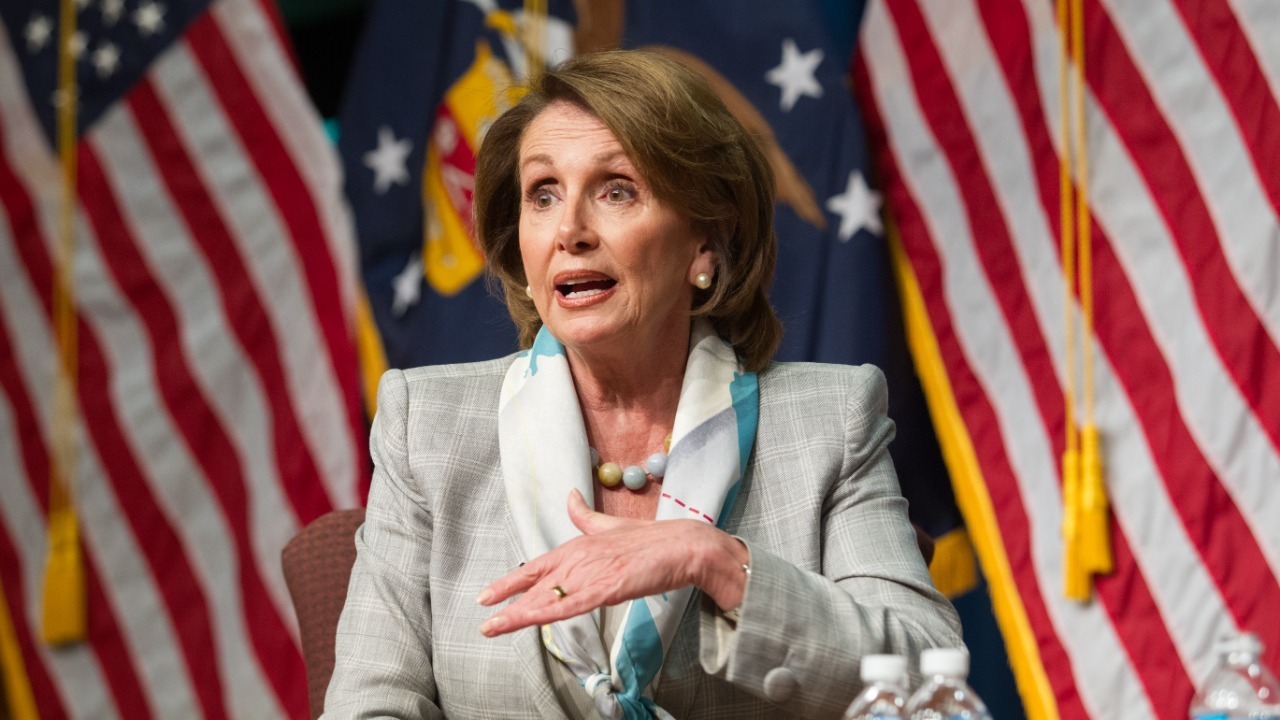
Nancy Pelosi’s latest financial disclosure shows a precisely timed exit from PayPal that spared her from a loss roughly equal to more than half of a member of Congress’s annual salary. The move, involving options tied to the digital payments giant and a subsequent stock sale, came just before PayPal shares plunged on weak earnings, wiping out about a quarter of the company’s market value. I see in that sequence a vivid example of how legally disclosed trades by powerful lawmakers can still raise sharp questions about access, timing, and public trust.
The numbers are stark. By cashing out when she did, Pelosi sidestepped a hit that one analysis pegs at about 55.4% of her congressional pay, a reminder that even a single well-timed trade can rival a year’s government salary. The episode has reignited scrutiny of how members of Congress interact with the markets they help regulate, and whether current disclosure rules are enough to reassure voters that the game is not tilted in favor of those on the inside.
How Pelosi’s PayPal bet was built
The core of the story starts with how Pelosi got exposure to PayPal in the first place. Her latest periodic transaction report, filed with the House clerk, shows that she Exercised call options tied to the stock. The filing describes a “New” transaction in which she Exercised 50 call options that had been purchased earlier, converting them into 5,000 shares at a strike price of $80. That structure meant she was effectively betting that PayPal’s share price would stay comfortably above that level, turning the options into a levered way to gain exposure to the company’s performance.
Those options were linked to PayPal’s role as a leading digital payments platform, a company that has become a fixture of online commerce through its PayPal service and related brands. By structuring the trade around options rather than simply buying shares on the open market, Pelosi amplified both potential gains and potential losses. When she later moved to sell, the size of the position meant that even a relatively modest percentage swing in the stock price translated into a six-figure difference in real money.
The eerily precise exit before PayPal’s plunge
The timing of Pelosi’s sale is what has drawn the most attention. Her disclosure shows that she unloaded a significant PayPal position shortly before the company’s stock was hit by a brutal selloff tied to disappointing earnings. One breakdown of the trade notes that the transaction was valued at hundreds of thousands of dollars and that the avoided loss, once the stock collapsed, worked out to roughly 55.4% of her annual congressional salary. In other words, by exiting when she did, she effectively preserved an amount of wealth comparable to more than half of what she earns in a year as a lawmaker.
Separate reporting on the same trade underscores just how close her move came to the subsequent drop. A detailed account of the Stock Sale describes how the options exercise and subsequent sale locked in gains before the market turned. The result was that Pelosi sidestepped a sharp markdown in PayPal’s value that would have eaten into the profit on her earlier bet, and instead crystallized her returns at what now looks like a near-peak level.
What happened to PayPal after Pelosi got out
Once Pelosi was out of the position, PayPal’s stock ran into serious trouble. After the company reported weaker than expected results, What Happened next was a steep slide in the share price as investors reassessed the growth outlook. One analysis notes that Shares of the digital payments platform PayPal, which trades on the NASDAQ under the ticker PYPL, fell 19.8% in a single afternoon session as the earnings miss triggered a wave of selling. That kind of one-day move is punishing for any shareholder, but it is especially consequential for someone who had just converted options into a concentrated equity stake.
The pain did not stop there. A separate breakdown of the rout notes that the NASDAQ listed PYPL shares continued to slide as investors digested the company’s guidance and competitive pressures. By the time the dust settled, the stock had dropped roughly 27% from the level where Pelosi had sold, a decline that turned her decision to exit into a textbook example of market timing. For ordinary investors who held through the earnings report, the same move translated into a substantial hit to their portfolios.
The $295K trade and the 27% slide
The scale of Pelosi’s PayPal exposure is captured in another data point that has circulated widely among market watchers. Social media posts highlighting her disclosure note that Two weeks before the earnings-driven selloff, filings showed that Nancy Pelosi sold $295K worth of PayPal shares. The same commentary points out that Since then, PYPL is down 27%, including a particularly sharp drop on the day the earnings news hit. That combination of a six-figure sale and a double-digit percentage decline is what makes the trade stand out from the routine churn of congressional financial reports.
More formal market data backs up that picture. A press release summarizing the episode notes that Nancy Pelosi Sold PayPal Stock Before a 27% Drop as Shares Sink on an Earnings Miss, describing how the stock fell about 27% after her sale. Another version of the same release, focused on the market impact, emphasizes that she sold Stock Before the Drop, and that Shares Sink on the back of the Earnings Miss, a sequence that has become a case study for those who track how lawmakers’ trades line up with major corporate news.
Inside the official paperwork
To understand how this all fits within the rules, it helps to look closely at the official paperwork. The House disclosure system requires members to file periodic transaction reports when they buy, sell, or otherwise acquire assets above certain thresholds, and Pelosi’s PayPal trades appear in that system as a New entry that spells out the mechanics of the options exercise. The document states that she Exercised 50 call options, converting them into 5,000 shares at a strike price of $80, and then moved to sell the resulting stock. That level of detail is designed to give the public a clear view of the size and structure of the trade, even if it arrives after the fact.
A separate link to the same filing, accessible through the House clerk’s portal, reinforces that the Exercised options were part of a broader pattern of active trading in large-cap technology and financial names. The form does not, and under current law is not required to, explain why Pelosi chose that moment to exercise and sell, or what information she relied on in making the decision. It simply records that the transaction occurred, leaving outside observers to connect the dots between the timing of the trade and the subsequent collapse in PayPal’s share price.
Why the timing looks so uncanny
From a purely financial perspective, Pelosi’s PayPal maneuver reads like something out of a trading manual. She built a leveraged position through options, converted it into shares, and then exited shortly before a major negative catalyst hit the stock. One analysis of the episode notes that While Pelosi avoided deeper losses on this particular trade, her broader history with PayPal has included both gains and setbacks, suggesting that not every move has been so perfectly timed. Still, the juxtaposition of her sale with the subsequent 27% drop is striking enough that it has fueled renewed calls for tighter rules on congressional stock trading.
Another breakdown of the same sequence emphasizes that the Feb trade spared her from losing an amount equal to 55.4% of her annual salary, a figure that resonates because it translates abstract percentage moves into something closer to a household budget. When a single options exercise and stock sale can make the difference between keeping or losing more than half a year’s pay, it is easy to see why voters might question whether lawmakers should be allowed to trade individual stocks at all, even when they follow the letter of the disclosure rules.
The broader debate over lawmakers trading stocks
Pelosi’s PayPal episode is not happening in a vacuum. For years, ethics advocates have argued that members of Congress should be barred from trading individual stocks in companies that could be affected by legislation, regulation, or oversight. The fact that a high profile lawmaker could sell a large block of PayPal shares just before an earnings-driven collapse, as highlighted in the Drop that followed, feeds the perception that elected officials enjoy informational or analytical advantages that ordinary investors do not. Even if no confidential data were involved, the optics are difficult to ignore.
At the same time, defenders of the current system point out that Pelosi’s trades were disclosed through the proper channels, that the PayPal earnings miss was widely telegraphed by analysts, and that market volatility is a fact of life for any investor. They note that the $295 thousand sale and the subsequent 27% decline could, in theory, be chalked up to skill, luck, or a mix of both. I see the real issue less in whether Pelosi broke any rules, which available disclosures suggest she did not, and more in whether the rules themselves are sufficient to maintain public confidence when a single trade can so neatly sidestep a loss equal to more than half a lawmaker’s salary.
More From The Daily Overview
*This article was researched with the help of AI, with human editors creating the final content.

Grant Mercer covers market dynamics, business trends, and the economic forces driving growth across industries. His analysis connects macro movements with real-world implications for investors, entrepreneurs, and professionals. Through his work at The Daily Overview, Grant helps readers understand how markets function and where opportunities may emerge.

