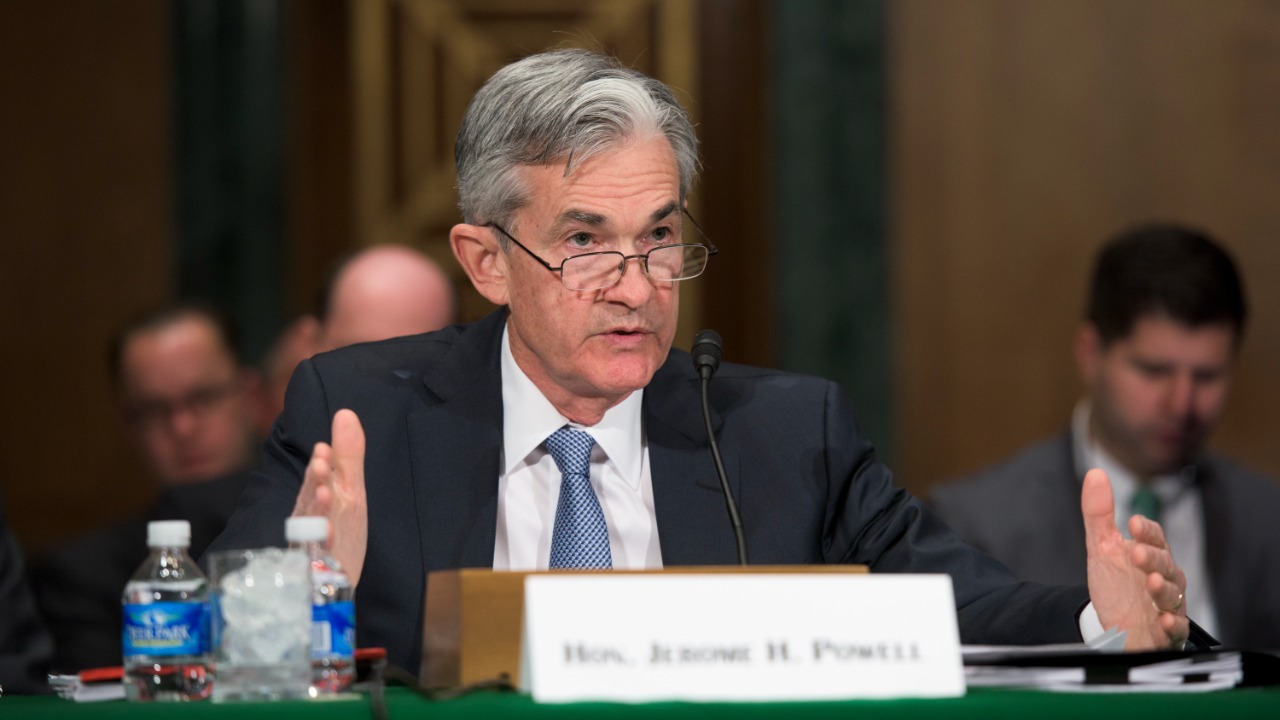
Jerome Powell is entering the final stretch of his term as chair of the Federal Reserve, and the one thing he will not say is whether he plans to stick around once that term ends. His refusal to answer the succession question has turned a routine leadership transition into a live piece of political and market theater, with President Donald Trump preparing to name a replacement and investors parsing every word from the Fed podium. The stakes are simple but enormous: how Powell exits could shape not just the next chair’s room for maneuver, but the credibility of the central bank itself.
The question Powell will not answer
When Jerome Powell is asked whether he will remain on the Federal Reserve Board after his chair term expires in May 2026, he now has a practiced move: he sidesteps. At a recent appearance, he was pressed directly on whether he would stay on as a governor once a new chair is in place, and he declined to commit, saying he would share his intentions only when he is ready. That deliberate nonanswer has become the headline, because it comes at a moment when markets, politicians and global central bankers all want clarity on who will be steering U.S. monetary policy in the next phase of the cycle.
The ambiguity is not accidental. Reporting on the episode notes that One area of speculation is whether Powell is using that silence as leverage with the administration, keeping his options open while President Donald Trump weighs successors. By refusing to say if he will occupy a powerful governor seat under the next chair, Powell preserves influence over how the transition is perceived and over the internal balance of the Board. For a central banker who has spent years insisting that communication is a policy tool, the choice not to communicate on this one question is itself a very pointed signal.
What the law actually allows him to do
Part of what makes Powell’s dodge so consequential is that he has more options than many casual observers realize. Legally, he does not have to leave the building when his chair term ends. His underlying appointment as a member of the Board of Governors runs longer, and reporting has underscored that Legally, he does not have to vacate his governor seat at all. That means he could, in theory, remain a voting policymaker even after handing the gavel to a successor, an arrangement that would be unusual but entirely within the statute.
Tradition, however, points in the other direction. Past chairs have typically left the Fed swiftly once their leadership term ended, clearing the way for a new figure to define the institution’s voice and internal culture. Brookings scholars have noted that by law the president nominates a Fed chair and two vice chairs for four year terms, and that They must be confirmed by the Senate, but governors themselves serve much longer staggered terms. Powell’s choice is therefore not about legal constraints, it is about norms, optics and how much continuity he believes the institution needs once he is no longer chair.
Powell’s own hints about his future
Although Powell now refuses to say whether he will stay on the Board, he has not always been so guarded about his plans. Earlier remarks in Dallas captured a different kind of certainty: asked under what circumstances he would remain a governor after his chairmanship, he replied that he “certainly” intended to stay at the Fed until his leadership term ends and that beyond that he had not decided and was not thinking about it. That answer, reported from an appearance in When he was asked during an appearance in Dallas, was meant to shut down speculation about an early exit, but it also made clear that he was drawing a line at May 2026.
More recently, Powell has narrowed his public focus even further. At his December press conference, he said, “I’m focused on my remaining time as chair,” adding that he had not made any decision about what comes after and still has years left on his term as governor. That formulation, captured in a video where Fed Chair Jerome Powell carefully avoided any commitment, suggests he wants maximum flexibility. He is promising to finish the job he has now, but he is not offering the White House, markets or his colleagues any advance notice about whether he will be part of the next chair’s team.
The Trump factor and a looming choice
Hovering over all of this is President Trump’s decision on who will replace Powell as chair. The White House has already signaled that the search has narrowed, with reporting that Trump has identified four contenders and expects to make a January decision. In that coverage, the president’s personal friction with Powell is impossible to miss, including an episode in which Trump threatened to sue Powell over a Fed building renovation, a dispute that underscored how far their relationship has deteriorated from the early days of Powell’s tenure. The same reporting notes that Trump threatens to sue Powell even as he weighs who should inherit the obligation running the central bank.
Trump’s team has been explicit that the president wants a chair who is more aligned with his preference for lower interest rates. Analysis of the coming reshuffle notes that significant changes are anticipated for the Federal Reserve in 2026, in part because Federal Reserve Chair Jerome Powell is nearing the end of his leadership term and Trump favors aggressive interest rate cuts. Against that backdrop, Powell’s silence about staying on the Board takes on a sharper edge. If he remains, he could be a moderating voice inside a Trump appointed majority. If he leaves, Trump gains a freer hand to reshape the institution from top to bottom.
Succession shortlists and the “Likely Successor” narrative
Names are already circulating for who might follow Powell, and those shortlists are shaping how markets interpret his noncommittal stance. One prominent line of reporting has framed the coming change in blunt terms, noting that Powell’s Fed Term Ends in May 2026 and that Kevin Hassett Emerges as Likely Successor. That framing, captured in a piece headlined “Powell’s Fed Term Ends in May 2026. Hassett Emerges as Likely Successor,” underscores how far the conversation has moved from whether Powell might be reappointed to which Trump ally will take his place. The same account stresses that Federal Reserve Chair Jerome Powell’s time as chair is ending and that Hassett Emerges as a Likely Successor in the Wire’s telling.
Other coverage has cast the race as a contest among several Kevins, with Trump’s Fed chair race continuing and Kevin Hassett and Kevin Warsh widely considered to be the leading candidates. In that narrative, President Trump will be announcing his pick for the next Federal Reserve chair in the coming days, replacing the current leader with someone more in tune with his economic agenda. The more that succession talk hardens around specific names, the more Powell’s refusal to say whether he will remain as a governor looks like a strategic hedge against a future in which he is a minority voice on a Trump remade Board.
How the Fed’s internal clock complicates the politics
Behind the personalities sits a rigid institutional calendar that shapes what is possible. By statute, the president nominates a Fed chair and two vice chairs for four year terms, and those positions must be confirmed by the Senate. At the same time, the seven members of the Board of Governors serve staggered 14 year terms, which means that at any given moment some seats are turning over while others are locked in. A recent analysis pointed out that three of the current members have terms that will expire over the next few years and that the vice chair for supervision’s term ends in June 2029, underscoring how More On the Fed’s leadership churn is already baked into the law.
For Powell, that structure means his personal decision about staying or going is nested inside a broader wave of turnover that President Trump can influence but not fully control. If Powell leaves the Board when his chair term ends, Trump gains an additional vacancy to fill, accelerating his ability to tilt policy toward the aggressive interest rate cuts he has signaled he wants. If Powell stays, he occupies one of those long dated seats and can continue to vote on rates and regulations even under a new chair. The legal architecture of the Fed, in other words, gives his silence real weight in the political bargaining over how quickly Trump can put his stamp on the central bank.
Powell’s stated exit conditions: a “really good” economy
While Powell will not say where he will sit after May 2026, he has been clear about the conditions under which he wants to hand over the job. He has said he wants the economy in strong shape and inflation under control before he departs, telling one interviewer that he really wants to turn this job over to whoever replaces him only when the economy is in “really good” condition. That comment came in the same breath as a reminder that Trump calls Fed Reserve Chair Jerome Powell a “stiff,” a jab that highlighted the political pressure he faces even as he tries to define his own exit on technocratic terms. The report quoted Powell saying, “I really want to turn this job over to whoever replaces me when the economy is in really good shape,” and that he was not prepared to put a specific date on that, adding, “I am not going to speculate on that to tell you,” a line captured in coverage that noted how Trump calls Fed Reserve Chair Jerome Powell a stiff even as Powell sets his own benchmark.
Powell has repeated that theme in other venues, emphasizing that he is focused on economic stability before any exit. In a social media clip, Federal Reserve Chair Jerome Powell highlights a key priority, saying he wants to see inflation sustainably back toward target and growth on a steady path before stepping aside. The video, tagged with phrases like POWELL EYES ECONOMIC STABILITY BEFORE EXIT, shows him stressing that the timing of his departure will be guided by macroeconomic outcomes rather than political calendars. That message, shared in a reel where POWELL EYES ECONOMIC STABILITY BEFORE leaving, is meant to reassure markets that he will not walk away in the middle of a fragile recovery, even if he will not say whether he will remain as a governor under a new chair.
Trump’s “Too Late” critique and the pressure on Powell’s legacy
Trump’s impatience with Powell is not just about who comes next, it is also about how history will judge the current chair’s timing. The president has repeatedly accused Powell of moving too slowly on rate cuts, branding him with a “Too Late” label even as some analysts argue that the Fed has been appropriately cautious. One detailed account noted that Powell, identified explicitly as Jerome Powell, may have a hard time avoiding Trump, identified as President Donald Trump, and his “Too Late” tag even if the Fed chief believes he is doing the right thing. That piece described how Powell ( Jerome Powell ) may have to navigate Trump, identified as President Donald Trump, and the “Too Late” critique even as he tries to calibrate policy in Washington, D.C.
That tension feeds directly into the current uncertainty about Powell’s future. If he leaves the Fed entirely when his chair term ends, Trump will almost certainly claim vindication, arguing that his pressure forced out a reluctant dove. If Powell stays on as a governor, he risks becoming a lightning rod inside the institution, a former chair second guessing his successor while the president continues to attack him from the outside. Either way, the “Too Late” narrative is now part of his legacy, and his refusal to say whether he will remain on the Board keeps that debate alive. For a central banker who has spent years trying to depoliticize monetary policy, it is a strikingly political silence.
Why Powell’s silence matters for markets and the Fed’s future
For investors, the question of whether Powell stays on the Board is not just inside baseball. It goes directly to how predictable the Fed will be in the next downturn and how much continuity there will be between the current regime and the next. If Powell remains a governor, markets can assume that at least one influential voice on the Federal Open Market Committee will continue to prioritize the same balance between inflation control and employment that has defined his tenure. If he departs entirely, the center of gravity could shift quickly toward Trump appointed officials who favor faster and deeper rate cuts, a possibility highlighted in analyses that describe how Key Takeaways from the coming reshuffle include a president who favors aggressive interest rate cuts.
Inside the institution, Powell’s decision will also shape morale and the internal balance of expertise. Career staff and fellow governors know that his term as chair is ending in May 2026, but they do not yet know whether they will still be working with him as a colleague after that date. The uncertainty complicates succession planning, both for the chair and for key committee assignments that depend on seniority and experience. By dodging the big question about staying, Powell is buying himself time and perhaps some leverage with President Trump. He is also, intentionally or not, ensuring that the final chapter of his tenure will be written in real time, with markets, politicians and Fed insiders all waiting to see not just how he finishes his term, but whether he chooses to remain in the building once someone else is sitting in the chair’s seat.
More From TheDailyOverview

Grant Mercer covers market dynamics, business trends, and the economic forces driving growth across industries. His analysis connects macro movements with real-world implications for investors, entrepreneurs, and professionals. Through his work at The Daily Overview, Grant helps readers understand how markets function and where opportunities may emerge.

