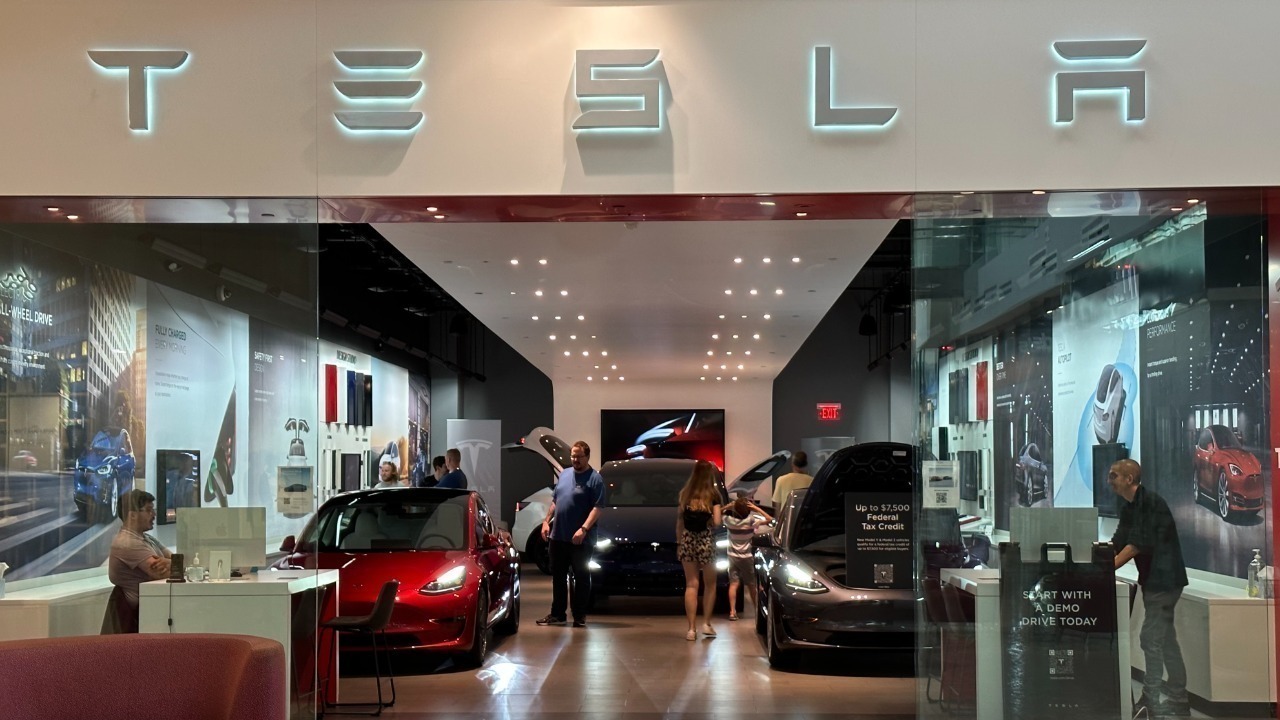
Tesla’s latest delivery report confirms what its share price has been hinting at for months: the company’s era of effortless growth in electric vehicles is over, at least for now. Fourth quarter deliveries fell 16 percent to 418,227 vehicles, a sharp reversal after a record summer and a clear sign that demand is cooling in key markets. The setback caps a year in which Tesla’s global volumes shrank and its status as the world’s dominant EV maker came under direct challenge.
Yet the same update also shows a company in transition rather than in free fall. While the core car business stumbled, Tesla’s energy division posted record storage deployments, and management is leaning harder on that side of the portfolio to offset weaker EV momentum. The question for investors and regulators alike is whether that shift can happen fast enough to sustain Tesla’s valuation and its influence over the broader clean‑tech economy.
Q4 by the numbers: a 16 percent slide and 418,227 deliveries
The headline figure is stark: Tesla delivered 418,227 vehicles in the fourth quarter, a drop of 16 percent from the prior year’s period and well below the trajectory that once made the company synonymous with hypergrowth. That total, confirmed in both the company’s own update and independent tallies, marks one of the steepest quarterly declines in Tesla’s history and contrasts sharply with the record output it reported just one quarter earlier. Analysts had expected a softer landing, so the scale of the shortfall has intensified scrutiny of how quickly demand for Tesla’s existing lineup is fading compared with newer rivals, especially in China and Europe, where price cuts have become routine.
Officially, Tesla framed the quarter as a reset after earlier production surges, but the delivery count still undershot many forecasts that clustered around 440,000 vehicles. The company’s investor relations site details the Tesla Fourth Quarter Production, Deliveries figures, while multiple market summaries highlight that the 418,227 tally represents a 15.6 percent year‑on‑year decline. One detailed breakdown notes that Tesla reported delivering 418,227 vehicles, down 15.6 percent compared with the same three‑month stretch a year earlier, underscoring how abrupt the reversal has been after years of near‑continuous expansion.
From record summer to winter chill in demand
The contrast with the preceding quarter is particularly telling. Earlier in the year, Tesla celebrated a record third quarter, with factories in Austin, Shanghai, Berlin and Fremont running at high utilization and management touting operational efficiencies. That momentum set expectations for a strong finish to the year, which is why the fourth quarter drop has been described in some coverage as a “plummet” rather than a routine fluctuation. One analysis of Tesla Deliveries Plummet, What You Need, Know stresses that the magnitude of the decline is unusual for a company that had just posted record volumes, and that Tesla delivered significantly fewer vehicles in Q4 than it produced in Q3, a sign that inventory is building.
In my view, that swing from record to retrenchment reflects a mix of macroeconomic headwinds and Tesla‑specific challenges. Higher interest rates have made auto loans more expensive, while the expiration of key incentives in the United States and Europe has removed some of the urgency for buyers sitting on the fence. At the same time, Tesla’s lineup is aging, with the Model 3 and Model Y facing intense competition from fresh models in China and from legacy automakers’ expanding EV portfolios. The company’s own investor communications, including the Tesla Fourth Quarter release, emphasize production achievements, but the delivery gap shows that building cars is no longer the hard part; finding buyers at acceptable margins is.
Full‑year 2025: the second consecutive annual decline
Zooming out to the full year, the picture is no less sobering. For 2025, Tesla delivered 1.64 m vehicles, an 8.6% decline from the 1.79 m it shipped in 2024. That drop, highlighted in a detailed market recap of 1.64 m, 8.6%, 1.79 m, confirms that 2025 was not a one‑off blip but the second straight year of shrinking volumes. For a company that once promised sustained growth of 50 percent a year, two consecutive annual declines are a clear break from its earlier trajectory and a reminder that even category creators eventually hit saturation.
Other reporting reinforces the same trend, noting that Meanwhile, Tesla said it delivered 418,227 vehicles in the fourth quarter and 1.64 m for the year, compared with 1.79 m in 2024, as lower EV demand weighed on results. Another long‑form analysis points out that Tesla sales fell by 9 percent in 2025, its second yearly decline, and ties that performance to a mix of product quality controversies, a “busted battery” strategy and the reputational drag of a “toxic owner.” I see those factors as compounding a more basic reality: the easy growth from early adopters is over, and Tesla is now fighting for share in a mainstream market where brand perception and after‑sales experience matter as much as raw technology.
Energy storage shines with a 14.2 GWh record
Amid the gloom in vehicles, Tesla’s energy business is quietly emerging as a bright spot. The company reported deploying 14.2 GWh of energy storage products in the fourth quarter, a quarterly record that underscores how quickly demand for grid‑scale batteries and commercial storage is ramping up. In its own production and delivery summary, Credit Tesla with highlighting that 14.2 GWh figure as a milestone, even as it acknowledged weaker EV volumes. That performance suggests Tesla’s long‑promised diversification beyond cars is finally materializing in the numbers.
Independent market commentary goes further, arguing that the energy division could be the company’s “saving grace” if EV growth remains sluggish. One detailed breakdown notes that EV giant Tesla deployed 14.2 G of storage in the quarter, even as it delivered 1.6 million vehicles for the year and logged a second consecutive year of delivery decline. Another summary of the quarter notes that Tesla Deliveries Slide, Energy Storage Hits Records, Tesla Inc reported a 16 percent drop in quarterly deliveries while energy storage hit new highs, and that the company plans to break out more detail on this segment in its upcoming Q4 earnings report. I read that as a signal that Tesla wants investors to focus less on unit car sales and more on the recurring revenue potential of large‑scale energy projects.
Tax credits, incentives and the $7,500 question
Policy shifts have also played a role in Tesla’s cooling demand, particularly in the United States. The expiration of a key federal incentive removed a powerful nudge for buyers who had been weighing whether to go electric. One widely cited report notes that, At the same time, the expiration last fall of the $7,500 EV tax credit likely hurt demand as it removed an incentive that had helped offset higher upfront prices. For a brand that has long relied on a mix of technological cachet and financial sweeteners, the loss of that $7,500 cushion made Tesla’s vehicles look less compelling against cheaper gasoline cars and aggressively priced Chinese EVs.
In my assessment, the impact of that policy change goes beyond simple arithmetic on monthly payments. The end of the credit also signaled to some consumers that the era of generous subsidies for early adopters is winding down, which may have encouraged fence‑sitters to delay purchases in the hope of better deals or new models. At the same time, Tesla’s own pricing strategy, with frequent cuts and adjustments, has trained buyers to expect volatility, further encouraging them to wait. The combination of a vanished $7,500 incentive and a perception that prices might fall again has created a more cautious consumer, which shows up directly in the 16 percent quarterly delivery slide.
Losing the EV crown and the rise of BYD
Perhaps the most symbolic blow in this latest report is Tesla’s loss of its long‑held title as the world’s biggest EV maker. A detailed market recap notes that Tesla, Deliveries Slide, Elon Musk, Led Company Loses Title As World, Biggest EV Maker In 2025 to BYD, reflecting how quickly Chinese manufacturers have scaled up both pure EVs and plug‑in hybrids. BYD’s strength in its home market, combined with aggressive expansion into Europe, Latin America and Southeast Asia, has allowed it to outpace Tesla in unit terms even if Tesla still leads on margins and software revenue per vehicle.
From my perspective, that shift matters less for bragging rights and more for what it says about the balance of power in the global auto industry. Tesla’s early lead gave it enormous influence over charging standards, battery supply chains and consumer expectations, but the rise of BYD and other Chinese players means those decisions are now more contested. The fact that a single year of weaker deliveries could cost Tesla its “largest EV maker” label underscores how narrow its volume lead had become. It also raises uncomfortable questions about whether Tesla’s current lineup and pricing strategy are enough to fend off competitors that are willing to accept lower margins in exchange for rapid market share gains.
How analysts are reading the miss
Market reaction to the Q4 numbers has been swift, with Tesla’s stock sliding as investors digested the scale of the delivery miss. One detailed breakdown notes that Tesla (TSLA) delivered 418,227 electric vehicles in the quarter, compared with Wall Street expectations for Q4 vehicle deliveries totaling 440,260, and that the shortfall weighed on the share price. Another investor‑focused summary, titled Tesla Reports, Delivery Numbers, Narrowly Misses, Deliveries, Energy Hits Record, emphasizes that while the company narrowly missed on deliveries, the energy segment’s record performance helped soften the blow in some models.
Some analysts are urging investors to look past the headline decline and focus on underlying profitability and the mix shift toward higher‑margin software and energy products. A nuanced take argues that Tesla Q4 delivery numbers are better than they initially look, noting that the company has been deliberately prioritizing margin over volume in certain markets and that some production was pulled forward into earlier quarters. I think there is some truth to that, especially given Tesla’s history of end‑of‑quarter delivery pushes, but it does not fully explain a 16 percent year‑on‑year drop. The more convincing interpretation is that Tesla is now navigating a classic transition from hypergrowth to maturation, where investors must recalibrate their expectations for both volume and valuation multiples.
What Tesla’s own report emphasizes
Tesla’s official communications around the quarter strike a noticeably different tone from the more alarmed market commentary. In its investor relations update, the company highlights its global production footprint, ongoing cost reductions and the record performance of its energy division, while presenting the delivery shortfall as a function of timing and macro conditions rather than a structural demand problem. The formal release on Tesla homepageInvestor Relations groups “Production, Deliveries & Deployments” together, implicitly inviting investors to weigh the strength of energy deployments alongside weaker vehicle numbers.
Another detailed summary of the company’s own figures notes that Tesla (NASDAQ:TSLA) has reported its Q4 2025 production and deliveries, with 418,227 vehicles handed over to customers and energy storage deployments hitting a quarterly record at 14.2 GWh. That framing underscores how Tesla wants the market to see it: not just as a carmaker, but as a diversified clean‑energy company listed on the NASDAQ under the TSLA ticker. In my reading, the emphasis on “deployments” alongside “deliveries” is deliberate, a way of signaling that the company’s future growth story may rely as much on megawatt‑hours as on Model Ys.
What the Q4 slump means for Tesla’s next chapter
Put together, the 16 percent quarterly slide, the 1.64 m full‑year deliveries and the loss of the global EV crown paint a picture of a company at an inflection point. Tesla is still profitable, still technologically ahead in many areas and still capable of setting records in energy storage, as the Tesla Inc energy storage record underscores. But it is no longer the unchallenged growth engine it once was, and its valuation now rests on the market’s belief that it can successfully pivot from volume‑driven expansion to a more balanced mix of software, services and infrastructure.
For that pivot to work, Tesla will need to address the issues that contributed to its second straight annual sales decline, from product quality concerns highlighted in the Deadly doors and “busted battery” critiques to the reputational drag associated with its high‑profile chief executive. It will also have to navigate a policy environment where incentives like the $7,500 tax credit can vanish overnight, and a competitive landscape where rivals like BYD are willing to trade margin for market share. The Q4 numbers do not answer whether Tesla can pull off that transition, but they make one thing clear: the company’s next chapter will be defined less by how many cars it ships in a single quarter and more by how convincingly it can reinvent itself as a broader clean‑energy platform.
More From TheDailyOverview

Elias Broderick specializes in residential and commercial real estate, with a focus on market cycles, property fundamentals, and investment strategy. His writing translates complex housing and development trends into clear insights for both new and experienced investors. At The Daily Overview, Elias explores how real estate fits into long-term wealth planning.

