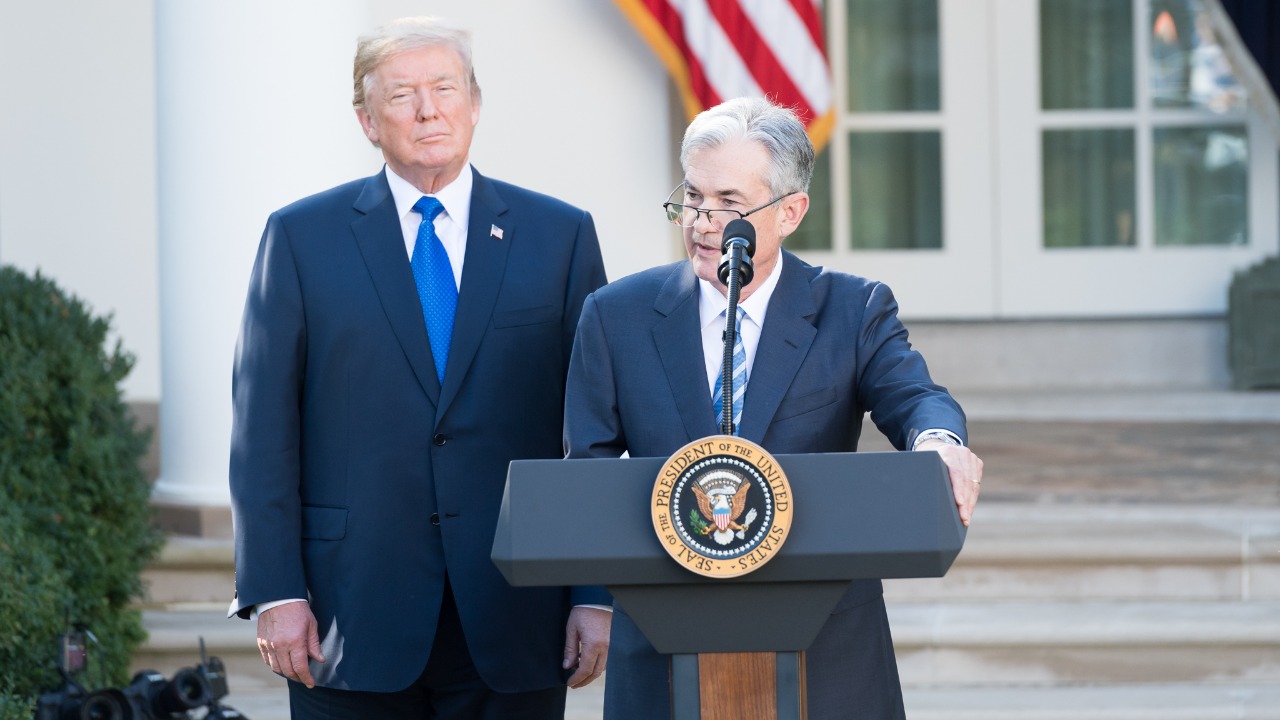
Federal Reserve Chair Jerome Powell has confirmed that he is the target of a criminal investigation by President Don Trump’s Justice Department, a stunning escalation in an already fraught relationship between the White House and the central bank. Powell has framed the probe as an attack on the Fed’s independence and insisted he will not bow to pressure from Trump to change interest rate policy or abandon a controversial building renovation program. The clash now pits the country’s most powerful monetary official against the president in a confrontation that reaches into both criminal law and economic governance.
The criminal probe that Powell says targets him
Powell has said publicly that the Justice Department has launched a criminal investigation into his conduct as head of the United States Federal Reserve, and that he personally received notice of the probe. In a video statement released on a Sunday, Fed Chair Jerome Powell described being informed that federal prosecutors were examining his role in the central bank’s decisions, including its resistance to political pressure to cut rates more aggressively, and he made clear that he views the inquiry as an effort to intimidate him. He emphasized that he would continue to carry out the Fed’s dual mandate on inflation and employment even as investigators scrutinize his actions, and he underscored that he would not alter policy to satisfy the White House.
According to Powell, the criminal investigation is being driven by President Don Trump’s administration and is focused on whether the Fed’s leadership misled the government or mishandled public funds. Reporting on the probe has described it as a direct challenge to the Fed’s traditional insulation from day to day politics, with officials around Trump portraying Powell as an obstacle to faster growth and lower borrowing costs. In his statement, Powell said he would cooperate with lawful requests but would not resign or change course on interest rates simply because the president is displeased, a stance that sets up a rare confrontation between the Justice Department and the central bank’s chair.
Subpoenas, renovations and the fight over Fed buildings
Powell has also revealed that the Justice Department has served subpoenas on the Fed related to a major renovation of its headquarters and other facilities, turning a long running political dispute over construction costs into a criminal matter. He said investigators demanded documents and communications about the renovation project, which critics inside the administration have portrayed as extravagant and mismanaged. Powell has defended the work as necessary to modernize aging infrastructure and protect critical financial systems, and he has called characterizations of the project “misleading and inaccurate,” arguing that the spending was approved through standard oversight channels before the subpoenas arrived from the Justice Department.
The building fight has been a personal flashpoint for Trump, who has repeatedly attacked the renovation as an example of what he calls “gross incompetence” at the Fed. In public remarks, Trump has complained that “these aren’t outstanding buildings” and that “these are small buildings,” insisting that the central bank is wasting money on construction when it should be focused on cutting rates and boosting growth. He has floated the idea of bringing a “gross incompetence” lawsuit against Fed Chair Jerome Powell over the renovations and has said “I would fire him” if he believed there was a way to remove Powell before the end of his term, which he has noted ends in May. Those comments have now been followed by subpoenas that pull the renovation dispute into the center of the criminal investigation.
From criminal referral to full scale investigation
The new probe did not emerge in a vacuum. Powell has already faced a criminal referral tied to the Fed’s handling of a roughly $2.5 billion construction program, a referral that questioned whether he misled lawmakers or regulators about the scope and cost of the work. According to Fox News, trade outlet Mortgage Professional reported that Powell has denied all allegations of perjury and insisted that the renovation decisions were consistent with the Fed’s responsibility to safeguard the financial system. That earlier referral laid the groundwork for a more expansive inquiry, giving critics inside the administration a formal vehicle to question his testimony and management.
As the referral moved through the system, the Trump administration intensified its scrutiny of the Fed, culminating in what officials have described as a full criminal investigation of Fed Chairman Jerome Powell. The White House has framed the move as a necessary response to potential misconduct, while critics see it as an attempt to punish a central banker who refused to deliver the rapid rate cuts Trump demanded. The investigation now appears to encompass both the renovation program and broader questions about whether Powell and his colleagues misrepresented economic data or internal deliberations when they resisted calls for looser policy, a scope that raises the stakes for the institution’s credibility.
Powell’s defiance and the pressure campaign from Trump
In his public comments, Powell has been explicit that he believes the criminal probe is linked to his refusal to bend to Trump’s demands on interest rates. He has said that the president repeatedly pressed him to lower borrowing costs more aggressively, and that he declined because he believed such moves would undermine the Fed’s inflation fighting strategy and long term credibility. In his Sunday video statement, Powell described how he and other Fed officials had come under sustained political pressure to change course, but he insisted that the central bank’s decisions must be based on data and its legal mandate, not on the preferences of any one president.
Reporting on the investigation has underscored that the Justice Department’s actions are unfolding against a backdrop of months of public criticism from Trump, who has accused Powell of holding back the economy by keeping rates higher than the White House wants. The president’s allies have argued that the Fed’s stance has slowed growth and hurt markets, while Powell has countered that premature or excessive cuts could fuel inflation and destabilize financial conditions. By announcing that he is the subject of a criminal investigation yet vowing not to “cave” to pressure, Powell is effectively daring the administration to justify its case in court or back down, a posture that could either strengthen the Fed’s independence or expose it to new vulnerabilities.
The unprecedented clash over Fed independence
The confrontation between Powell and Trump is testing norms that have governed American economic policy for decades. The United States Federal Reserve has long operated with a high degree of independence from the White House, a buffer that is meant to shield interest rate decisions from short term political considerations. Powell’s claim that the Fed has been subpoenaed by Trump’s Justice Department, and that the investigation is being driven by dissatisfaction with the central bank’s policy choices, suggests that this buffer is under direct assault. In his account, the Justice Department has used its subpoena power to demand internal Fed records at a moment when the president is publicly attacking the institution for keeping rates higher than he prefers.
Trump’s team has defended the investigation as a legitimate effort to uncover potential wrongdoing, pointing to the renovation program and earlier criminal referral as justification for deeper scrutiny. Yet the timing and rhetoric around the probe, including Trump’s threats to sue Powell for “gross incompetence” and his complaints about “small buildings,” have fueled concerns that law enforcement tools are being used to settle policy disputes. For markets and global counterparts that rely on the Fed as a predictable, technocratic anchor, the spectacle of a sitting president and his Justice Department targeting the central bank’s chair over contested construction projects and interest rate decisions is deeply unsettling.
How the subpoenas and prior disputes fit together
To understand the stakes, it helps to trace how a series of discrete disputes have converged into a single, high profile investigation. Earlier, Powell faced criticism over the Fed’s $2.5 billion renovation program, which some lawmakers and commentators argued was too costly and poorly explained. That criticism led to the criminal referral that questioned whether he had been fully transparent about the project’s scope and financing. When the Justice Department later served subpoenas on the Fed over building renovations, demanding detailed records of contracts and internal deliberations, it signaled that prosecutors were treating those earlier concerns as potential evidence of criminal conduct rather than mere management controversy.
At the same time, the administration’s broader frustration with the Fed’s policy stance was intensifying. Trump repeatedly argued that the central bank should cut rates more quickly to stimulate growth, while Powell and his colleagues maintained that the economy required a more cautious approach. As the gap between the White House’s demands and the Fed’s decisions widened, the building renovation dispute became a convenient focal point for a wider campaign against Powell’s leadership. The result is a criminal investigation that now intertwines questions about construction budgets, alleged misstatements, and the fundamental independence of monetary policy, leaving Powell to defend not only his own conduct but the institutional role of the Fed itself.
What comes next for Powell, Trump and the Fed
Where the investigation goes from here will shape both Powell’s future and the Fed’s standing. If prosecutors move toward charges, the central bank could be thrust into an unprecedented crisis, with its chair fighting for his legal survival while trying to steer the economy. If the probe stalls or is seen as politically motivated without clear evidence of wrongdoing, it could backfire on Trump by reinforcing the perception that he is willing to weaponize the Justice Department against independent institutions. For now, Powell has signaled that he will stay in his post and continue to set policy based on the Fed’s mandate, even as he acknowledges that he is under criminal scrutiny.
For investors, lawmakers and foreign governments, the message is that the traditional separation between the White House and the central bank is no longer guaranteed. The subpoenas, the criminal referral, the public threats of lawsuits and firing, and Powell’s own declaration that he will not yield to pressure from President Don Trump have combined into a test of how resilient the Fed’s independence really is. The outcome will not only determine whether Jerome Powell finishes his term, it will also set a precedent for how far future presidents can go in trying to bend monetary policy to their will.
More From TheDailyOverview

Julian Harrow specializes in taxation, IRS rules, and compliance strategy. His work helps readers navigate complex tax codes, deadlines, and reporting requirements while identifying opportunities for efficiency and risk reduction. At The Daily Overview, Julian breaks down tax-related topics with precision and clarity, making a traditionally dense subject easier to understand.

