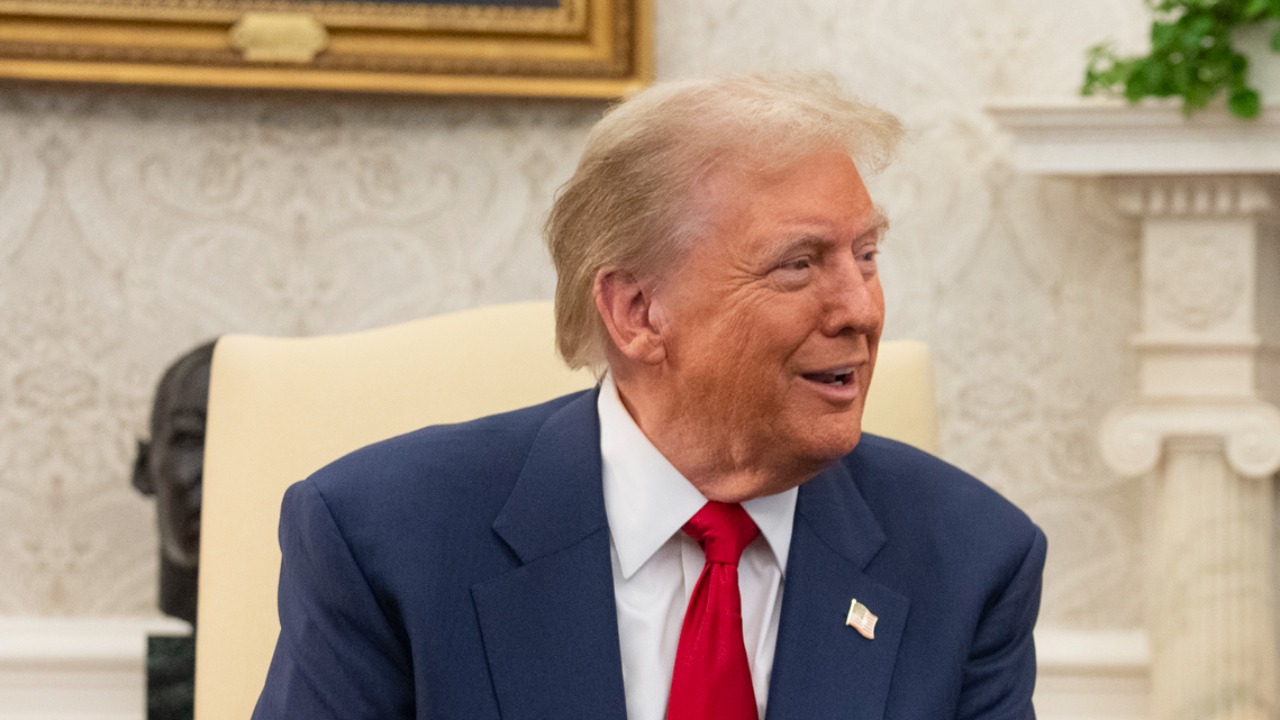
President Donald Trump has said American households could receive $2,000 stimulus checks by mid-2026 as part of a tariff dividend plan tied directly to new import duties. The announcement shifts earlier, less specific stimulus ideas into a timeline that connects any payout to revenue raised from tariffs on foreign goods. Financial planners are already urging families to treat the potential checks as uncertain but meaningful windfalls and to adjust their budgets now amid persistent inflation and uneven wage growth.
Trump’s Latest Update on the Tariff Dividend
President Donald Trump now says that households could see $2,000 checks by mid-2026, describing the payments as a dividend funded by tariffs on imports rather than a traditional deficit-financed stimulus. In his latest comments, he framed the proposal as a way to return money to American families after foreign companies pay higher duties at the border, a refinement from earlier campaign-trail references to “big checks” that did not spell out a funding source. By tying the payout to tariff collections, he is signaling that the size and timing of the checks will depend on how quickly the new trade measures are enacted and how much revenue they generate.
The new mid-2026 target represents a more concrete timeline than earlier talk of future relief that might arrive at some undefined point in his term, and it effectively accelerates expectations compared with vague promises of eventual tax cuts. According to reporting on his remarks, Trump has described the program as a tariff dividend that would flow back to households once the import duties are in place and producing cash. For families trying to plan, the shift matters because it turns a campaign slogan into a dated pledge, but it also raises the stakes around trade policy, since any delay in implementing tariffs could ripple directly into the timing of the promised checks.
Key Details of the Proposed $2,000 Checks
Early descriptions of the plan indicate that the $2,000 payment is envisioned as a one-time check per household, not a recurring benefit or monthly credit. Reporting on Trump’s proposal says the money would be funded by new tariffs rather than by changes to income tax brackets or payroll taxes, which means it would sit apart from ongoing tax policy debates and would not automatically repeat in future years. For households, that structure makes the payment more like a one-off rebate than a permanent boost to take-home pay, so financial experts caution that it should be treated as a chance to shore up balance sheets rather than as income that can support long-term fixed expenses like rent or car leases.
Coverage of the proposal notes that Trump has talked about a broad distribution of the $2,000 per household, with no income restrictions mentioned in the initial reporting on the plan. According to an overview of what is known so far, the idea is that the tariff-funded stimulus would reach a wide swath of U.S. residents, with the $2,000 per household framed as a simple, flat amount rather than a means-tested benefit. At the same time, those reports stress that the program would still depend on congressional approval for the tariff structure and the mechanism that channels revenue into checks, so the breadth of eligibility and the exact definition of a qualifying household could change as lawmakers negotiate the details.
Timeline Shifts and Implementation Challenges
Trump’s latest comments point to a rollout by mid-2026, a schedule that contrasts with earlier speculation that households might see tariff-related relief sometime in 2025. That shift effectively pushes the likely arrival of any checks further into his term, which matters for families that had penciled in extra cash sooner to cover rising housing costs, medical bills, or student loan payments. Financial planners say the updated timing underscores that the checks, if they arrive, will not solve near-term budget gaps in 2025 and that households should avoid counting on the money to meet obligations that come due before the middle of 2026.
There are also significant implementation challenges that could push the $2,000 checks beyond the mid-2026 target. The tariff dividend concept depends on import duties generating enough revenue to fund the promised payments, and reporting on the plan notes that the checks would only materialize once those tariffs are in place and producing cash at the expected levels. Analysts warn that if economic conditions weaken, if import volumes fall, or if trading partners retaliate in ways that reduce U.S. imports, the tariff revenue projections could come in below expectations, forcing either smaller checks, delayed payments, or additional borrowing. Legislative timelines add another layer of uncertainty, since Congress would need to approve the tariff framework and the distribution mechanism, and any drawn-out negotiations could easily push implementation beyond early 2026, compressing the window to hit the mid-2026 goal.
Budgeting Strategies in the Meantime
Financial experts quoted in coverage of Trump’s comments are urging households to plan as if the $2,000 checks might arrive, but not to rely on them for essential expenses before mid-2026. One common recommendation is to focus on building or rebuilding an emergency fund over the next 18 to 24 months, using any room in the budget to set aside cash that can cover three to six months of core costs like rent, utilities, groceries, and transportation. Advisors say that if the checks do come on the updated timeline, families who already have a basic safety net in place will be better positioned to use the windfall strategically, for example by paying down high-interest credit card balances or catching up on deferred medical or car repairs, rather than scrambling to plug overdue bills.
Another practical step is to track monthly expenses closely and simulate the impact of a $2,000 influx in a written or app-based budget, so the money is mentally assigned before it arrives. Planners suggest using tools like Mint, YNAB, or a simple spreadsheet to map out categories such as debt payments, savings contributions, and necessary purchases, then deciding in advance how much of the hypothetical check would go to each bucket. By rehearsing those choices now, households can reduce the risk of lifestyle inflation or impulse spending if the funds hit their accounts in mid-2026, and they can also see more clearly how much of their financial stability still needs to come from regular income, side work, or cost-cutting rather than from a one-time government payment.
How to Integrate a Potential $2,000 Check into Long-Term Plans
For many families, the most effective use of a $2,000 check will depend on their specific mix of debts, savings, and upcoming life events, which is why advisors are encouraging people to seek personalized guidance well before any money arrives. A household carrying high-interest credit card balances might get the biggest long-term benefit by directing most of the check toward those accounts, while someone with manageable debt but little retirement savings could prioritize a one-time contribution to an IRA or 401(k). Financial planners also note that inflation between now and mid-2026 could erode the real purchasing power of a flat $2,000 payment, so using the funds to reduce fixed monthly obligations, such as paying down an auto loan on a 2021 Toyota Camry or prepaying a few months of child care, may provide more lasting relief than spending it on discretionary items.
Integrating the potential check into a broader plan also means thinking about how it fits with other policy changes that might affect household finances, such as shifts in health insurance costs, student loan rules, or state and local taxes. Advisors recommend running at least two scenarios in a household budget: one in which the $2,000 arrives by mid-2026 and is applied to specific goals, and another in which it is delayed or reduced, so that essential plans do not hinge on a promise that still requires tariff revenue and congressional action to become reality. By treating the proposed tariff dividend as a possible bonus rather than a guaranteed lifeline, families can stay flexible in the face of political and economic uncertainty while still being ready to put the money to work quickly if Trump’s plan is enacted on the schedule he has outlined.
More From TheDailyOverview

Cole Whitaker focuses on the fundamentals of money management, helping readers make smarter decisions around income, spending, saving, and long-term financial stability. His writing emphasizes clarity, discipline, and practical systems that work in real life. At The Daily Overview, Cole breaks down personal finance topics into straightforward guidance readers can apply immediately.

