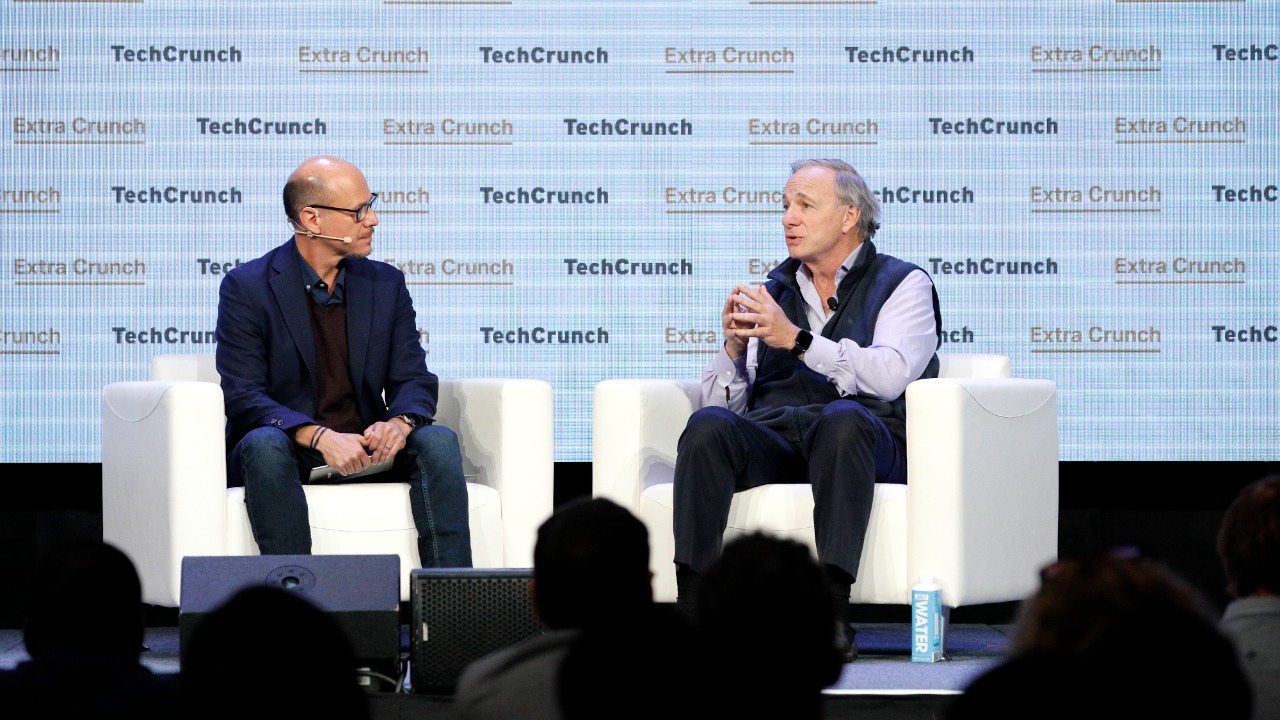
Ray Dalio is no longer speaking in the careful, hedged tones investors usually favor. The Bridgewater founder is now describing the United States as heading toward a “debt-induced heart attack” and even warning of a potential “civil war” if political and economic fractures keep widening. His message is blunt: unless Washington changes course, the country risks a financial and social rupture that could redefine what power looks like in America and beyond.
I see Dalio’s warnings as more than a billionaire’s gloomy mood. They amount to a diagnosis of a system that has grown dependent on cheap debt, polarized politics and a belief that the United States can always muddle through. He is arguing that the old assumptions are breaking down at the same time, and that the window to act is closing fast.
The “economic heart attack” Dalio says is coming
Dalio has been building toward this alarm for months, describing a looming U.S. debt crisis that could hit like a sudden cardiac arrest for the economy. He has compared the current trajectory of federal borrowing and interest costs to a patient ignoring chest pains until the moment a full-blown “economic heart attack” arrives, warning that the risk of such a shock would be high if deficits keep climbing relative to gross domestic product. In his view, the combination of large budget gaps, rising interest rates and slowing growth is pushing the country toward a tipping point where investors lose confidence in U.S. obligations and the government’s room to maneuver vanishes, a scenario he has framed as a looming U.S. debt crisis.
Earlier this year, Dalio sharpened that message directly at the Trump administration, urging officials to either cut the debt burden relative to the size of the economy or accept that the United States could face the financial equivalent of a cardiac event. He cast the choice in stark terms, saying policymakers needed to bring debt down as a share of gross domestic product or effectively resign themselves to a future in which markets impose discipline through higher borrowing costs and forced austerity. In that warning to the White House, he spoke not as a partisan but as a veteran investor who has watched cycles of leverage and deleveraging for decades, telling the administration to confront the problem before it triggers an economic heart attack that Washington can no longer control.
From “dark times” to talk of civil war
Dalio’s concern is not limited to balance sheets. He has started to describe the United States and the wider global order as heading into “very, very dark times,” a phrase he uses to capture the convergence of economic stress, geopolitical rivalry and domestic anger. He points to the growing confrontation between America and China, widening inequality and a breakdown of trust in institutions as forces that are feeding off one another, arguing that these pressures are pushing the country toward a period of intense conflict rather than gradual reform. In his telling, the risk is that economic strain and political division combine into a broader crisis of legitimacy, a path he has linked to the prospect of very dark times for the system itself.
That is why Dalio has gone so far as to warn that the United States is entering what he calls a “civil war” phase, not necessarily in the sense of armies on battlefields but as a period of extreme internal conflict that could paralyze governance and destabilize markets. He has described a “death spiral” for the economy if political factions refuse to compromise, suggesting that rising debt, culture-war battles and institutional mistrust could feed a cycle of escalation that undermines both growth and social cohesion. In interviews, he has framed this as a structural risk for a country that is already deeply polarized, warning that the combination of fiscal strain and political extremism could push the United States toward a kind of internal civil war that markets are not yet pricing in.
The debt “death spiral” and a world less eager to fund America
At the core of Dalio’s alarm is a simple arithmetic problem: the United States is borrowing more while the world is becoming less willing to finance that habit on generous terms. He has described this as a potential “debt death spiral,” in which rising interest costs force more borrowing, which in turn pushes rates higher and erodes confidence in U.S. bonds. In that scenario, investors begin to question whether they want to hold so much American debt, particularly if inflation remains sticky or political dysfunction makes fiscal reform look unlikely. Dalio has warned that this dynamic could accelerate if foreign buyers step back, arguing that the country is moving toward a point where it becomes significantly harder to persuade global savers that U.S. Treasurys are the safest place to park their money, a concern he has tied to the risk of a debt death spiral.
Dalio has also stressed that this is not just a domestic issue, because the United States sits at the center of the global financial system and its debt is woven into everything from central bank reserves to corporate balance sheets. He has argued that a U.S. debt crisis could trigger global economic turmoil, with higher borrowing costs, currency volatility and capital flight hitting both advanced and emerging markets. In his view, the same forces that are straining Washington’s finances, including large deficits and rising interest expenses, are compounding the financial troubles of the United States and increasing the risk of a broader shock that would reverberate through trade, investment and growth worldwide, a chain reaction he has described as a potential global economic turmoil set off by U.S. debt.
“Most people are silent” as the numbers get worse
For Dalio, one of the most troubling aspects of the current moment is how little open debate he sees about these risks. He has said that “most people are silent” because they are afraid to talk honestly about the scale of the problem, whether out of political caution, career risk or simple fatigue with bad news. In his telling, that silence allows the status quo to harden, even as the underlying math grows more dangerous, and it leaves voters and investors unprepared for the kind of wrenching choices that may be required. He has framed the looming debt crunch as a “danger” not only to the U.S. economy but to the global system, arguing that the reluctance to confront it openly is itself part of the threat, a point he has tied to his warning that most people are silent about the danger.
The hard data back up his sense that the situation is deteriorating even as public conversation lags. America’s national debt has already topped $38 trillion, and budget experts warn it could reach $39 trillion within months if current borrowing trends continue. Those figures reflect years of spending that has far outpaced economic growth, leaving the federal government more exposed to any rise in interest rates or slowdown in tax revenues. Dalio’s argument is that such numbers are not abstract accounting quirks but concrete signs of a system that is living beyond its means, and that the longer Washington waits to adjust, the more painful the eventual correction will be for households, businesses and markets that are tied to a federal balance sheet now measured in $38 trillion and rising toward $39 trillion.
Global power shifts and the risk of a U.S. “civil war” phase
Dalio’s warnings also sit within a broader thesis about shifting global power and the fragility of empires that overextend themselves financially. He has argued that the United States is entering a period where its dominance is being challenged externally by rivals and internally by social and political fragmentation, a combination he believes has historically preceded major transitions in world order. In his view, the erosion of trust in institutions, the rise of populist movements and the strain of high debt loads are all symptoms of a system that is moving from stability to conflict. He has suggested that the world is already entertaining the possibility of a shift away from the dollar-centric order, noting that although the transition is unlikely to be immediate, the mere discussion of alternatives reflects rising tensions and uncertainty about the future of U.S. leadership, a mood captured in his warning that Although the shift may be gradual, the risks are already building.
That is why Dalio has repeatedly linked America’s fiscal and political trajectory to the possibility of a “civil war” phase, arguing that internal conflict could weaken the country just as external competitors gain ground. He has warned that the United States is facing potential civil war risks, citing deepening polarization, contested elections and a breakdown in the willingness of opposing factions to accept shared rules. In his analysis, those dynamics are not separate from the debt story but intertwined with it, because fiscal stress can intensify political battles over who pays and who benefits. He has framed this as a warning that a billionaire investor who predicted the 2008 financial crisis now sees the United States at risk of entering a period of internal strife that could reshape its role in the world, a concern he underscored when he flagged potential civil war risks as part of his broader warning.
Can Washington still change course?
Dalio is not arguing that disaster is inevitable, but he is clear that avoiding it will require choices that are politically difficult and economically uncomfortable. He has called for a mix of spending restraint, tax reforms and growth-friendly policies that would stabilize debt relative to the size of the economy, along with institutional changes that could rebuild trust and reduce polarization. In his conversations about the national debt, he has emphasized that the market’s appetite for U.S. bonds is not infinite, warning that the world no longer has the same automatic demand for American debt and that this creates a supply and demand imbalance that could push borrowing costs higher. He has framed this as a matter of human nature as much as economics, arguing that investors will eventually demand more compensation for lending to a country that appears unwilling to manage its finances, a point he has tied to his concern that it will get harder to sell U.S. debt on favorable terms.
At the same time, Dalio has framed his warnings as a chance for the United States to reset rather than simply decline, if leaders are willing to act before markets force their hand. He has argued that the country still has enormous strengths, from its innovative economy to its deep capital markets, but that those advantages can be squandered if debt keeps climbing and political conflict overwhelms problem solving. In interviews, he has described his recent alarms as the most dire he has ever issued about America, saying they come after years of watching deficits grow, interest costs rise and political incentives drift away from long term stewardship. His message is that the United States can still pull itself back from the brink of an economic heart attack and a civil war phase, but only if it treats the current moment as a final warning rather than just another market scare, a sense of urgency he underscored when he issued his most dire warning to America.
Debt, politics and the Trump-era test
Dalio’s critique has become even more pointed under President Donald Trump, whose administration is presiding over rising deficits at a time of already elevated debt. He has warned that the combination of tax cuts, spending increases and limited structural reform is pushing the United States deeper into fiscal trouble, even as political rhetoric grows more combative. In one of his starkest interventions, he argued that the country is at risk of a civil war under Donald Trump, not because of any single policy but because of the broader climate of polarization, institutional strain and unwillingness to compromise. He has tied that warning to official projections showing that debt held by the public equaled about 99 percent of GDP in 2024 and is on track to climb further as large deficits and rising interest costs compound, citing estimates from The Congressional Budget Office that put debt at 99 percent of GDP.
Dalio has also stressed that this is not simply a Republican problem or a Trump-era anomaly, faulting both major parties for avoiding the hard trade offs required to stabilize the debt. He has argued that years of bipartisan willingness to borrow for wars, tax cuts and social programs have left the United States in a position where each new shock, from pandemics to geopolitical crises, adds to an already heavy load. In that sense, he sees the current administration as a test of whether Washington can still act in the long term national interest when the political incentives point toward short term gains. His warning is that if leaders continue to ignore the structural issues he has highlighted, the United States could move from a period of relative stability into the kind of dark times he has described, with economic heart attacks, debt death spirals and civil war style conflict no longer just metaphors but lived reality, a trajectory he has linked to the broader fate of the very, very dark times he now sees ahead.
More From TheDailyOverview
- Tennessee loses $2.6B megafactory and faces major layoffs
- Retired But Want To Work? Try These 18 Jobs for Seniors That Pay Weekly
- What to do with your pennies after the U.S. stops minting them
- Home Depot CEO warns of a troubling customer trend in stores

Grant Mercer covers market dynamics, business trends, and the economic forces driving growth across industries. His analysis connects macro movements with real-world implications for investors, entrepreneurs, and professionals. Through his work at The Daily Overview, Grant helps readers understand how markets function and where opportunities may emerge.

