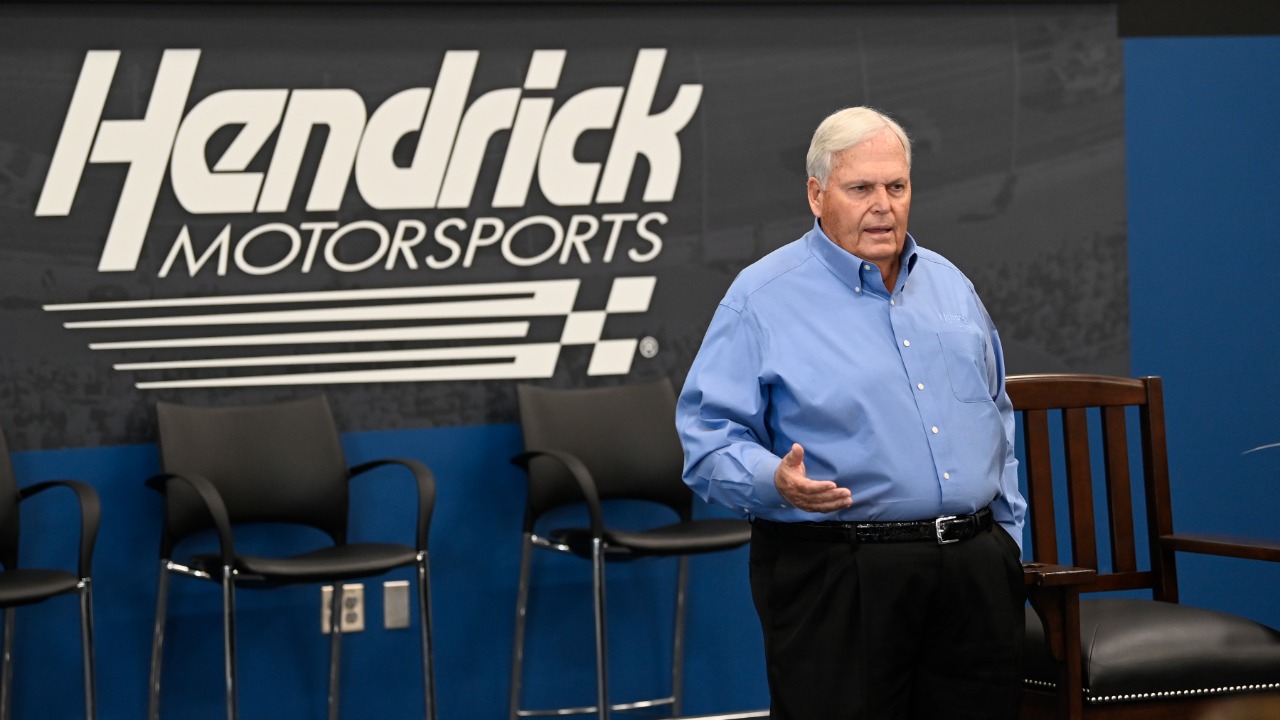
Rick Hendrick has put hard numbers to what many in the garage have only whispered, acknowledging that Hendrick Motorsports has lost millions of dollars in the NASCAR Cup Series even while winning on track. His financial disclosures, laid out in a letter to NASCAR leadership and in court testimony, show a team that captured multiple championships yet still posted a significant deficit over a three year span. Those figures now sit at the center of a high stakes antitrust trial that could reshape how money flows through the sport.
What Hendrick has admitted, however, is very different from the headline grabbing $1.06 billion figure that has circulated around the case. That larger number comes from an outside economist’s estimate of what other teams say they have lost in franchise value, not from Hendrick’s own books. Understanding that distinction is crucial to grasping both the scale of the financial strain on Cup organizations and the specific role Hendrick is playing in the fight over NASCAR’s charter system.
Hendrick’s audited losses, not a personal $1.06 billion hit
I see two very different financial stories being told in this trial, and they are too often being blurred together. On one side are the audited numbers from Hendrick Motorsports, where Rick Hendrick has acknowledged that his organization lost $20 million over a three year period despite winning two NASCAR Cup Series championships in that span. Reporting on the team’s financials notes that those losses came even as Hendrick Motorsports celebrated titles with Kyle Larson and another driver, underscoring how the current economic model can punish even the most successful operations on the grid, and that the organization’s broader business footprint includes 951 million in retail paper.
On the other side is the $1.06 billion figure that has fueled so many headlines, and that number does not come from Hendrick’s own disclosures. Instead, it is tied to expert testimony from Edward Snyder, a professor of economics who worked in the antitrust division of the Department of Justice and who was called to analyze the impact of NASCAR’s charter system on specific plaintiffs. In court, Edward Snyder calculated that 23XI Racing and Front Row Motorsports collectively lost $1.06 billion in value from 2021 to 2024, a figure that reflects what those teams argue they could have earned under a different, more open market structure. That is a systemic damage estimate, not a personal admission from Rick Hendrick, and conflating the two distorts both the scale and the source of the losses.
Inside Hendrick’s letter to NASCAR CEO Jim France
Rick Hendrick’s own intervention in this dispute has been unusually direct for a team owner of his stature. During the Tuesday examination of NASCAR CEO Jim France, lawyers for 23XI Racing and Front Row Motorsports introduced a letter in which Hendrick laid out his multi million dollar losses and pressed for change in the charter system. In that correspondence, he addressed NASCAR CEO Jim France directly, acknowledging that he understood NASCAR had to prioritize its business, its family and its employees, but arguing that the current model was leaving even elite organizations underwater. The fact that this letter surfaced in open court, rather than in a closed door negotiation, shows how far the charter fight has escalated.
Hendrick did not simply complain about the economics, he also leaned on the credibility of his own accounting. In his closing remarks within that letter, the 76 year old owner effectively invited scrutiny, saying he would “Be Happy to Show You Audited Financial Statements” to back up his claims. He stressed that it was “First and” foremost no secret that HMS was losing money and that those audited figures showed multi million dollar losses over the prior five years, not just a one off bad season. By framing his case around Show You Audited Financial Statements, Hendrick positioned himself as a reluctant but meticulous witness to a system he believes is structurally flawed.
Championships on track, red ink on the balance sheet
The most jarring part of Hendrick’s disclosures is the disconnect between competitive dominance and financial strain. Hendrick Motorsports has been the gold standard in the Cup Series, with Kyle Larson adding another title to the organization’s haul and Larson also winning the 2025 championship, even though those 2025 financials were not yet part of the letter that predated that season. Yet despite that success, the team still recorded a $20 million loss over three years, a figure that came to light in detailed coverage of Hendrick Motorsports and its recent financial performance. For a powerhouse with deep sponsorships and a sprawling dealership empire behind it, that kind of sustained loss is a warning sign about the underlying economics of the series.
Hendrick’s own language in the letter underscores that he sees the problem as structural rather than cyclical. He argued that the current charter and revenue model is not sustainable “without substantive, fundamental change,” a phrase that has been echoed by other owners who say the cost of fielding competitive cars has outpaced the guaranteed income from NASCAR’s central deals. When a team that has hoisted multiple NASCAR trophies in a short window still ends up in the red, it suggests that mid tier and smaller operations are under even more pressure, which is precisely the point 23XI Racing and Front Row Moto have tried to make as they challenge the system in court. Their lawyers have used Hendrick’s numbers as a kind of benchmark, arguing that if the sport’s most successful organization is losing money, the model is broken for everyone.
The antitrust trial and Snyder’s $1.06 billion calculation
While Hendrick’s letter provides a vivid snapshot of one team’s finances, the antitrust trial has widened the lens to the entire Cup ecosystem. The case centers on whether NASCAR has violated antitrust laws through its control of charters and race access, and a nine person jury will ultimately decide both liability and damages. As part of that process, the court heard from Snyder, who built detailed models of how team values and earnings would look under a more open market. According to testimony recounted in trial coverage, Snyder did his calculations for both teams based on each having two charters, noting that each purchased a third charter in late 2023, and then projected the impact of NASCAR’s restrictions on their ability to monetize those assets.
The result of that modeling was the now famous $1.06 billion figure, which Snyder said represented the combined loss in value for 23XI Racing and Front Row Motorsports from 2021 to 2024. That number has also been cited in broader coverage of the trial, where it is framed as the potential damages the nine person jury could award if it finds that NASCAR violated antitrust laws. Crucially, Snyder’s estimate is about the plaintiffs’ lost opportunities and suppressed franchise values, not about Hendrick Motorsports or Rick Hendrick personally. Hendrick’s audited $20 million loss and multi year red ink are part of the factual backdrop that makes Snyder’s model plausible, but they are not the same thing as the billion dollar claim.
Jim France’s stance and Hendrick’s public response
At the center of the dispute sits Jim France, the NASCAR chairman and CEO who has defended the charter system as essential to the stability of the series. In his testimony, France has cited his parents’ advice about running the family business and has argued that the current structure balances risk and reward in a way that has kept the sport viable through economic downturns and shifting media landscapes. He has also made clear that he sees the charters as licenses to compete, not permanent franchises, a distinction that has frustrated owners who want more security and resale value. Coverage of his appearance in court highlighted how firmly NASCAR chairman Jim France has held to that line even as the damages claims have mounted.
Hendrick’s own tone toward France has been respectful but pointed. In a public message that circulated on social media, he told France, “In turn, I understand you must prioritize business and the best interest of your company, your family, and your employees,” before pivoting to his plea for change. That clip, shared widely among fans and insiders, captured Hendrick trying to balance his long relationship with NASCAR’s ruling family against his responsibility to his employees and partners. The video, which has been preserved in an Dec reel, ends with a call to “stop right there” and rethink the model, a phrase that has become shorthand in the garage for owners’ impatience with the status quo.
A sport under pressure from bigger entertainment economics
What is happening in NASCAR does not exist in a vacuum, and I see echoes of these financial tensions across the wider sports and entertainment landscape. In boxing, for example, Jake Paul has been accused of making a “mockery” of the sport by chasing spectacle over competitive integrity, with his planned fight against Anthony Joshua sparking fears of a cancellation and raising questions about how money and attention are allocated. Coverage of that saga even tucked in a note that Rick Hendrick had made a billion dollar related admission, a framing that blurred the line between Snyder’s systemic estimate and Hendrick’s own audited losses. The cross sport comparison shows how easily big round numbers can overshadow the more nuanced reality underneath.
Even outside motorsport and combat sports, the chase for massive rights deals and sponsorships is reshaping how teams think about value. Tennis has seen Coco Gauff’s sponsor ink an eye popping $500 million deal with a major brand, while baseball fans watched as the Mets did not fight to keep Pete Alonso before his $155M Orioles move, and analysts warn that China could cause mass blackouts in key markets that underpin global sports broadcasts. Those disparate storylines, captured in a single Don report that also noted Dale Earnhardt Jr was “shocked” by a NASCAR safety claim, illustrate how fragile even the biggest revenue streams can be. Against that backdrop, Hendrick’s insistence on audited transparency and Snyder’s billion dollar valuation model look less like outliers and more like early warning signs of a broader recalibration in how sports properties are priced, protected and, ultimately, shared between leagues and the teams that bring them to life.
More From TheDailyOverview

Grant Mercer covers market dynamics, business trends, and the economic forces driving growth across industries. His analysis connects macro movements with real-world implications for investors, entrepreneurs, and professionals. Through his work at The Daily Overview, Grant helps readers understand how markets function and where opportunities may emerge.

