President Donald Trump has never shied away from slapping his name on luxury branding, but his latest pitch, a high-dollar “Gold Card” visa, has collided with a brutal online reception. What was framed as an elite gateway to the United States quickly turned into a meme factory, as critics mocked both the eye-watering price tag and the salesmanship behind it.
The rollout has exposed a widening gap between the administration’s promise of a serious investment program and the way the offer actually looks and feels to the public. Instead of projecting stability at a moment of market anxiety and immigration debate, the Gold Card has become a case study in how a political product can be roasted in real time.
The $5 million pitch that launched a thousand jokes
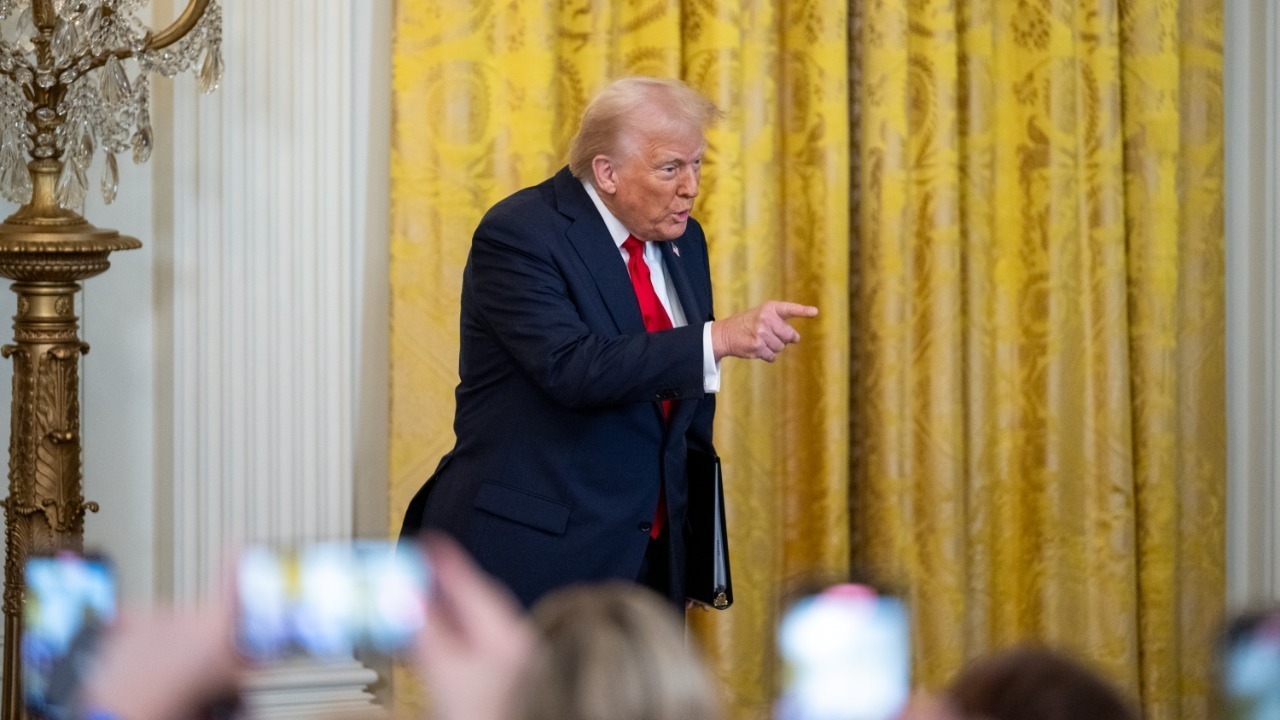
The core of the backlash started with the pitch itself, which leaned heavily on spectacle. In front of cameras, Trump held up a gleaming card and declared, “For $5 million, this could be yours,” turning a complex immigration product into something that looked more like a late-night infomercial than a sober policy announcement. That moment, captured as he waved the card at a press gaggle, set the tone for how critics would frame the entire offer, especially once questions surfaced about who exactly might be able to buy in, including speculation about Russian oligarchs obtaining a card.
Online, that image of Trump literally brandishing his “Trump card” became instant fodder. Social media users spliced the clip into parody ads, mocked the $5 million price as a punchline, and tied the stunt to broader frustrations over tariffs and market turmoil, arguing that the president was hawking a luxury visa while his own policies had helped send stocks sliding. The fact that critics could so easily turn the phrase “For $5 million, this could be yours” into a meme underscored how vulnerable the rollout was to ridicule, and how quickly a carefully staged moment can be reframed as comedy when the underlying offer feels out of step with public mood.
A shiny card in a shaky market
The timing of the Gold Card debut only sharpened the reaction. Trump unveiled the shiny, metallic-looking card as U.S. markets were already under strain, presenting it as a premium path into the country just as investors were watching indexes wobble. In video of the event, Donald Trump pulled out his Trump card, a gold-colored rectangle that looked like a cross between a luxury credit card and a loyalty perk, and pitched it as a $5 million opportunity for those who could afford it.
That visual, a president selling a glittering access product while markets “melt down,” as critics put it, fed a narrative that the administration was more focused on monetizing entry than stabilizing the broader economy. The card’s design, which resembled something “straight out” of a high-end rewards program, made it easy for detractors to argue that the policy blurred the line between governance and branding. Instead of reassuring investors or workers worried about volatility, the spectacle of a gold card held aloft in front of cameras became a symbol of how disconnected the offer felt from everyday economic anxiety.
An amateurish online storefront for a premium visa
If the physical card was meant to signal exclusivity, the digital rollout undercut that message. When President Trump later touted that “the waiting list is now open” for the Trump Gold Card visa, curious onlookers who clicked through found a website that critics said looked more like a rushed side project than the front door to a multimillion-dollar immigration program. Analysts who reviewed the site described it as “amateurish,” pointing to basic design flaws and language that did not resemble a serious commercial enterprise.
That disconnect between price and presentation became another punchline. For a product that asks applicants to commit millions of dollars, visitors expected a polished, secure portal that clearly explained eligibility, benefits, and legal safeguards. Instead, the rough edges of the Trump Gold Card site fueled skepticism that the program had been rushed out to capitalize on the president’s personal brand rather than built from the ground up as a credible immigration pathway. The more people shared screenshots of clunky pages and vague promises, the easier it became for critics to argue that the Gold Card looked like a marketing gimmick dressed up as policy.
From $5 million hype to a $1 million reality check
Behind the viral clips and website jokes, the administration has tried to frame the Gold Card as a serious investment visa. Reporting on the underlying terms describes Trump’s $1m “Gold Card” visa as a route that offers significant advantages to those who qualify, including long-term residence rights and access to parts of the U.S. economy that are typically closed to short-term visitors. At the same time, coverage has stressed that even at the $1 million level, there are clear limits on what applicants stand to gain and what remains off-limits.
The contrast between the $5 million theatrics and the $1 million program details has added to the confusion. On one hand, Trump and his allies have leaned into the idea of a premium, almost club-like product, complete with a physical Gold Card and talk of waiting lists. On the other, the fine print reads more like a conventional investor visa, with thresholds, restrictions, and compliance requirements that look familiar to immigration attorneys. That gap has allowed critics to argue that the administration is selling sizzle while the steak is far more limited, and that the early focus on a $5 million figure distorted public understanding of what the Gold Card actually offers.
“Fakest looking website” and a credibility problem
The online mockery has not been limited to memes about the card itself. Commentators have zeroed in on the digital infrastructure around the program, with one widely shared critique describing the Gold Card portal as the “Fakest Looking Website” for a product of this scale. In that account, the launch of the $5 million offer was paired with a site that looked more like a fan-made page than an official government-backed platform, even as it promised a pathway to permanent residency through the Million Gold Card.
That perception matters because immigration programs live or die on trust. Potential applicants weighing whether to move capital, families, and careers to a new country look for clear rules, stable institutions, and professional communication. When the face of the program is a site that critics call “fakest looking,” it feeds doubts about whether the rules might change, whether personal data will be secure, and whether the promise of permanent residency is as solid as advertised. For a president who has long equated gold-plated aesthetics with quality, the Gold Card’s digital storefront has become an unexpected liability.
Substance versus spectacle in the Gold Card debate
Beneath the jokes, there is a serious policy argument unfolding about what the Gold Card represents. Supporters inside the administration have framed the Gold Card (often branded explicitly as the Trump Gold Card) as a way to attract high net worth individuals who can invest, spend, and create jobs in the United States. Critics, however, have pushed back that, despite the official framing, the Gold Card has immediately drawn concern from immigration attorneys, policy analysts, and members of Congress who see it as a pay-to-play shortcut that risks undermining other parts of the system.
Those experts have raised questions about whether the Trump Gold Card will distort priorities by privileging wealth over humanitarian or family-based claims, and whether it will create a two-tiered system in which those with $1 million or $5 million to spare can buy a level of access that others can never hope to reach. The online roasting, in that sense, is not just about the aesthetics of a shiny card or a clumsy website. It is also a way for critics to express deeper unease with an immigration model that treats residency as a luxury product, marketed with the same flourish as a branded tower or a private club. As the memes keep circulating, the administration is left trying to convince both skeptics and potential applicants that behind the spectacle, the Gold Card is more than a punchline.
More From TheDailyOverview

Cole Whitaker focuses on the fundamentals of money management, helping readers make smarter decisions around income, spending, saving, and long-term financial stability. His writing emphasizes clarity, discipline, and practical systems that work in real life. At The Daily Overview, Cole breaks down personal finance topics into straightforward guidance readers can apply immediately.

