Saks Global’s rapid descent from luxury consolidator to bankruptcy case study has left a trail of scorched stakeholders, from fashion brands to one of the world’s biggest e‑commerce companies. The $2.7 billion Neiman Marcus merger that was supposed to create a dominant high‑end retail group instead exposed how fragile the model had become, and turned Amazon’s $475 million bet on Saks into a cautionary tale about chasing glamour over fundamentals. The fallout now stretches from Fifth Avenue flagships to federal courtrooms, with shoppers, suppliers and investors all trying to understand what, if anything, can be salvaged.
At the center of the storm is Saks Global, the parent of storied banners like Saks Fifth Avenue, Neiman Marcus and Bergdorf Goodman, whose bankruptcy has forced a reckoning over debt, digital strategy and the limits of luxury’s resilience. I see the collapse as less a sudden shock than the inevitable result of a leveraged roll‑up that underestimated how quickly consumer behavior and financing conditions could turn.
The $2.7 billion merger that broke Saks Global
The seeds of the crisis were planted when Saks Global pushed ahead with its acquisition of Neiman Marcus in a deal valued at $2.7 billion, a transaction that was framed as a way to knit together iconic department stores into a single luxury powerhouse. Earlier reporting shows that Saks Global, backed by Canadian Hudson’s Bay Company, had already been reshaped into a holding company that combined the American Neiman Marcus Group with the existing Saks business, creating a complex structure that depended heavily on borrowed money to function. According to company disclosures, Saks Global was created after the Canadian Hudson, Bay Company, often referred to as HBC, purchased the American Neiman Marcus Group, a move that set the stage for the later $2.7 billion consolidation and the appointment of Saks CEO Marc Metrick to lead the enlarged group.
Once the Neiman Marcus deal closed, the financial strain became impossible to ignore. Analysts have described how the merged company took on significant new obligations tied to the acquisition, then found that, after paying transaction‑related debts, there was not enough liquidity left to execute the ambitious integration plan. One detailed breakdown of the numbers noted that the structure left Saks Global highly exposed to any slowdown in luxury spending, and that the combination of acquisition debt and existing liabilities made bankruptcy the “likely destination” once performance slipped. In that context, the Chapter 11 filing by Saks Global, the longtime leader of luxury department stores, looks less like a surprise and more like the logical endpoint of a strategy that prioritized scale over balance‑sheet resilience.
How debt, missed payments and operational missteps pushed the company over the edge
By late last year, warning signs were flashing across Saks Global’s financing ecosystem. Factors that purchased receivables from brands supplying Saks were already wary, and accounts from private credit markets describe how the company, burdened by debt, missed a $100 million interest payment, a lapse that sharply raised expectations that bankruptcy was coming. Internal assessments cited in court filings paint a picture of a retailer that “continuously failed to meet its budgets,” burned through hundreds of millions of dollars in less than a year, and piled on additional borrowings even as its cash position deteriorated, leaving lenders and trade partners increasingly nervous about getting paid.
Operational decisions compounded the financial squeeze. When Saks acquired Neiman Marcus, management changed payment terms for brands, stretching out how quickly labels were paid even as the company leaned on them for fresh inventory. That shift meant there was less money flowing in from vendors willing to extend generous credit, at the same time that shoppers were becoming more cautious and promotional activity was rising. A granular “financial colonoscopy” of Saks Global’s books, prepared after the filing, highlighted how the combination of acquisition‑related obligations, missed interest payments and aggressive budgeting left the company with little margin for error once sales underperformed, turning what might have been a manageable restructuring into a full‑blown Chapter 11 case.
Amazon’s $475 million luxury experiment turns into a courtroom fight
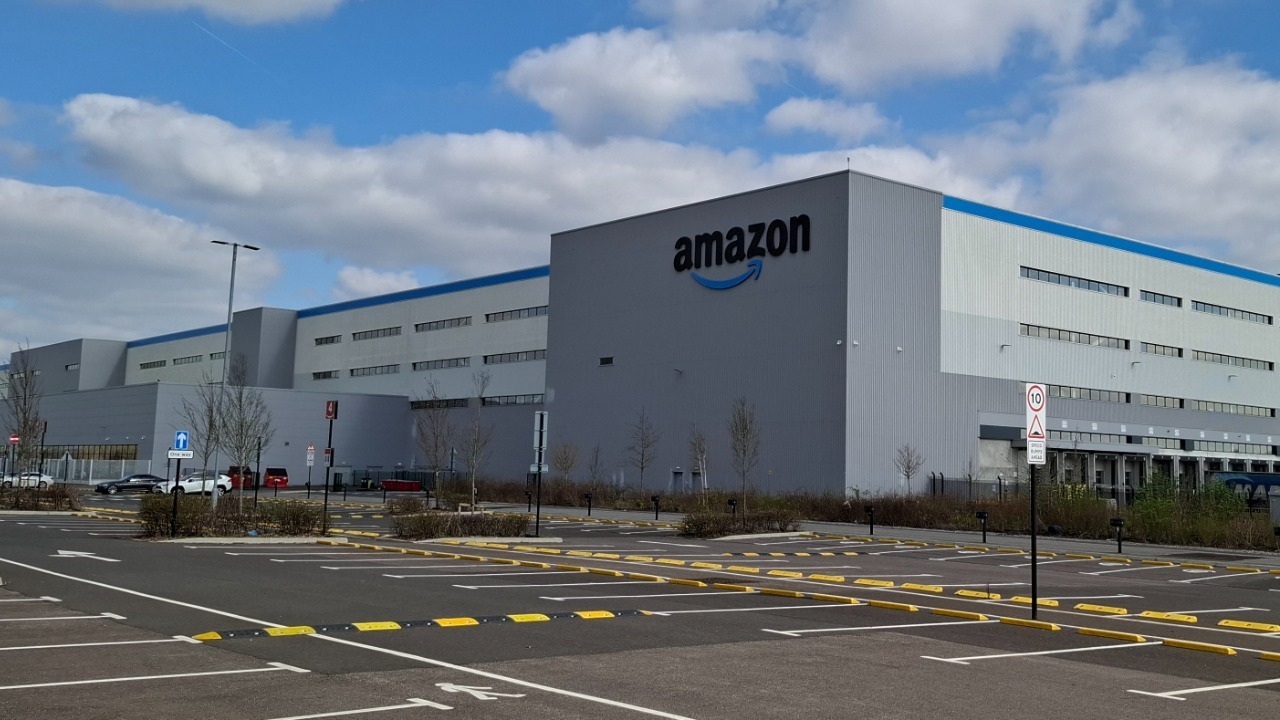
Into this fragile structure stepped Amazon, which saw an opportunity to deepen its presence in high‑end fashion by aligning with Saks. As part of the Neiman Marcus transaction, Amazon invested $475 million when Saks acquired Neiman Marcus, a sum that was tied to a broader partnership to sell luxury fashion and beauty items through Amazon’s platform while driving traffic back to Saks’ own channels. One detailed account of the arrangement notes that Amazon just watched its $475 million stake in Saks Investment Goes Worthless, Threatens Court Action, and that the e‑commerce giant had expected to earn referral fees over eight years in exchange for steering its affluent customers toward Saks and Neiman Marcus assortments.
Once Saks Global filed for Chapter 11, Amazon moved quickly to protect its position. In a motion filed in Texas federal bankruptcy court, Amazon said it “hopes” Saks will “resolve” its concerns, but warned that if the issues remain unresolved it may pursue “drastic remedies,” language that underscores how sharply relations have soured. Separate filings show that Amazon Warns Of Drastic Remedies Amazon as it objects to aspects of the proposed bankruptcy financing, arguing that the structure could disadvantage key business partners and leave major creditors, including Amazon itself, with limited recourse. Coverage of the dispute describes how Amazon now wants a federal judge to recognize that its investment in Saks Fifth Avenue’s parent has effectively been wiped out, and that it is prepared to escalate its legal fight if the restructuring sidelines its claims.
Iconic stores, e‑commerce carve‑outs and what shoppers will actually see
For shoppers, the most visible question is what happens to the stores and websites they know. Saks Global’s portfolio includes luxury players Saks Fifth Avenue, Neiman Marcus and Bergdorf Goodman, banners that still anchor high‑end malls and shopping districts even as traffic patterns shift. The company’s own sites, from the main Saks Fifth Avenue portal to the Neiman Marcus and Bergdorf Goodman online storefronts, remain live, and reporting on the bankruptcy emphasizes that brick‑and‑mortar locations are continuing to operate while the restructuring plays out. One consumer‑focused explainer notes that Saks Global, the parent company behind Saks Fifth Avenue, Neiman Marcus and Bergdorf Goodman, has sought to reassure customers that gift cards, loyalty points and returns will be honored, even as it renegotiates with landlords and suppliers.
Behind the scenes, however, the digital side of the business is already being reshaped. Court documents show that Saks Global’s e‑commerce unit has been placed under independent managers and received permission to hire a liquidator, a step that allows for accelerated inventory flow and potential sell‑offs of online assets without directly affecting the physical stores. Separate coverage of the case explains that this carve‑out is designed to maximize value from the digital operation while the parent company restructures, but it also underscores how fragmented the group has become. For shoppers browsing Saks Fth Avenue the locations featured in videos from channels like Retail Archaeology, the experience may still feel familiar for now, yet the corporate entity behind the marble floors and designer concessions is being dismantled and reassembled in real time.
What the collapse signals for luxury retail’s future
The implosion of Saks Global is not happening in isolation. Analysts tracking department stores point out that the sector has been under pressure for years, with mid‑tier chains closing locations and even luxury players struggling to justify sprawling footprints. One recent overview notes that in mid‑January Saks Global, which includes Saks Fifth Avenue, Neiman Marcus and Bergdorf Goodman, filed for bankruptcy at the same time other department store operators were shuttering underperforming sites, a sign that even the top of the market is not immune. In that context, Saks Global’s failure looks like an extreme example of a broader pattern in which legacy retailers, loaded with debt and slow to adapt, find themselves outflanked by more nimble competitors and changing consumer habits.
More From TheDailyOverview
*This article was researched with the help of AI, with human editors creating the final content.

Grant Mercer covers market dynamics, business trends, and the economic forces driving growth across industries. His analysis connects macro movements with real-world implications for investors, entrepreneurs, and professionals. Through his work at The Daily Overview, Grant helps readers understand how markets function and where opportunities may emerge.