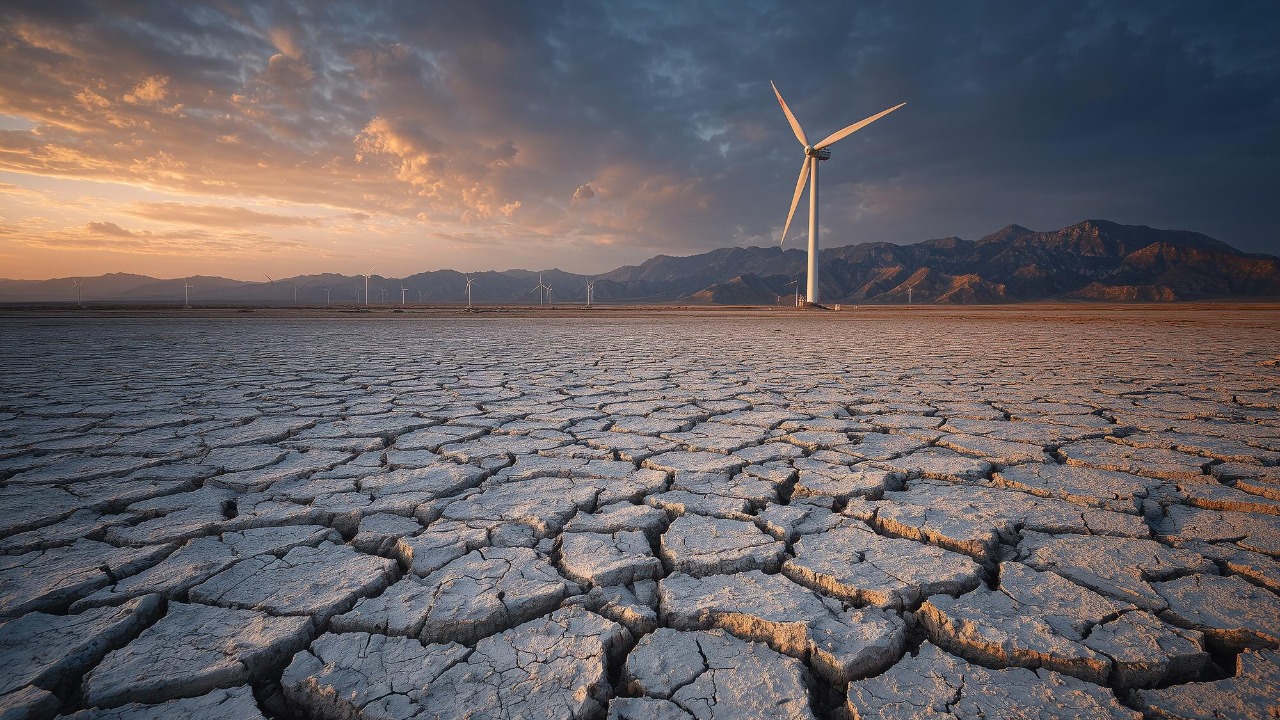
Scientists, risk analysts and farm leaders are converging on a stark message: the climate crisis is no longer a distant environmental issue but a direct threat to the global economy. From food systems to finance, they warn that current policies and models are steering governments toward a slow-motion crash. If we want to avoid a systemic breakdown, they argue, we urgently need a recovery plan that treats climate risk as a present economic emergency rather than a future technical problem.
That warning is not abstract. It is grounded in new research on flawed economic models, in letters from agricultural leaders describing a looming “collapse,” and in risk assessments that now rank ecosystem breakdown alongside geopolitical conflict. Taken together, these signals sketch a simple but uncomfortable conclusion: the world’s economic playbook is out of date, and the bill for delay is coming due.
The models that missed the cliff edge
For decades, policymakers have relied on neat curves and smooth projections to estimate how rising temperatures would dent growth, but a growing body of work suggests those tools are dangerously out of step with reality. Recent analysis linked to the flawed climate damage models used by central banks and finance ministries argues that these tools assume gradual, linear losses that economies can absorb with incremental adaptation. In practice, scientists expect something closer to a series of shocks, where floods, fires and heatwaves punch holes in infrastructure, supply chains and productivity all at once.
That critique is echoed by work from the University of Exeter, which warns that prevailing models severely underestimate the risk of a catastrophic global financial crash. Instead of treating climate change as a slow drag on GDP, that research describes a world of tipping points and cascading failures, where damage to one sector or region can rapidly propagate through trade, insurance and credit markets. In that scenario, the real risk is not a few percentage points off long term growth, but a sudden loss of confidence that could trigger a crisis on a scale we have never seen.
From tail risk to central threat
What is shifting now is not just the science but the way global risk communities rank climate and nature in the hierarchy of threats. Commentators drawing on Too many years of complacency argue that ecosystem collapse and climate tipping points are no longer “tail risks” that might materialize in some unlucky future, but central drivers of geopolitical instability. As ice sheets, forests and coral systems approach thresholds beyond which change becomes irreversible, the potential for abrupt shifts in food, water and migration patterns grows, with obvious implications for security and trade.
The latest global risks assessment reinforces that message, describing a world economy already weakened by overlapping crises and a multilateral system that is struggling to coordinate responses. In a companion digest, the same community notes that Multilateralism is in retreat, with Declining trust and transparency undermining the very forums that would be needed to manage cross border climate shocks. When the institutions designed to share risk are themselves under strain, the probability that local climate disasters spiral into global economic crises rises sharply.
Food systems on the brink
Nowhere is the collision between climate and economics more visceral than in agriculture, where extreme weather is already eroding yields and balance sheets. In the United States, former officials and industry figures have warned that U.S. agriculture could face a structural crisis if climate volatility continues to outpace the capacity of existing safety nets. One widely cited image of Corn being harvested on a family farm in Iowa, credited to Kathryn Gamble for The New York Times and reported By Linda Qiu from Wash, has become a shorthand for a sector that still looks productive on the surface but is increasingly exposed to drought, flooding and heat stress.
Those concerns are not confined to former officials. In a separate intervention, Farm leaders have warned of a potential “collapse of American agriculture,” telling lawmakers that a mix of climate shocks, high input costs and weak farm incomes is pushing many operations to the edge. Reporting on that letter notes that American producers are facing losses for a fourth consecutive year, a pattern that, if sustained, would ripple through rural employment, food prices and the broader financial system. A follow up account of the same warning, attributed to Tom Polansek and P.J. Huffstutter at Reuters, underlines that this is not a hypothetical scenario but a live policy problem.
Coastal communities preparing for the wrong disaster
While farmers grapple with erratic weather inland, coastal regions are confronting a different kind of misalignment between risk and response. A group of Scientists has warned that many coastal states are “preparing for the wrong disaster,” focusing on familiar storm scenarios while underestimating compound threats like sea level rise, groundwater intrusion and back to back flooding. Their message is that infrastructure and emergency plans built for the climate of the past are being overtaken by the climate of the present, leaving homes, ports and industrial hubs exposed.
Researchers at Lehigh University have tried to quantify what a more realistic adaptation strategy would look like, arguing that Their work highlights the need for a national, well funded policy framework to help individuals and communities relocate from high risk areas. In a related technical release, the same team notes that Together, Casagrande and the Center are pushing for disaster models that capture not just physical risk but the human and financial consequences of repeated losses. Without such planning, the economic hit from coastal erosion and flooding will not be a one off event but a chronic drag on public budgets, insurance markets and local tax bases.
Actuaries, insurers and the price of denial
One of the most striking shifts in the climate conversation is the entry of actuaries and insurers into the chorus of alarm. A widely discussed analysis from earlier last year framed the possibility of a 50% GDP collapse if climate risks are mispriced and left to accumulate in the financial system. The argument is simple but unsettling: if the professionals who price risk for a living are now warning that climate change could trigger losses on a scale we have never seen, then the old assumption that markets will quietly adapt looks increasingly shaky.
That warning dovetails with the critique of States and financial bodies that continue to rely on outdated climate models. If those institutions keep treating climate risk as marginal, they may be building portfolios and public budgets on sand. The more detailed version of that critique, set out in the separate Flawed modelling analysis, warns that underestimating systemic climate shocks could have global consequences for society, not just for investors.
Science as an economic roadmap
If the diagnosis is that current economic planning is misaligned with physical reality, the obvious question is what a better roadmap would look like. Climate scientist Johan Rockstr has argued that Johan Rockstr and his colleagues now see a Scientific consensus that global warming has effectively reached the 1.5°C threshold, which in their view demands an immediate shift in policy. Rather than treating emissions cuts as a drag on growth, they argue that aligning investment with a scientific roadmap can make climate stability and economic development go hand in hand.
That perspective is echoed in the broader World Economic Forum risk work, which frames climate action as a precondition for long term stability rather than a niche environmental cause. In that context, the retreat of Declining multilateral cooperation looks less like a technical diplomatic issue and more like a direct economic vulnerability. Without shared standards, pooled finance and coordinated adaptation, each country is left to improvise its own response, increasing the odds of disorderly transitions and competitive shocks.
Designing a real recovery plan
Against that backdrop, the call for a recovery plan is not about returning to a pre crisis status quo but about redesigning economies to function within planetary limits. One vivid example comes from a group of Researchers whose work on extreme heat scenarios has circulated widely online, warning that certain regions could face temperature spikes of up to 6 Celsius (10.8 degrees Fahrenheit) if emissions stay high. A more detailed account of that analysis, shared by the same Research group, argues that such heat would not just be uncomfortable but economically devastating, rendering outdoor work unsafe for large parts of the year and straining power grids built for cooler climates.
On the adaptation side, the Lehigh team’s proposals for a well funded managed retreat program offer a glimpse of what a proactive recovery strategy could entail. Rather than waiting for repeated disasters to wipe out property values and public infrastructure, they argue for planned relocation, backed by federal support, to reduce long term losses. In parallel, the technical work by Casagrande and the Center on more realistic disaster models suggests that governments should be budgeting for climate shocks the way they budget for defense or healthcare, as recurring structural costs rather than one off emergencies.
More From The Daily Overview
*This article was researched with the help of AI, with human editors creating the final content.

Grant Mercer covers market dynamics, business trends, and the economic forces driving growth across industries. His analysis connects macro movements with real-world implications for investors, entrepreneurs, and professionals. Through his work at The Daily Overview, Grant helps readers understand how markets function and where opportunities may emerge.

