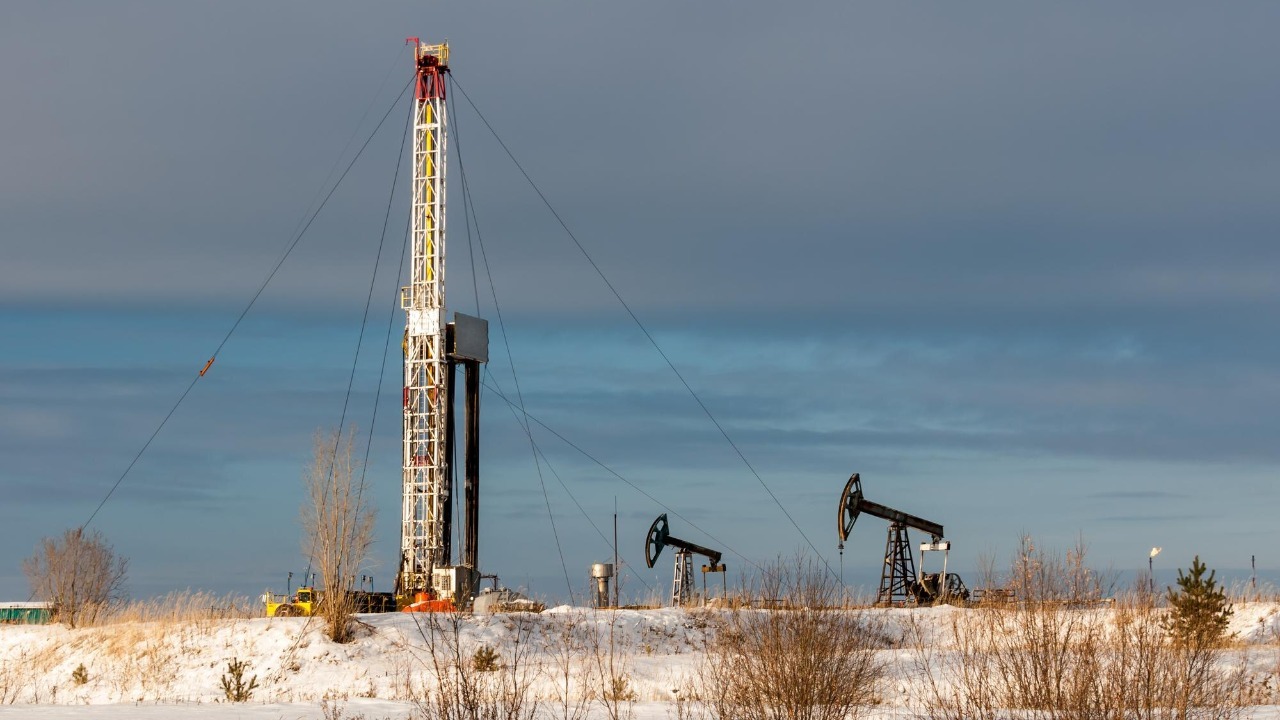
Small Russian oil drilling companies are increasingly facing bankruptcy pressures as Urals crude prices fall sharply, according to reporting cited below, while Western sanctions continue to strain the sector’s finances. The average Urals price dropped to $44.87 per barrel in November 2025, down from $53.68 in October, while separate reporting says some Russian oil has traded as low as $30 per barrel. The failures among independent drillers threaten to accelerate a decline in Russian oil output at a time when the Kremlin depends heavily on energy revenue to fund state expenditures.
Urals Prices Collapse, Squeezing Small Producers
The speed of the price decline has caught smaller operators off guard. Russia’s Ministry of Economic Development published official pricing data on December 3, 2025, setting the average Urals price for November at $44.87 per barrel, a figure used to calculate the mineral extraction tax known as NDPI. That represented a steep drop from the October average of $53.68 per barrel, a decline of roughly $9 in a single month. For large state-backed producers like Rosneft, such a swing is painful but survivable. For small independent drillers operating older fields with higher extraction costs, it can be fatal.
The pricing picture may be even worse than official averages suggest. According to reporting on bankruptcies, some Russian oil has traded at prices as low as $30 a barrel. That figure differs from the official November Urals average of $44.87; the gap may reflect differences between benchmark Urals pricing and the steeper discounts some sanctioned Russian cargoes can face, depending on grade and buyer. Small producers who sell at these distressed prices face immediate cash-flow crises, while still owing taxes calculated against the higher official benchmark.
Drilling Activity Hits a Three-Year Low
The financial stress is already visible in operational data. Russia’s oil producers reduced the pace of drilling in 2025 to the lowest level in three years, according to a Feb. 18, 2026 Bloomberg analysis of industry data. That pullback puts Russia’s future oil output at risk, because maintaining production from mature Siberian fields requires constant new well completions. When drilling slows, output follows within months, and the lag between investment cuts and production declines means today’s decisions will shape export volumes well into the late 2020s.
The drilling slowdown hits small service companies hardest. Independent drillers typically operate under contract to larger producers, and when those contracts dry up or payments are delayed, the smaller firms have few reserves to draw on. Unlike state-backed majors that can access government credit lines or defer tax obligations through political channels, independent operators face the full force of creditor claims. Russia’s federal arbitration system, accessible through the court registry, has become the venue where these collapses play out, with bankruptcy filings moving through observation and competitive production stages as creditors push for asset liquidation and remaining assets are redistributed across the sector.
Sanctions Compound the Revenue Shock
Most coverage of Russia’s oil troubles focuses on prices alone, but that framing misses a critical mechanism. U.S. and allied sanctions have not just reduced the price Russian producers receive; they have also raised the cost of doing business at every stage. Importing Western drilling equipment is now far more difficult and expensive, forcing many firms to rely on lower-quality or costlier alternatives. Insuring tanker cargoes requires workarounds that add fees and delays. Finding buyers willing to handle sanctioned crude means accepting deeper discounts, and financing trade flows through non-Western banks typically entails higher interest costs and stricter collateral requirements.
For a small driller already operating on thin margins, these compounding costs turn a price decline into an existential threat far faster than the headline Urals number would suggest. The bankruptcies among small firms, described in reporting as occurring amid U.S.-led sanctions and weaker prices, could point to a structural shift rather than a temporary dip. When independent drillers go under, their rigs, crews, and field expertise do not simply transfer to larger companies overnight. Equipment rusts, skilled workers leave the industry, and well maintenance lapses. The result is a potential loss of productive capacity that cannot be quickly reversed even if prices recover, accelerating a consolidation of Russia’s upstream sector toward greater state dominance as only companies with direct government backing can absorb the combined pressure of low prices and sanctions costs.
Federal Budget Feels the Strain
The consequences extend well beyond the oil patch. The slide in benchmark prices, including Urals, puts direct pressure on Russian Federation revenues and affects the financing of state expenditures. Oil and gas revenues have historically funded a large share of the federal budget, and the current price environment erodes fiscal buffers and complicates decisions on state spending priorities. Every barrel sold at $44.87 instead of the budget’s assumed price generates less tax revenue, and barrels sold at $30 generate dramatically less, forcing policymakers to weigh spending cuts, higher borrowing, or additional taxes on other parts of the economy.
The tax mechanism itself worsens the squeeze on small producers. Russia’s NDPI is calculated using the official Urals average, meaning producers owe taxes based on a price that may be significantly higher than what they actually receive after sanctions-related discounts. A company selling crude at $30 but paying extraction taxes pegged to a $44.87 benchmark faces a punishing gap. Larger producers can absorb this through volume, vertical integration, and access to state support. Small drillers cannot, which is why they are the first to file for bankruptcy. The broader market data confirms that the recent weakness in oil is part of a wider adjustment across commodities and asset classes, but Russia’s unique sanctions burden leaves its smaller producers far more exposed than peers in other exporting countries.
Policy Options and Long-Term Risks
Moscow’s ability to cushion the blow is constrained by both economics and geopolitics. Domestic policymakers track global conditions through tools such as monetary policy analysis, but any attempt to offset revenue losses by devaluing the ruble or loosening fiscal policy risks stoking inflation and undermining living standards. Targeted subsidies or tax holidays for small drillers could slow the bankruptcy wave, yet such measures would effectively socialize losses in a sector already criticized for its concentration and political influence. At the same time, easing sanctions pressure is largely outside Russia’s control, hinging on foreign policy decisions in Washington and European capitals.
Longer term, the erosion of independent capacity raises questions about innovation and efficiency in Russia’s oil industry. Smaller firms often pioneer new techniques and take on marginal fields that larger companies deem uneconomic, contributing to overall recovery rates and regional employment. As they disappear, the sector risks becoming more insular and less competitive. Russia’s isolation from many international business and innovation networks may further slow the adoption of best practices, compounding the drag from underinvestment and sanctions.
The financial pressures also intersect with the outlook for global energy demand. While oil remains central to the world economy, many governments and investors are rebalancing portfolios and policies in line with energy transition goals. This shift is monitored through research services that track how climate policy, technology and geopolitics feed into commodity markets. For Russia, the risk is that today’s bankruptcies and drilling cuts will leave it with a smaller, less flexible oil sector just as the global market becomes more competitive and structurally less forgiving of high-cost, high-risk producers.
If Urals prices remain depressed and sanctions endure, the current wave of failures among small Russian drillers may mark more than a cyclical downturn. It could signal the start of a prolonged decline in the country’s upstream capacity, a deeper reliance on a handful of state-backed giants, and a tighter fiscal squeeze on a government still heavily dependent on hydrocarbon revenues. That combination would not only reshape Russia’s domestic political economy but also alter the balance of supply in global oil markets in the years ahead.
More From The Daily Overview
*This article was researched with the help of AI, with human editors creating the final content.

Grant Mercer covers market dynamics, business trends, and the economic forces driving growth across industries. His analysis connects macro movements with real-world implications for investors, entrepreneurs, and professionals. Through his work at The Daily Overview, Grant helps readers understand how markets function and where opportunities may emerge.

