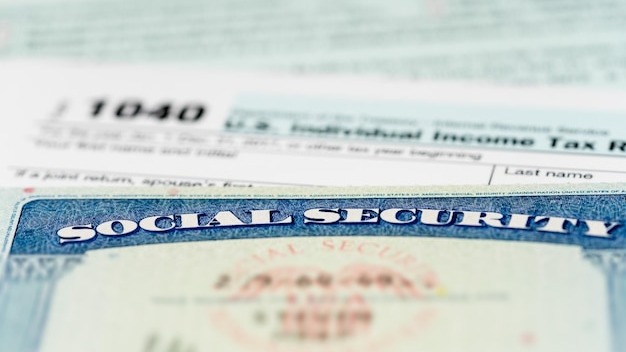
Social Security is approaching a built-in shock that will hit retirees’ wallets even if Congress never votes on a single cut. The retirement trust fund is projected to run dry around 2033, triggering an automatic reduction of roughly 24 percent in monthly checks, or about $18,100 a year for an average beneficiary starting in late 2032. The question is no longer whether the system faces a reckoning, but whether households will adjust in time to keep their own finances afloat.
In the near term, a 2.8 percent cost-of-living adjustment in 2026 will nudge benefits higher and help roughly 75 million recipients keep up with prices. Yet that short-term boost risks lulling people into complacency just as the long-term math turns against them. I see a widening gap between what the program can sustainably pay and what Americans assume it will deliver, and that gap is where individual planning now matters most.
What the “built-in” cut actually means
Social Security was designed with an automatic brake: once its trust funds are depleted, benefits must be paid only from incoming payroll taxes. Analysts who track the program’s finances estimate that, for the Social Security retirement program, this would translate into roughly a 24 percent haircut in late 2032, which they peg at about an $18,100 annual loss for a typical retiree, shortly after trust fund insolvency hits Social Security. That reduction would apply across the board, regardless of income, work history, or political pressure, because the law simply does not allow the program to borrow to fill the gap.
Think of it as a pre-programmed sequester: if lawmakers do nothing, the system automatically shifts from paying 100 cents on the dollar to paying only what current payroll taxes can cover. Reporting on Social Security’s finances describes this as a “built-in benefit cut” that is getting closer each year, with the program currently collecting less in dedicated taxes than it promises in future benefits for every dollar of obligations Built. That is why the looming reduction is best understood not as a hypothetical threat, but as the default outcome baked into current law.
The clock is ticking on a 90-year-old program
Social Security turns 90 in Aug, a milestone that underscores how long the program has anchored American retirement security Social Security. Yet the same analysis that marks that 90-year anniversary also warns that the system is “racing towards insolvency,” with combined trust funds projected to be exhausted while today’s youngest retirees are still in their early seventies. On a theoretically combined basis, the retirement and disability funds are expected to run short of reserves around the time today’s youngest retirees turn 71, which means the automatic cut would hit people who are already well into retirement, not just future generations Racing Towards Insolvency.
The strain is not limited to retirement benefits. The trust funds that support Medicare and Social Security together form a financial backbone for nearly 70 m Medicare and Social Security Americans, and projections show both sets of reserves facing insolvency by roughly 2032 if policies do not change Medicare and Social. That twin pressure makes it harder for Congress to fix one program in isolation, and it increases the odds that any eventual deal will involve a mix of tax hikes and benefit trims that ripple across retirees’ budgets.
Short-term relief: the 2026 COLA and benefit changes
In the near term, beneficiaries are getting a modest reprieve. Official Cost, Living Adjustment, COLA, Information for 2026 shows a 2.8 percent cost-of-living adjustment that will begin with benefits payable at the start of that year, reflecting the recent uptick in consumer prices Information for. Separate coverage notes that Inflation has pushed up the COLA to that same 2.8 percent figure for people receiving Social Security and Supple benefits, slightly improving purchasing power after several years of volatile price spikes COLA.
About 75 million Americans will see their 2026 monthly checks influenced by this COLA and other technical adjustments, according to guidance on how benefit amounts will be affected next year Here. Yet that short-term boost should not be mistaken for a structural fix. Analysts emphasize that Social Security Benefits Won, Be Slashed, But Here, When Retirees May Be Looking, Cuts only after the trust fund is depleted, which is why the absence of reductions in 2026 should be seen as a grace period rather than a reprieve Nasdaq. The COLA is like a small patch on that aging ship, helpful for the next few miles but irrelevant to the size of the hole below the waterline.
How a 24 percent cut would hit real households
The projected 24 percent reduction is not an abstract budget line, it is rent, groceries, and prescriptions that would suddenly be harder to cover. Analysts warn that such a cut would immediately squeeze spending on housing, healthcare and daily essentials, particularly for retirees who rely on Social Security for the majority of their income What the Cut. For someone receiving roughly the average benefit, losing about $18,100 a year would be the equivalent of erasing a modest car payment, a Medicare supplement premium, and a month’s worth of groceries all at once.
Coverage of Social Security’s built-in reduction stresses that the cut would apply to every beneficiary, not just new claimants, because the law requires benefits to match incoming revenue once reserves are gone Here. That universality is what makes the risk so destabilizing. It is closer to a sudden nationwide pay cut for retirees than to a targeted policy change, and it would land at the same time that Medicare’s finances are under strain, compounding the pressure on older households’ medical budgets.
Why Congress has not fixed it yet
Given the stakes, it is tempting to assume that lawmakers will simply step in at the last minute and avert any reduction. The political reality is more complicated. Analyses of Social Security’s finances point out that the program already turns 90 while running persistent cash deficits, and that closing the gap would require either sizable tax increases, benefit changes, or both Social Security Turns. At the same time, the trust funds that support Medicare and Social Security together face insolvency by roughly 2032, which means any fix must juggle two politically sensitive programs at once insolvency.
Experts have floated a menu of options, from gradually increasing the payroll tax rate to lifting the taxable wage cap so higher earners contribute more over time tax rate. Yet each of those ideas creates clear winners and losers, and younger workers already worry about whether they will receive full benefits at all, as reflected in Social Security FAQs that address fears about the program “running out” Social Security. My read is that political gridlock is not just inertia, it is a reflection of how hard it is to sell any sacrifice to voters who have been told for decades that their benefits are guaranteed.
More From The Daily Overview
*This article was researched with the help of AI, with human editors creating the final content.

Nathaniel Cross focuses on retirement planning, employer benefits, and long-term income security. His writing covers pensions, social programs, investment vehicles, and strategies designed to protect financial independence later in life. At The Daily Overview, Nathaniel provides practical insight to help readers plan with confidence and foresight.

