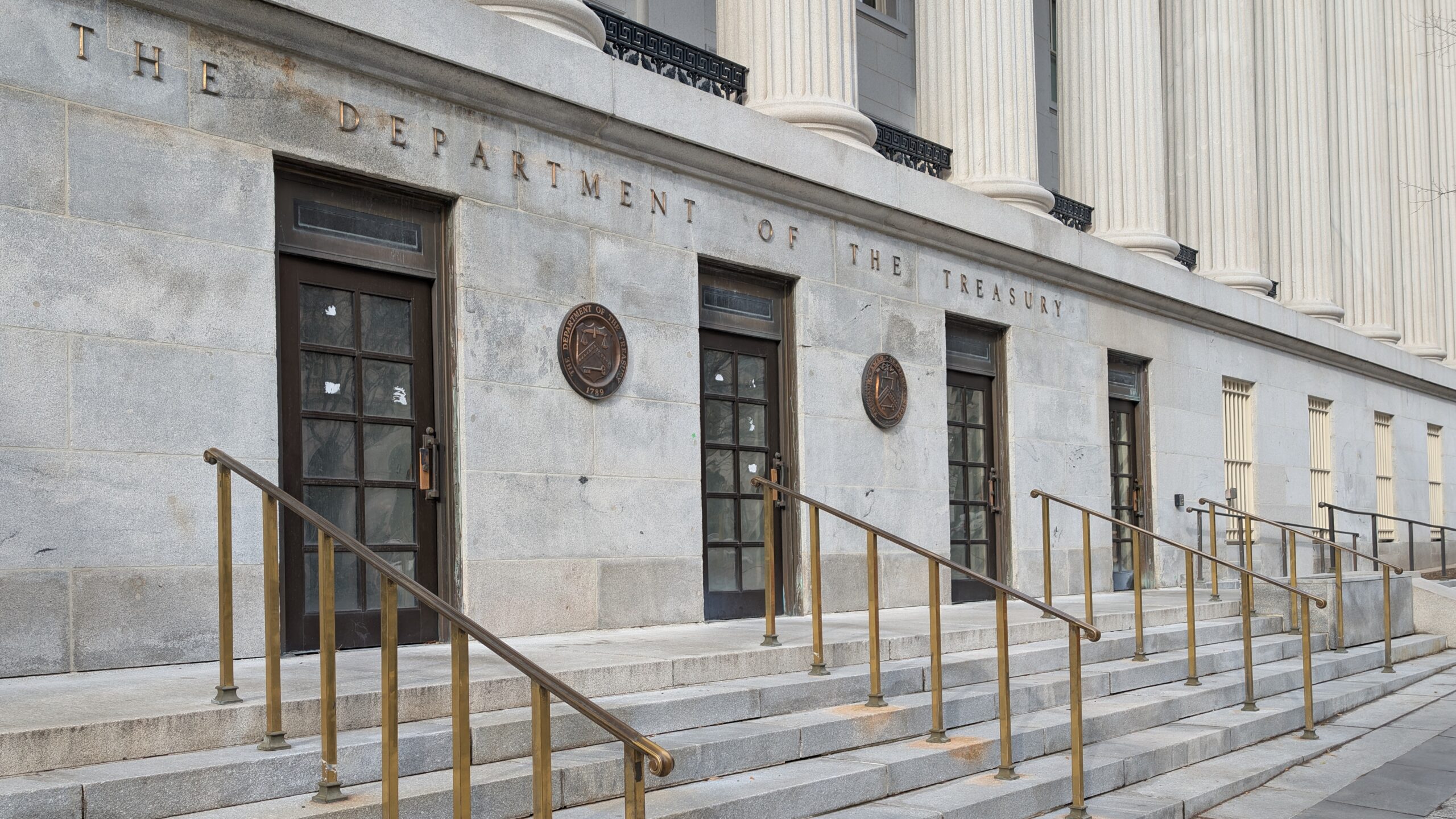
The U.S. government has quietly crossed a new threshold in its revived bond repurchase program, lifting total buybacks for the week to 6 billion dollars after a fresh 2 billion dollar operation. The move folds into a broader plan to manage a record debt load while trying to keep markets orderly and borrowing costs contained. I see it as a revealing test of how far the Treasury can lean on buybacks without spooking investors who are still digesting heavy new issuance.
Rather than a one-off maneuver, the latest purchases fit into a pre-announced schedule that is starting to resemble a weekly rhythm. That structure matters as much as the headline number, because it signals how the Treasury wants to normalize buybacks as a standing tool of debt management rather than an emergency lever pulled only in moments of stress.
How the 6 billion dollar week came together
The Treasury set the tone earlier in the week by flagging a maximum 4 billion dollar buyback that would settle in early February, then followed it with a second 2 billion dollar operation that closed out the week at a cumulative 6 billion dollars. Officials framed the initial 4 billion dollar cap as part of a measured rollout rather than a surprise expansion, and the follow up 2 billion dollar purchase slotted into that same template rather than rewriting it. The sequence underscored that the department was sticking to its stated parameters even as markets parsed every move for hints of a shift in strategy, a point reinforced when The Treasury announced that the maximum 4 billion dollar operation was not a deviation from plan.
By the end of the week, the U.S. Treasury had bought back another 2 billion dollars of its own debt, lifting total repurchases for the period to 6 billion dollars and giving investors a concrete sense of the scale it is willing to deploy in the early phase of the program. That second leg was described as a clear signal to markets that the department intends to keep buybacks on a steady cadence rather than using them as sporadic interventions, with officials emphasizing that the 2 billion dollar add-on was consistent with the broader framework rather than a sudden escalation. In my view, that consistency matters as much as the cash itself, because it helps anchor expectations around how aggressively the U.S. Treasury will lean on this tool in the months ahead.
The quarterly roadmap behind the buybacks
The weekly operations sit inside a much larger blueprint that the Department of the Treasury laid out in the Quarterly Refunding Statement of Deputy Assistant Secretary for Federal Finance Brian Smith. In that document, officials explained that over the February to April refunding window they anticipate conducting a series of buybacks alongside regular auctions, with the goal of smoothing the maturity profile and supporting market liquidity. The same statement detailed how the department plans to manage auction sizes, including keeping a key benchmark auction size at 26 billion dollars, which gives investors a clearer sense of how repurchases will coexist with ongoing issuance rather than replacing it outright, as spelled out in the Quarterly Refunding Statement.
Officials also used that statement to preview the mechanics of the program for the first half of 2026, signaling that buybacks would be phased in gradually and calibrated to market conditions. Today, Treasury is releasing a tentative buyback schedule for the upcoming refunding quarter, the statement noted, and it emphasized that the department anticipates conducting operations across a range of maturities rather than concentrating solely on one segment of the curve. That forward guidance is designed to reduce uncertainty for primary dealers and asset managers who need to plan around both new supply and repurchase flows, and it anchors the 6 billion dollar week within a broader roadmap that Today, Treasury has already put on paper.
Test runs, cash management, and program design
Under the hood, the current operations are still being treated as a proving ground for a more robust buyback regime. The same refunding communication made clear that Treasury is releasing a tentative buyback schedule that includes a small-value test buyback, a signal that officials want to validate the operational plumbing before scaling up to larger and more frequent transactions. I read that as an acknowledgment that even a seemingly straightforward repurchase can have knock-on effects for dealers, settlement systems, and collateral chains, which is why the department is starting with modest sizes and a clearly labeled small-value test buyback rather than jumping straight to tens of billions of dollars a week.
The design choices also reflect lessons from earlier discussions of how buybacks can support market functioning. A detailed program outline from Jul 2025 explained that Treasury conducts two types of buyback operations, distinguishing between cash management buybacks that are intended to reduce volatility in Treasury’s cash balance and other operations that focus more squarely on market liquidity and curve structure. That document stressed that cash management buybacks are meant to smooth short term funding swings rather than signal a broader shift in debt strategy, which helps explain why the current 6 billion dollar week is being framed as part of a methodical rollout rather than a sudden attempt to retire large chunks of debt. The emphasis on these two categories, and on the role of Treasury Cash management, shows how carefully the department is trying to separate operational housekeeping from policy signaling.
Market reaction and yield curve implications
Investors have been quick to parse what a 6 billion dollar weekly buyback pace means for yields, liquidity, and risk appetite. The Department of the Treas has now bought back 6 billion dollars of debt for the week, and that activity has unfolded against a backdrop where the 10 Year Treasury Yield is at 3.48 percent, a level that reflects both the Federal Reserve’s policy stance and the market’s assessment of long term inflation and growth. While a single week of repurchases is not enough to rewrite the yield curve, it does add a marginal source of demand that can support prices in specific off the run issues, especially when the Treasury Yield backdrop is already relatively stable.
From a trading perspective, the more important effect may be on liquidity and bid ask spreads rather than on headline yield levels. By targeting older securities that can be harder to trade in size, the U.S. Treasury is effectively recycling those bonds back into the system and replacing them with more current benchmarks, which can help dealers manage inventory and reduce the risk of air pockets in stressed markets. The latest 2 billion dollar operation, which brought the weekly total to 6 billion dollars, was described as part of a pattern that brings early February activity into line with a weekly operational rhythm rather than an escalation, a nuance that reassured desks that the department was not about to flood the market with surprise demand. Together, those repurchases have been framed as a way to support liquidity without signaling a broader retreat from issuance, a balance that U.S. Treasury officials appear keen to maintain.
What the buyback pace signals about debt strategy
Beyond the week to week mechanics, the 6 billion dollar tally offers a window into how the Treasury is thinking about its long term debt strategy under President Donald Trump. The department has to juggle heavy financing needs with the imperative to keep markets functioning smoothly, and buybacks give it a flexible lever to retire specific issues while continuing to sell new ones. A preliminary buyback announcement circulated to market participants set a maximum purchase amount of 2.0 billion dollars for one operation, down from a previous 4.0 billion dollar cap, and described the security type as nominal, a reminder that officials are calibrating each step carefully. That same notice highlighted that buybacks can help manage the maturity profile and potentially contribute to reducing the government’s interest payments over time, a goal that was spelled out explicitly in the Maximum Purchase Amount guidance.
More From The Daily Overview
*This article was researched with the help of AI, with human editors creating the final content.

Grant Mercer covers market dynamics, business trends, and the economic forces driving growth across industries. His analysis connects macro movements with real-world implications for investors, entrepreneurs, and professionals. Through his work at The Daily Overview, Grant helps readers understand how markets function and where opportunities may emerge.

