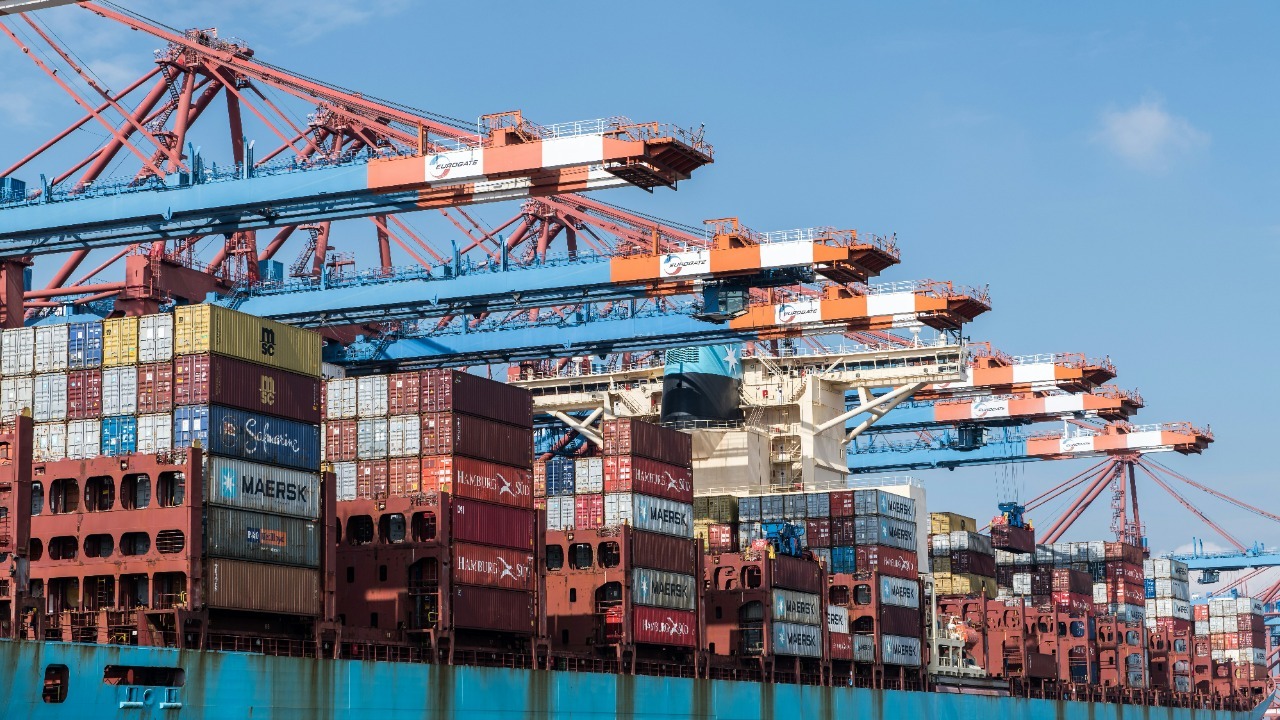
The fight over President Donald Trump’s tariffs has moved from cargo terminals to the marble steps of the Supreme Court, and the stakes for the freight economy could hardly be higher. A pending ruling on whether those tariffs were lawfully imposed now threatens to reorder who pays for global shipping, who gets money back, and where the next wave of containers lands. If the justices detonate that legal bombshell, the volume and direction of United States freight trade could shift faster than trucking and logistics networks can adapt.
At its core, the case is about far more than customs paperwork or legal theory. It is about whether hundreds of billions of dollars in duties that reshaped supply chains will stand, and whether the Supreme Court will narrow the White House’s room to maneuver on trade. For carriers, importers, and exporters that have already endured a rate recession and volatile demand, the decision could mark the line between a fragile recovery and another round of disruption.
The legal fuse: Trump tariffs in the Supreme Court’s hands
The Supreme Court is weighing the legality of many of President Donald Trump’s tariffs, a set of measures that have defined United States trade policy since they were imposed on a wide range of imports. The looming decision has companies on edge as they try to understand whether the duties that shaped their sourcing strategies will survive or be rolled back, and whether the administration will need new tools to accomplish its existing trade goals if the current approach is curtailed by the Supreme Court.
Uncertainty has only deepened as the justices have delayed issuing their opinion. In WASHINGTON, D.C., The Supreme Court recently signaled it would not give any decision on the tariffs when many in the trade world expected one, a pause that has amplified anxiety across supply chains and prompted President Donald Trump to describe the USMCA as effectively irrelevant to the current fight over duties, according to RFD NEWS. A separate alert described how The Supreme Court did not give any opinion on Trump Tariffs and may instead decide closer to January 16, underscoring how the court’s schedule has become a market event in its own right, as captured in a Breaking update on the Supreme Court Delays Ruling.
Refund shock: $150 billion on the line for importers
Behind the courtroom drama sits a staggering financial question: what happens to the money already collected. Companies that paid duties on affected imports are bracing for a potential wave of refund litigation if the tariffs are struck down, with reporting indicating that the Decision could impact $150 billion in tariff refunds. Those Companies are already preparing for complex refund challenges, knowing that even a favorable ruling will not automatically return cash without extensive follow up in the courts and at customs.
Another analysis of the same dispute underscores how that figure would reverberate through ports and logistics hubs. At the Port of Long Beach in Long Beach, Californi, trade groups and shippers are watching a potential ruling that could allow importers to seek refunds of up to $150 billion in duties, a sum large enough to reshape balance sheets and investment plans across the sector, according to Reuters. I see that scale of potential repayment as a direct threat to the stability of freight rates, since carriers and forwarders that negotiated contracts around tariff inflated costs could suddenly find their customers flush with cash and demanding new terms.
Freight volumes and a fragile trucking recovery
Even before the court rules, the freight industry in the US has been in what logistics executives describe as a rate recession, with lower container volumes after companies frontloaded products to get ahead of earlier tariff deadlines. That frontloading pulled demand forward and left a hole in subsequent months, contributing to weaker pricing and excess capacity across trucking and intermodal networks, as detailed in an analysis of how the freight industry has absorbed the tariffs.
Tariffs do not just change prices at the border, they also alter the pattern of shipments that keep trucks and trains moving. Guidance on How Tariffs Can Affect the Trucking Industry notes that Tariffs can trigger Shifts in Freight Volume for Dedicated Trucking Companies, forcing carriers to reposition equipment and staff as customers reroute cargo through different ports, warehouses, and distribution centers, a dynamic that has already played out across freight networks. If the Supreme Court invalidates key duties, I expect another round of abrupt volume swings as importers unwind contingency plans and shift back to lower cost lanes.
Volume of US freight trade hanging on the ruling
What makes this case so pivotal is that it could reset the Volume of US freight trade, not just the legal status of past payments. Analysts following the dispute argue that the Volume of US container flows could rise or fall depending on whether the tariffs stand, since a ruling against the duties would effectively cut landed costs and encourage more imports, while an endorsement of the current regime would lock in higher prices and keep some production offshore, as outlined in coverage of how the Volume of US trade could hinge on the decision.
Market watchers have zeroed in on the Supreme Court as the fulcrum for that shift, with one assessment warning that the Volume of freight trade could hinge on whether the justices uphold or strike down the tariffs, and that If President Trum is constrained by an adverse ruling, future trade actions might need to rely more heavily on other legal provisions, as described in a detailed look at the Supreme Court case. I read those scenarios as a warning that freight planners cannot simply assume a return to pre tariff patterns, because the legal boundaries for future duties may be redrawn even if current ones survive.
Winners, losers, and the “mysterious trader”
As the legal clock ticks, financial markets are already placing bets on who stands to gain or lose. One report describes a Mysterious trader who bought millions in positions ahead of Wednesday’s Supreme Court tariff ruling, a move that underscores how investors see the case as a binary event for certain stocks tied to global trade, according to coverage of that Wednesday trade. The fact that a single court decision can justify such concentrated wagers is a reminder of how tightly freight exposed equities are linked to tariff policy.
Those bets are informed by detailed scenarios of What Supreme Court’s tariff ruling implies. The Supreme Court heard oral arguments in the case on Nov. 5, 2025, and is expected to deliver a decision that could have huge consequences for companies that either benefited from tariff protection or absorbed higher input costs, as laid out in an examination of What Supreme Court might decide. I see import heavy retailers, automakers that rely on global parts chains, and logistics providers with large transpacific exposure as some of the clearest potential winners if duties fall and volumes rebound.
More From TheDailyOverview

Silas Redman writes about the structure of modern banking, financial regulations, and the rules that govern money movement. His work examines how institutions, policies, and compliance frameworks affect individuals and businesses alike. At The Daily Overview, Silas aims to help readers better understand the systems operating behind everyday financial decisions.