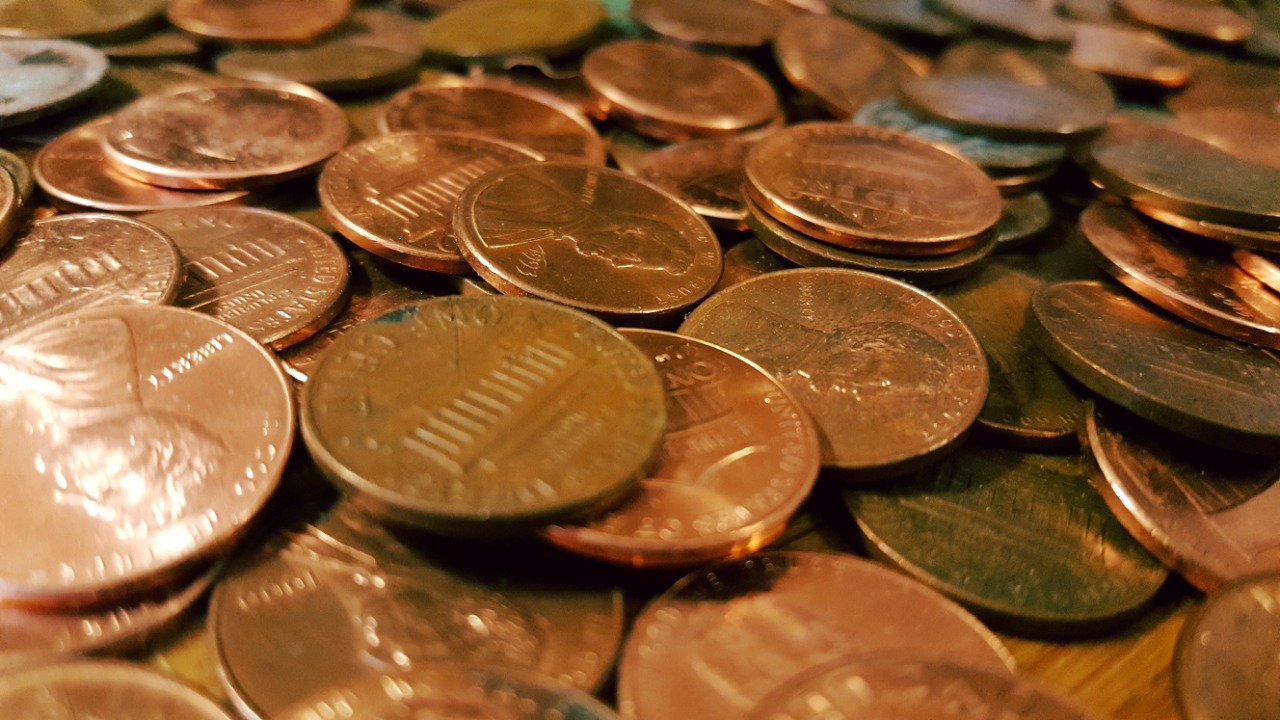
The United States has finally shut off the presses for the one-cent coin, ending more than a century of minting pennies and forcing Americans to rethink the smallest unit of their cash economy. With no new supply coming, the humble cent is about to test a paradox of money: a coin that costs more to make than it is worth could suddenly become a winning bet for people who have been quietly hoarding jars of change.
The last penny does not instantly turn pocket change into a windfall, but it does flip the script on how the coin is valued, from a disposable nuisance at the bottom of a purse to a finite commodity with metal content, collector appeal, and rounding rules all tugging at its future price. I see three big forces that will decide whether penny hoarders come out ahead: the economics that killed the coin, the legal and market limits on melting and trading it, and the way retailers and digital payments adapt to a world where the smallest physical coin is now the nickel.
The economics that finally killed the penny
The cent has been on borrowed time for years because it costs more to produce than its face value, a basic contradiction that eventually became politically impossible to ignore. The United States Mint has repeatedly reported that the unit cost of striking a penny, once metal, labor, and overhead are counted, has exceeded one cent, which means taxpayers have effectively been subsidizing every new coin that enters circulation. That negative seigniorage turned the penny into a budget line item rather than a neutral tool of commerce, and it set the stage for the decision to halt new production once policymakers accepted that the coin’s sentimental value no longer justified its financial drag, as detailed in official production data.
Rising commodity prices made the math even worse, because the modern penny is mostly zinc with a thin copper coating, and both metals have traded at levels that pushed per-coin costs higher. When the Mint has broken out its annual figures, it has shown that the cent and the nickel are the only denominations that routinely cost more to make than they are worth, while dimes and quarters generate positive returns that help offset the losses on smaller coins, according to its circulating coin reports. Once the penny’s production stopped, that cross-subsidy became less defensible, and the government could point to immediate savings from no longer manufacturing a money-losing product, even if the total budget impact is modest compared with larger fiscal debates.
Why hoarders think their jars of pennies might pay off
For people who have been quietly filling coffee cans and five-gallon buckets with cents, the end of minting feels like the moment their patience might finally be rewarded. The basic thesis is simple: a coin that is no longer being made becomes scarcer over time as pieces are lost, damaged, or removed from circulation, and that shrinking supply can eventually push its value above face, especially if the metal inside is worth more than one cent. That logic has already driven some savers to focus on older “pre-1982” pennies that contain 95 percent copper, since the raw metal in those coins has at times had a melt value above one cent based on official composition data and global copper prices.
There is also a psychological angle that favors hoarders, because once people know no new pennies are coming, they tend to treat the ones they have less casually. Instead of tossing them in tip jars or leaving them in store trays, they are more likely to pull them out of circulation and stash them at home, which can create pockets of concentrated supply that later feed niche markets for bulk coins, sorted copper cents, or collectible dates. Online marketplaces already host listings for large lots of pennies sold above face value, especially when sellers have pre-sorted them by year or composition, and those premiums are often justified by reference to the Mint’s own specification tables that distinguish copper-heavy vintages from modern zinc pieces.
The legal and practical limits on cashing in
Even if the metal in a penny is worth more than one cent on paper, hoarders cannot simply melt their coins and sell the copper or zinc for scrap, at least not legally. The United States government has long maintained regulations that restrict the melting or mass export of cents and nickels, arguing that it needs to protect the coin supply from being destroyed for raw materials, and those rules remain in place unless specifically repealed, as outlined in federal regulatory notices. That means the most straightforward arbitrage, turning pennies into metal and pocketing the spread, is off the table for now, and any investor counting on a melt-up scenario is effectively betting on a future policy change that is not guaranteed.
Practical constraints also limit how quickly hoarders can convert their stash into spendable money or higher-value assets. Banks and coin-counting machines may accept rolled or loose pennies at face value, but they are not in the business of paying a premium for copper content or scarcity, so anyone seeking more than one cent per coin has to find private buyers willing to pay extra. That usually means sorting coins by year, separating copper from zinc, and marketing them in bulk lots, a labor-intensive process that only makes sense if the per-coin premium is meaningful, as seen in the pricing patterns on online resale platforms. For most casual savers with a few jars of mixed dates, the realistic upside is modest unless the legal environment or metal markets shift dramatically.
How retailers and digital payments will adapt to a pennyless world
Ending new penny production does not instantly erase the coin from cash registers, but it does force retailers and payment processors to decide how they will handle prices that do not land neatly on a five-cent increment. Other countries that have retired their smallest coins have typically adopted rounding rules that apply only to cash transactions, leaving electronic payments charged to the exact cent, and early guidance in the United States points in the same direction, with merchants encouraged to round final totals up or down to the nearest nickel while keeping pre-tax prices unchanged, according to policy discussions summarized in congressional research. That approach minimizes disruption for card and app users while simplifying the math for cashiers and customers who still prefer physical money.
Digital payments are likely to accelerate as a side effect, because every price that ends in .99 or .49 can still be charged precisely when a shopper taps a phone or swipes a card, avoiding any rounding at the register. Payment apps such as Cash App, Venmo, and Apple Pay already dominate small-dollar transfers among younger consumers, and the disappearance of the penny gives them another subtle advantage over cash, particularly for businesses that want to keep psychological price points intact without dealing with extra coins. Over time, that shift could further marginalize physical change, leaving nickels, dimes, and quarters to handle a shrinking share of everyday transactions even as the Mint’s production tables show continued high volumes for larger denominations that feed vending machines, laundromats, and transit systems.
Winners, losers, and the long game for small change
The immediate winners from the penny’s retirement are not the people with a few rolls in a kitchen drawer, but the federal budget and any business that has long complained about the time and hassle of handling low-value coins. The Mint no longer has to spend more than one cent to create each new penny, which trims a recurring cost from its balance sheet and lets it focus on denominations that generate positive seigniorage, as reflected in its annual financial breakdowns. Retailers and service workers also gain from faster cash transactions, fewer coin shortages, and less time spent counting and rolling change at the end of a shift, benefits that have been documented in other countries that scrapped their smallest coins and later reported smoother point-of-sale operations in government case studies.
For hoarders, the payoff is more nuanced and will likely unfold over years rather than months. People sitting on large, sorted caches of copper-rich pennies are best positioned to benefit if metal prices rise or if the government eventually relaxes melting restrictions, while casual savers may see only a small premium if they sell bulk lots to collectors or resellers who specialize in pre-1982 coins, as suggested by current spreads in secondary markets. The last cent to roll off the presses marks the end of an era, but the real story for those jars of change is just beginning, and the outcome will depend less on nostalgia than on the hard math of metal, law, and how quickly Americans leave physical coins behind.
More From TheDailyOverview
- Dave Ramsey says these two simple questions show whether you’re rich or poor
- Retired But Want To Work? Try These 18 Jobs for Seniors That Pay Weekly
- IRS raises capital gains thresholds for 2026 and what’s new
- 12 ways to make $5,000 fast that actually work

Cole Whitaker focuses on the fundamentals of money management, helping readers make smarter decisions around income, spending, saving, and long-term financial stability. His writing emphasizes clarity, discipline, and practical systems that work in real life. At The Daily Overview, Cole breaks down personal finance topics into straightforward guidance readers can apply immediately.

