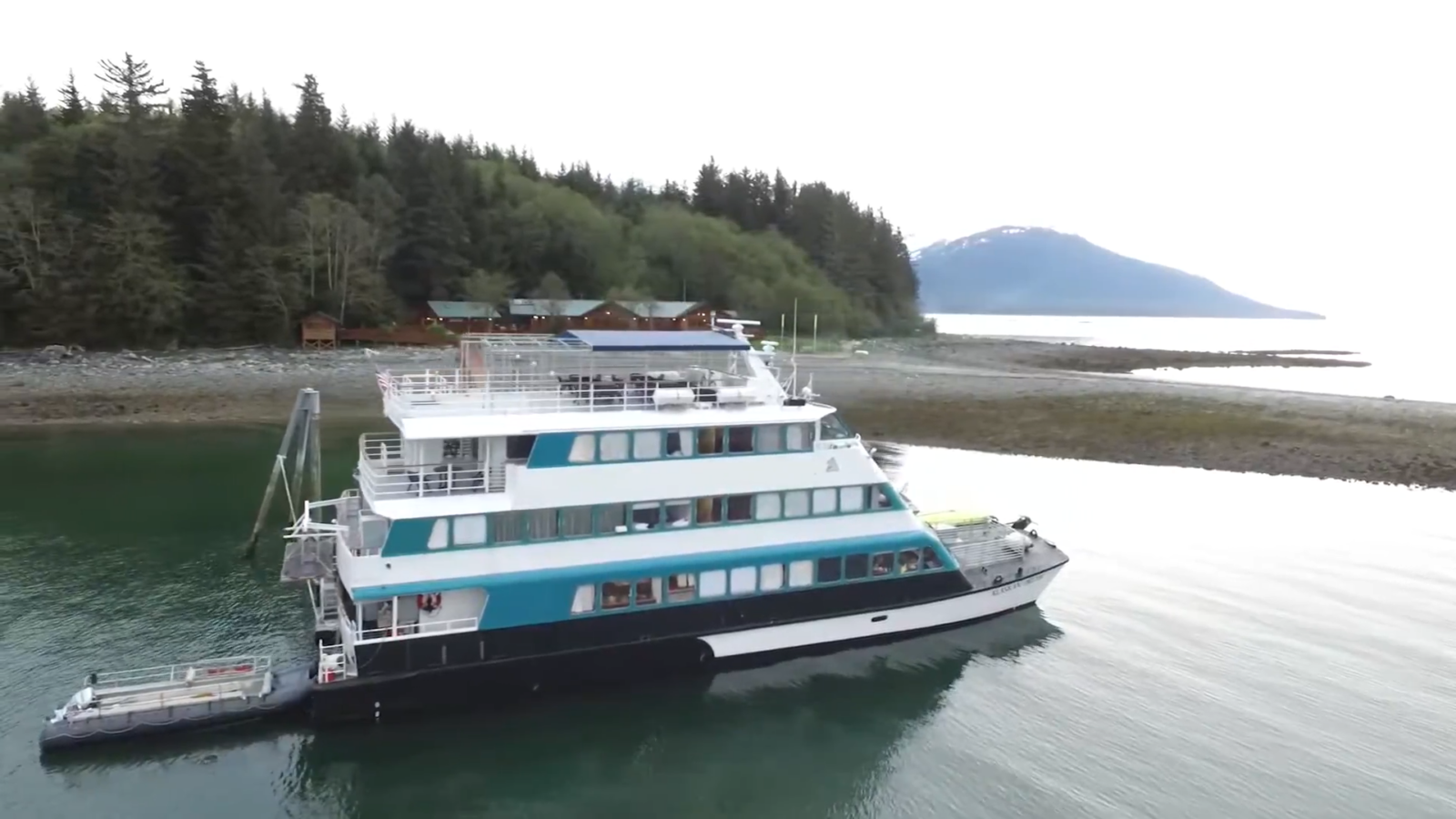
A niche but beloved Alaska cruise brand has abruptly gone dark, leaving travelers and local partners scrambling to understand what went wrong. After more than a decade sailing intimate itineraries through Southeast Alaska, Alaskan Dream Cruises has shut down and canceled every future voyage, a rare full stop in an industry that usually prefers gradual retrenchment to sudden exits.
The collapse hits a corner of the cruise market built on small ships, local ownership, and close ties to coastal communities. It also raises sharper questions for anyone booking with boutique operators, from how deposits are protected to what happens when a parent company decides its priorities lie elsewhere.
What happened to Alaskan Dream Cruises
The shutdown unfolded with striking speed. In a notice to guests and partners, the company stated that, “Effective immediately Alaskan Dream Cruises has ceased business operations and will not longer be operating any future sailings,” a blunt confirmation that the line was not merely pausing or restructuring but closing outright. That language left little room for ambiguity, signaling that every scheduled departure, from early season voyages to peak summer sailings, was off the table and that the brand itself was effectively finished.
For a cruise line that marketed itself on reliability and deep roots in Alaska, the suddenness of the announcement has been jarring. Travelers who had spent months planning bucket list trips through the Inside Passage woke up to find their vacations erased in a single sentence, with the phrase “Effective immediately Alaskan Dream Cruises has ceased business operations” now circulating widely through financial coverage of the closure.
A small-ship specialist with deep Alaska roots
The loss resonates beyond the usual cruise headlines because Alaskan Dream Cruises was not a mass market giant but a small-ship operator that had carved out a distinctive role in Southeast Alaska. The company had been sailing those waters since 2011, positioning itself as a locally owned alternative to the megaships that dominate the region’s busiest ports. Its vessels carried far fewer passengers than the floating resorts that tower over Juneau and Ketchikan, trading onboard water parks and shopping malls for wildlife viewing, cultural programming, and access to narrower channels and smaller communities.
That niche made the line a favorite among travelers who wanted to see Southeast Alaska at a slower pace and closer range, often with naturalists and local guides interpreting the landscape. Reporting on the shutdown notes that Alaskan Dream Cruises operated as a small-ship specialist from its inception, building a reputation for intimate voyages that contrasted sharply with the thousands of passengers disembarking from larger brands on any given summer day.
Inside the four-ship fleet and its parent company
Part of what set the company apart was its scale. Alaskan Dream Cruises ran a Four ship fleet that offered weeklong voyages for just 40 to 80 passengers, a configuration that kept guest counts low and crew-to-passenger ratios high. Those numbers, 40 and 80, are not just marketing talking points but a window into the economics of the operation, with each sailing depending on a relatively small pool of fares to cover fuel, staffing, maintenance, and port costs that have been rising across the industry.
Behind the brand stood Allen Marine, a long-established Alaska business that owns tour boats, shipyard operations, and marine services in the region. The decision to halt voyages was framed as a way for Allen Marine to focus on those other lines of work, effectively acknowledging that the cruise arm no longer fit its strategic priorities. Coverage of the closure notes that the four-ship company is stopping its weeklong voyages so parent company Allen Marine can concentrate on its shipyard operations and marine services, a pivot that underscores how vulnerable small cruise brands can be when their owners see better returns elsewhere.
How the shutdown unfolded for guests and crew
From the traveler’s perspective, the most immediate impact is the blanket cancellation of all future sailings. Guests who had booked for the coming season, often planning around specific wildlife windows or family milestones, are now confronting a tangle of logistics: airfare to reroute or cancel, vacation time to reassign, and the question of whether deposits and final payments will be refunded or converted into credits that may never be usable. The company’s statement that it “will not longer be operating any future sailings” leaves little doubt that rebooking within the same brand is not an option, forcing customers to look elsewhere if they still hope to cruise Alaska this year.
For crew and shoreside staff, the closure is just as abrupt. Small-ship lines rely heavily on seasonal workers who return year after year, building a culture that regular guests come to recognize. When a brand like Alaskan Dream Cruises shuts down without a transition period, those mariners, guides, and hospitality workers must scramble to find positions with other operators, often after the prime hiring window has closed. Industry-focused reporting on the collapse, including a detailed account under the banner “Alaska Cruise Line Abruptly Shuts Down Operations, Canceling All Future Sailings,” has highlighted how quickly the news filtered through crew networks, with writer Frank describing how Alaskan Dream Crui staff were left to absorb the news just as they would normally be preparing for another season.
Signals of financial strain and a shifting market
While the company’s public statement centers on a strategic refocus by its parent, there were indications that the business model was under pressure. Small-ship cruising in remote regions like Southeast Alaska carries high fixed costs, from fuel and provisioning to specialized maintenance, and those expenses can be harder to absorb when each voyage carries only 40 to 80 guests. Analysts have pointed to signs of financial strain at Alaskan Dream Cruises, suggesting that the line may have struggled to balance its intimate scale with the capital demands of keeping a fleet seaworthy and competitive.
The broader market context has not been forgiving. Larger cruise brands have poured capacity into Alaska, often discounting shoulder-season itineraries and bundling air promotions that are difficult for smaller operators to match. At the same time, travelers have more options than ever in the expedition and adventure segment, from global names like Lindblad Expeditions and Hurtigruten to hybrid products on smaller ships owned by mainstream lines. Coverage of the shutdown notes that there were already signs of financial before the final announcement, a reminder that even well-regarded niche brands can be squeezed when competition intensifies and costs climb.
What the closure means for Southeast Alaska communities
The end of Alaskan Dream Cruises is not just a story about ships and bookings, it is a local economic story for Southeast Alaska. The line’s itineraries were built around smaller ports and cultural experiences that funneled visitor spending into communities beyond the main cruise hubs. When a four-ship company that specialized in weeklong voyages disappears, the ripple effects touch independent guides, dock operators, cultural presenters, and small businesses that counted on a steady stream of 40 to 80 high-intent visitors at a time rather than thousands arriving at once.
Because the brand was tied so closely to Allen Marine and its broader network of marine services, the shutdown also reshapes how tourism and maritime work intersect in the region. Allen Marine’s decision to focus on shipyard operations and other marine services may ultimately support local employment in different ways, but in the near term it removes a locally branded cruise option that many residents saw as a counterweight to outside corporations. As Southeast Alaska prepares for another summer of record traffic from the biggest ships, the absence of Alaskan Dream Cruises will be felt most acutely in the quieter coves and smaller docks where its vessels once tied up, a gap that no amount of megaship volume can fully replace.
More From The Daily Overview
*This article was researched with the help of AI, with human editors creating the final content.

Grant Mercer covers market dynamics, business trends, and the economic forces driving growth across industries. His analysis connects macro movements with real-world implications for investors, entrepreneurs, and professionals. Through his work at The Daily Overview, Grant helps readers understand how markets function and where opportunities may emerge.

