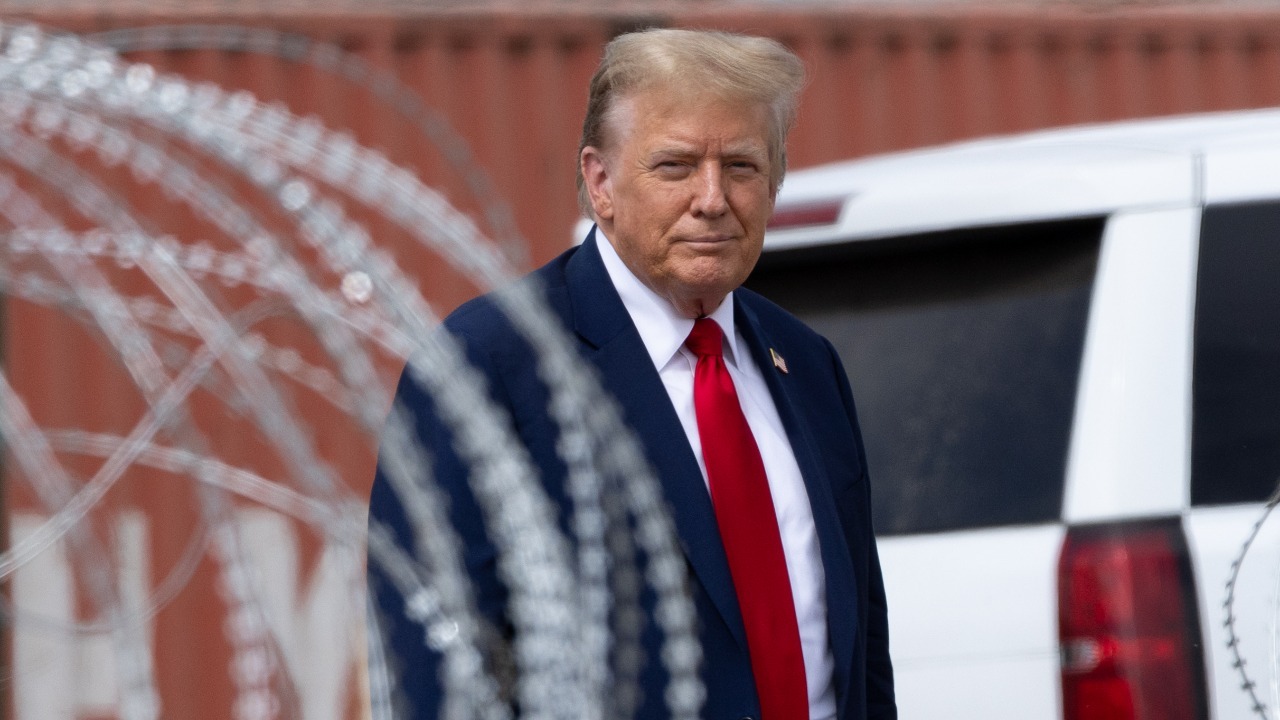
President Donald Trump’s push to wrest control of Greenland from Denmark has escalated from a provocative idea into a full-blown geopolitical confrontation, and one of his closest aides is now framing it as a matter of basic fairness. White House Deputy Chief of Staff Stephen Miller has argued that Danish sovereignty over the Arctic island is “unfair to the American taxpayers,” insisting that the United States shoulders the real costs of defending the territory while Copenhagen reaps the benefits. His fury over what he casts as an imbalanced arrangement is now colliding with European outrage, new tariffs, and rising anxiety inside NATO.
At stake is far more than a symbolic land grab. Greenland’s strategic location, its role in Western defense planning, and its vast natural resources have turned a long-running curiosity about buying the island into a live crisis that is testing alliances and reviving old arguments about American power, European responsibility, and who ultimately pays for security in the North Atlantic.
The aide who says Denmark is “too tiny” for Greenland
Stephen Miller has emerged as the most aggressive public defender of Trump’s Greenland ambitions, turning what might have sounded like a quirky real estate fantasy into a hard-edged case about security and money. As White House Deputy Chief of Staff and Trump’s aide, he has told conservative audiences that Denmark is simply too small to manage or defend the vast Arctic territory, describing the Nordic state as “tiny” and insisting it “cannot control” Greenland. In an interview with Fox News host Sean Hannity, Miller framed the administration’s push as a sober reassessment of who actually guarantees the island’s safety, casting the United States as the indispensable power that already underwrites Greenland’s defense and infrastructure while Danish politicians cling to formal sovereignty.
In Miller’s telling, that imbalance is not just a strategic problem but a financial injustice. He has argued that it is “unfair to the American taxpayers” for Washington to keep paying to secure a territory that belongs to another country, especially when that country, Denmark, is portrayed as unwilling or unable to invest at the scale the United States believes is necessary. His comments, reported as part of the Trump administration’s intensified campaign to justify a takeover proposal, have turned a technical debate about Arctic basing and NATO planning into a populist grievance about who foots the bill. By tying Greenland’s future to the wallets of ordinary Americans, Miller is trying to turn a niche foreign policy issue into a domestic political cause.
Why Greenland matters so much to Washington
To understand why Miller’s anger resonates inside the White House, it helps to look at what Greenland represents in strategic terms. The island sits between North America and Europe, a massive Arctic landmass that has long been central to North Atlantic defense planning and early warning systems. For decades, the United States has operated key military facilities there under arrangements with Copenhagen, treating Greenland as a forward outpost for monitoring the Arctic and protecting the North Atlantic region for NATO interests. In that sense, Miller is not wrong that American forces and budgets already carry much of the practical burden of defending the island, even though formal sovereignty remains with Denmark.
Greenland’s importance has only grown as melting ice opens new sea routes and exposes potential reserves of minerals and energy, intensifying global competition in the Arctic. The current confrontation is unfolding against the backdrop of a broader Greenland crisis inside NATO, where member states are already grappling with how to balance deterrence, resource access, and the rights of the Greenlandic population. When Miller insists that Denmark “cannot defend” the territory, he is tapping into a long-standing American frustration that European allies benefit from U.S. security guarantees without matching them in spending or capability. The difference now is that the Trump administration is no longer content with quiet grumbling; it is openly questioning whether Copenhagen should keep the keys to the island at all.
Denmark, Greenland and the “unfair” sovereignty argument
Miller’s fairness argument rests on a stark contrast between the scale of Greenland and the size of the country that formally owns it. Greenland is a vast Arctic territory with a tiny population, while Denmark is a relatively small European state whose defense budget and military footprint are modest compared with those of the United States. Miller has seized on that disparity to argue that Copenhagen’s control is not just outdated but irresponsible, claiming that a country of Denmark’s size cannot realistically manage a territory that large or secure it against modern threats. In his view, the current arrangement leaves American forces to do the heavy lifting while Danish leaders enjoy the prestige of sovereignty.
That line of attack has been sharpened by Miller’s repeated insistence that the situation is “unfair to the American taxpayers,” a phrase that has become a kind of mantra for the administration’s Greenland push. Reporting on his remarks notes that he has portrayed the island as “25 per cent” of the Arctic region, a statistic he uses to dramatize the mismatch between Greenland’s scale and Denmark’s capacity. By arguing that the United States is already paying to defend a quarter of the Arctic while lacking formal control over the territory in question, Miller is trying to reframe the debate from one about annexation to one about overdue burden sharing. It is a rhetorical move designed to make a radical proposal sound like a logical correction of an old imbalance.
Tariffs, “national emergency” talk and the cost to taxpayers
The fairness argument is not just rhetorical; it is now being used to justify concrete economic pressure. Trump has moved to impose tariffs on European countries that oppose U.S. control of Greenland, turning the dispute into a trade confrontation that directly affects consumers and businesses on both sides of the Atlantic. According to reporting on the standoff, Trump says 8 EU countries will face a 10% tariff because they have opposed U.S. control of Greenland, a move European leaders warn could trigger a downward spiral of retaliatory measures tied to territorial ambitions. In parallel, the administration has threatened Europe with 25% tariffs and hinted at military pressure, deepening what officials describe as a NATO crisis over Arctic resources and U.S. national security.
Treasury Secretary Scott Bessent has tried to put a technocratic gloss on this escalation, defending the Greenland-related tariffs as a necessary response to what he calls a looming emergency. In his words, “the national emergency is avoiding the national emergency,” a circular but revealing phrase that underscores how the administration is using the language of crisis to justify extraordinary economic measures. Bessent has been explicit that these tariffs are tied to the broader effort to secure a deal over Greenland, presenting them as a tool to force European governments to take U.S. concerns seriously. For American taxpayers, that means Miller’s complaint about unfair costs is now being translated into policies that could raise prices at home, even as they are sold as a way to stop others from free-riding on U.S. defense spending.
From purchase talk to military options
Behind the public rhetoric, the White House has been exploring a range of options to change Greenland’s status, including scenarios that go far beyond a conventional real estate deal. Officials have acknowledged that the United States is discussing ways to acquire Greenland that include the use of military power, a striking admission that reflects how far Trump’s team is willing to go. The White House has said that President Donald Trump has been discussing options to purchase the territory, while also leaving open the possibility of more coercive steps if negotiations fail. That dual track, financial and military, has alarmed European allies who see it as a direct challenge to the principle that borders in their region are not redrawn by force.
More From TheDailyOverview

Grant Mercer covers market dynamics, business trends, and the economic forces driving growth across industries. His analysis connects macro movements with real-world implications for investors, entrepreneurs, and professionals. Through his work at The Daily Overview, Grant helps readers understand how markets function and where opportunities may emerge.

