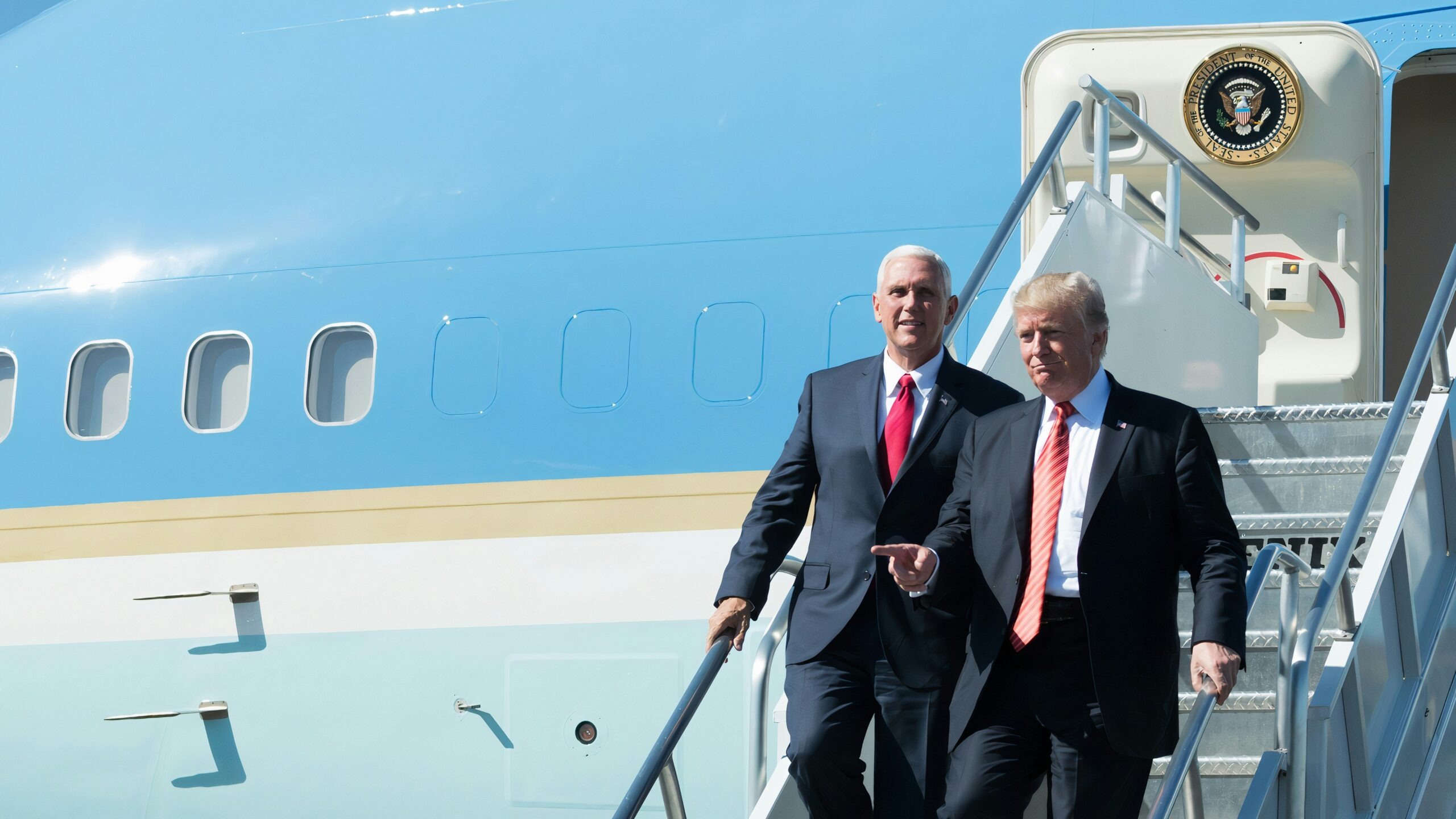
The fight over Greenland has shifted from diplomatic oddity to full-blown economic confrontation. President Donald Trump is threatening tariffs as leverage to force European countries to back his push to acquire the Arctic territory, while Europe is preparing to answer with a legal weapon it openly calls a trade “bazooka.” What began as a dispute over a remote island is now testing how far Washington and Brussels are willing to go in weaponizing trade.
At stake is not only control over a strategically vital Arctic outpost but also the basic rules of transatlantic commerce. If Trump follows through with new duties and Europe fires its bazooka in response, the Greenland standoff could harden into a long‑running economic conflict that hits exporters, rattles markets, and redraws the boundaries of geopolitical coercion.
The Greenland trigger: tariffs for territory
The current crisis is rooted in Trump’s decision to tie tariffs directly to his ambition to annex Greenland, a semiautonomous part of Greenland and Denmark that sits astride key Arctic sea lanes. Earlier this year he announced that he would impose a 10% tariff on eight European countries that refuse to support his plan, explicitly linking the duties to their stance on the island and to his frustration over a failed bid for a Nobel Peace Prize connected to the proposed deal for Greenland. In live updates from Washington, officials described how President Donald Trump framed the move as a response to European resistance and to what he saw as a snub over the Nobel Peace award, turning a territorial gambit into a personal and geopolitical score to settle, as detailed in the running coverage of What he is “covering” today.
The White House has made clear that the tariffs are not a bluff. Officials have briefed that the 10% duties would hit eight European nations, including six members of the European Union, starting at the beginning of February and lasting until at least the end of the year, a timeline spelled out in Main points from European capitals. Trump has also warned that countries such as the U.K., which have rallied around Greenland and Denmark, will be targeted, a threat echoed in separate reporting that the US President plans to penalize states that back Greenland and Denmark diplomatically, as described in coverage of Greenland and Denmark. In effect, Trump is using the tariff schedule as a pressure tool to force a change in sovereignty over an Arctic territory that European governments insist is not for sale.
Europe’s ‘trade bazooka’: the Anti-Coercion Instrument
Europe’s answer is not to mirror Trump’s improvisational tariff politics but to reach for a new legal device designed precisely for this kind of pressure. The so‑called trade bazooka, formally the Anti Coercion Instrument, or ACI, gives the European Union authority to retaliate when a third country uses economic measures to coerce its members. Under the law, the European Union can investigate alleged coercion for months, then respond with tariffs, restrictions on services, or limits on investment if talks fail, a process laid out in detail in guidance on the Anti Coercion Instrument. Officials in Brussels have been explicit that Trump’s Greenland move is exactly the kind of scenario the ACI was built for, describing it as economic duress aimed at forcing a territorial concession.
The ACI is widely described as the EU’s strongest trade weapon of last resort, a tool that allows the bloc to act collectively rather than leaving individual capitals to fend off pressure alone. Analysts note that the ACI can be calibrated, with measures ranging from targeted duties to sweeping restrictions on access to the EU market, and that it is meant to deter coercion before it escalates. A detailed explainer on how The ACI works describes it as the EU’s most powerful response to economic blackmail by a third country, complete with examples of how it could be deployed and illustrated by Photographer Angel Garcia, who has documented the political symbolism of the instrument in The ACI coverage. In the Greenland case, that means Europe is signaling that if Trump fires his tariff shot, it is prepared to answer with a coordinated economic counterstrike.
European unity hardens as Berlin and Brussels push back
For the ACI to matter, Europe has to stay united, and so far leaders are working hard to project exactly that. Germany has vowed a “united” response from Europe after Donald Trump’s threats, with Berlin warning that the continent will not accept what it calls blackmail over Greenland. German officials have stressed that Europe will counter any attempt to force a territorial deal through economic pain, a stance that reflects growing anger in Jan over the way Trump has framed the dispute, as reported in live updates on how Greenland has become a test of European resolve.
At the same time, European leaders have convened an extraordinary meeting to coordinate their response, underscoring how seriously they take the threat. According to accounts from that gathering, Trump’s Greenland threats prompted an urgent session of European heads of government, where they discussed both legal options under the ACI and potential sector‑specific retaliation if the US tariffs hit. The White House has been briefed that European leaders are also reviewing military cooperation in the Arctic, including participation in exercises near Greenland, a linkage described in detail in reports on how Trump has turned the island into a flashpoint. The message from Brussels and Berlin is that Europe will not be divided or intimidated over Greenland, even if that means risking a broader clash with Washington.
Who gets hit: exporters, markets and the IMF’s warning
Behind the rhetoric, the economic stakes are concrete and immediate. Analysts have already mapped out which European exporters are most exposed if Trump’s Greenland tariffs take effect, highlighting sectors such as autos, machinery, and luxury goods in countries that sit on the president’s eight‑nation list. A breakdown of the likely impact shows how Here are the European exporters most exposed to the 10% duties, with particular vulnerability for firms that rely heavily on US sales and operate on thin margins, as detailed in a granular look at Here the companies that could see profits squeezed.
Global institutions are already sounding the alarm. The International Monetary Fund has warned that there are no winners in trade wars and that Trump’s plan to impose tariffs on countries including the U.K. over Greenland and Denmark could spook markets and slow growth. One analysis notes that Donald Trump’s threats have already rattled equities and raised concerns about defaults, with investors worried that a tit‑for‑tat spiral could hit firms deeply embedded in the EU market, as described in a market‑focused report that opens with the phrase Defaults Done and tracks how traders are reacting to the Defaults Done scenario. Another live blog on the tariff fight notes that Americans bear almost all the cost of Trump tariffs, citing a study by a German research team and quoting analyst Jenny McCall, who argues that US consumers and importers ultimately pay for higher duties even when they are framed as punishment for foreign governments, as laid out in coverage that tracks how Americans shoulder the burden of Americans paying for tariffs.
Escalation risks: from ACI retaliation to a wider trade war
If Trump proceeds and Europe activates the ACI, the next phase will be retaliation. European countries are already weighing retaliatory tariffs and broader economic countermeasures against the US, including potential duties on politically sensitive American exports. Officials have floated a package worth up to 108 billion dollars in response, and are considering targeting sectors that matter in key US states, a strategy described in detail in analysis of how European governments are preparing retaliatory tariffs and other steps in European deliberations. The ACI would provide the legal framework, but the political choices about where to hit would be calibrated to maximize leverage while trying to avoid a complete breakdown in transatlantic trade.
More From TheDailyOverview

Grant Mercer covers market dynamics, business trends, and the economic forces driving growth across industries. His analysis connects macro movements with real-world implications for investors, entrepreneurs, and professionals. Through his work at The Daily Overview, Grant helps readers understand how markets function and where opportunities may emerge.

