Deputy Attorney General Todd Blanche is facing a formal ethics complaint that cuts to the heart of how the Department of Justice polices the fast‑moving world of cryptocurrency. At issue is whether the official overseeing key financial crime cases could fairly regulate an industry in which he personally held a significant stake while also serving as President Donald Trump’s criminal defense lawyer. The allegations, framed as a “blatant” conflict of interest, raise fresh questions about how the administration handles both digital assets and basic guardrails on public service.
The complaint does more than accuse one powerful lawyer of bad judgment. It suggests that decisions inside the Justice Department about crypto enforcement, money laundering and fraud may have been shaped by undisclosed financial incentives and overlapping loyalties. For a White House already defined by its combative posture toward federal prosecutors, the stakes extend well beyond one official’s portfolio.
The complaint that put Todd Blanche under the microscope
The new complaint zeroes in on Todd Blanche’s dual identity as a senior Justice Department official and as President Trump’s criminal attorney, arguing that his private interests collided with his public duties. Ethics advocates allege that Blanche’s personal holdings in digital assets and his role in shaping enforcement priorities created a structural conflict that could not be cured by routine disclosures or internal screens. They describe the situation as a “blatant” crypto conflict, asserting that the combination of prosecutorial power and market exposure undermined confidence in the department’s independence.
According to the filing, Blanche’s conduct must be evaluated against long‑standing rules that bar federal officials from participating in matters that could affect their own finances or those of close associates. The complaint points to his work on cases involving crypto fraud and money‑laundering schemes while he allegedly maintained substantial digital asset positions, arguing that this overlap violated those standards. It also notes that the controversy erupted only after outside scrutiny of his portfolio, which is why the complaint’s authors say internal safeguards clearly failed and have asked for a formal review of his actions as Deputy Attorney General.
Crypto holdings, enforcement power and a “blatant” conflict
The core factual claim behind the complaint is that Todd Blanche owned at least $159,000 worth of cryptocurrency while helping steer the Justice Department’s approach to the same industry. That figure, cited by the complainants, is not a trivial investment for any official, let alone one with authority over financial crime prosecutions and policy. In their view, the size of the stake made it impossible for Blanche to credibly claim that his decisions about investigations, settlements or guidance would be unaffected by market swings that could move his own net worth.
Critics argue that the problem is not only the amount but the timing and context of Blanche’s holdings. They note that his crypto exposure coincided with a period when federal agencies were wrestling with how aggressively to pursue exchanges, token issuers and trading platforms that had boomed during President Joe Biden’s term. The complaint contends that Blanche’s personal investments created a direct incentive to temper enforcement that might depress valuations or disrupt markets in which he was financially entangled, and that this incentive was never adequately disclosed to the public.
How Blanche reshaped DOJ’s crypto posture from the inside
Even before the complaint surfaced, watchdogs had raised alarms about how Todd Blanche used his position to influence the Justice Department’s stance on digital assets. Reporting has detailed how he helped shut down or sideline key crypto enforcement initiatives while he was still holding significant digital asset positions. Internal units that had been built to pursue complex fraud and money‑laundering schemes tied to tokens and exchanges reportedly saw their mandates narrowed or their resources reduced as Blanche consolidated decision‑making authority over which cases would move forward.
Those shifts did not occur in a vacuum. They came as regulators across the government were debating whether to treat certain tokens as securities, commodities or something else entirely, and as law enforcement tried to keep pace with scams that targeted retail investors through platforms like Coinbase, Binance and smaller offshore exchanges. By dialing back some of the most aggressive enforcement tools, Blanche effectively signaled to the market that the Justice Department would take a more cautious approach, a move that critics now say aligned neatly with his own financial interests in the sector.
The Trump defense connection and DOJ’s credibility problem
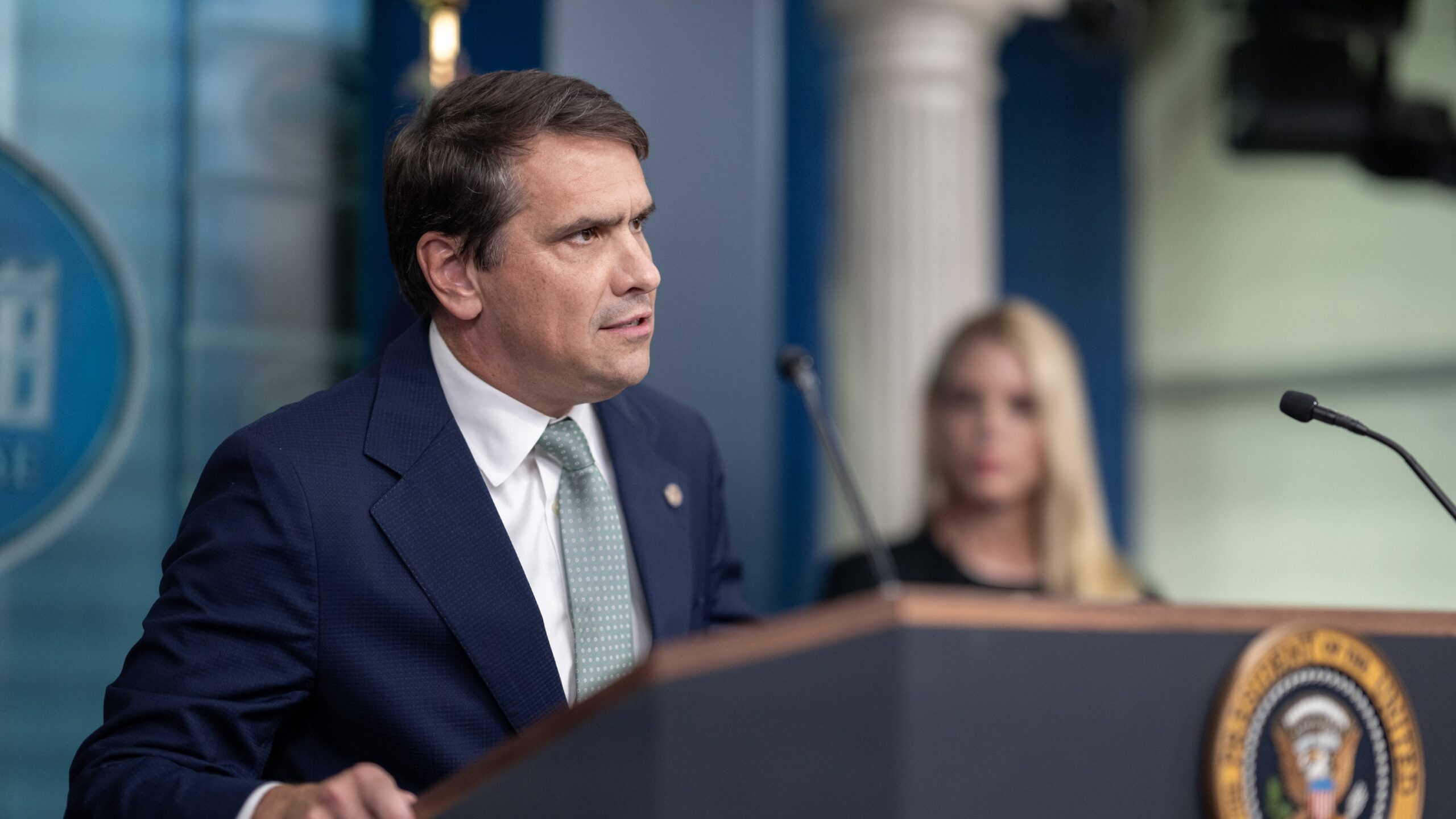
The complaint also highlights Blanche’s parallel role as President Trump’s criminal attorney, arguing that this second hat compounded the conflict inside the Justice Department. As Deputy Attorney General Todd Blanche appeared at a news conference in Washington, he was not only the department’s number two official but also the president’s personal defender in cases that touched on financial conduct and political power. That overlap, ethics experts say, blurred the line between the administration’s legal exposure and the department’s institutional mission to apply the law evenhandedly.
In practice, Blanche’s dual roles meant that decisions about which crypto‑related fraud and money‑laundering schemes to prioritize could not be easily separated from the political interests of the White House. A detailed account of his tenure describes how he navigated internal debates over whether to bring high‑profile cases that might rattle markets or implicate politically connected actors, including donors who had embraced digital assets as a new frontier of campaign finance. The complaint argues that his loyalty to President Trump, combined with his own investments, created a triple bind that made impartial judgment nearly impossible.
Inside the formal ethics challenge and what happens next
The formal complaint against Blanche, which ethics advocates have framed as a test of the Justice Department’s willingness to police its own leadership, draws heavily on prior investigative reporting about his crypto portfolio and enforcement record. It cites earlier findings that he helped shut down crypto enforcement while holding digital assets, and it uses those facts to argue that his conduct violated both the letter and spirit of federal conflict‑of‑interest rules. The document characterizes his behavior as a “blatant” breach, asserting that no reasonable observer could believe his decisions were free from personal financial influence.
To support that claim, the complaint references detailed accounts of Blanche’s actions in the department’s Regulation sphere, including how he curtailed initiatives that had targeted exchanges and token projects that flourished during President Joe Biden’s term. It also notes that the controversy has now become one of the Most Read stories in the broader debate over government ethics, appearing alongside coverage of a “Fraudulent Scheme” case in which New Mexico sues Texas oil companies for walking away from their leaking wells. By placing Blanche’s situation in that context, the complaint’s authors argue that his case is part of a larger pattern in which powerful actors treat public obligations as negotiable when private profit is at stake.
More From TheDailyOverview
*This article was researched with the help of AI, with human editors creating the final content.

Grant Mercer covers market dynamics, business trends, and the economic forces driving growth across industries. His analysis connects macro movements with real-world implications for investors, entrepreneurs, and professionals. Through his work at The Daily Overview, Grant helps readers understand how markets function and where opportunities may emerge.