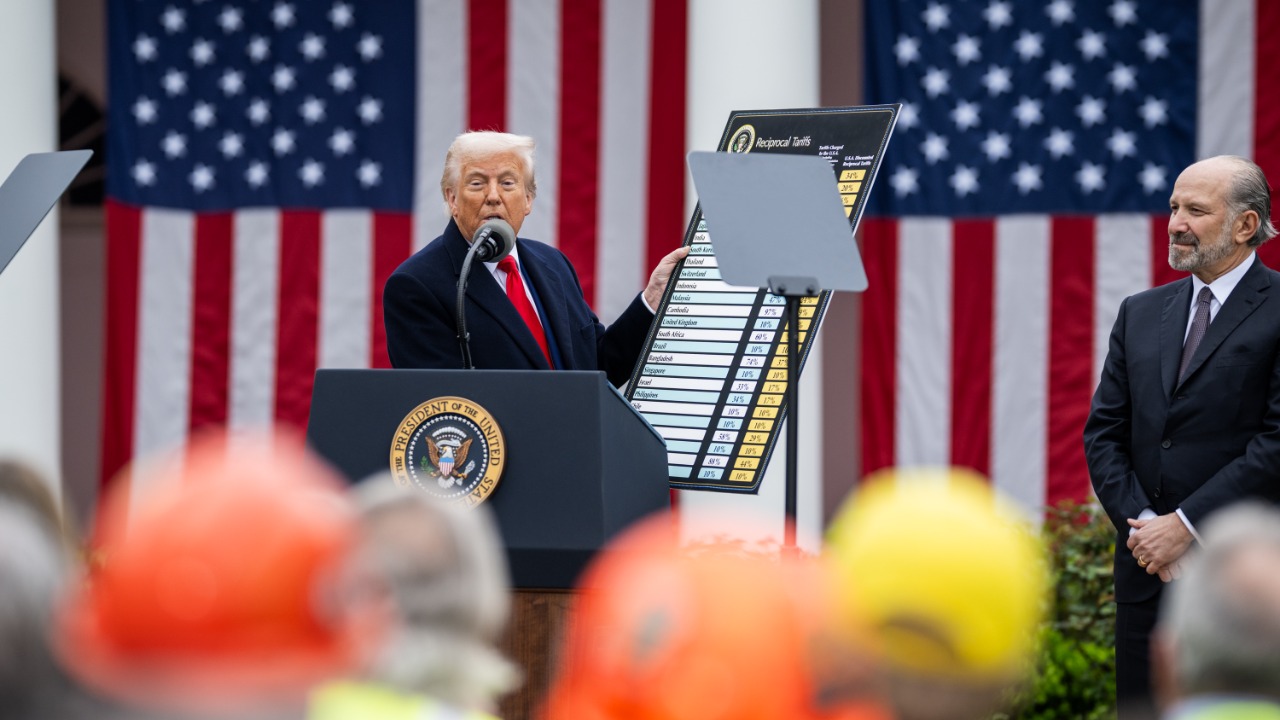
The Supreme Court ruled on February 20, 2026, that President Trump exceeded his authority by using the International Emergency Economic Powers Act to impose sweeping reciprocal tariffs on imports from dozens of countries. The decision in Learning Resources, Inc. v. Trump invalidated the emergency-based trade framework that had reshaped U.S. import costs over the past year. But for small businesses that absorbed those costs in real time, the legal victory has not erased the financial damage already done, and fresh tariff threats from the White House are compounding the uncertainty.
How IEEPA Became a Tariff Tool
The tariff campaign began in early 2025, when the White House issued an executive order on February 1 invoking emergency powers to impose duties tied to fentanyl trafficking across the northern border with Canada. That order framed drug flows as a national emergency, giving the president a legal hook to bypass the standard congressional trade process. A broader fact sheet released the same month outlined new levies on a wide range of imports from Canada, Mexico, and China, describing how the administration would use tariffs on North American and Chinese goods to pressure trading partners over security and economic concerns, and setting the stage for what would become a global tariff regime.
The administration escalated in April 2025 with Executive Order 14257, which declared persistent trade deficits an “unusual and extraordinary threat” and established reciprocal tariff rates on countries running surpluses with the United States. That order included baseline duty structures, carve-outs, exemptions, and modifications to the Harmonized Tariff Schedule, and it relied on IEEPA to justify treating long-standing trade imbalances as a national emergency. A follow-up order in July 2025 extended and adjusted those reciprocal rates, again citing emergency authority to keep the program in place. For importers, the effect was a rolling series of cost increases that shifted every few months, making it nearly impossible to lock in stable pricing for inventory or raw materials.
The Court Steps In, but the Pivot Is Instant
The legal challenge that reached the Supreme Court, Learning Resources, Inc. v. Trump, was argued on November 5, 2025, and centered on whether IEEPA, a statute designed for sanctions and asset freezes during foreign policy emergencies, could lawfully be stretched to cover ordinary trade policy. Justices pressed both sides on the limits of presidential power, with several questions probing whether accepting the administration’s theory would effectively give the executive a standing license to rewrite tariff schedules whenever it identified a foreign “threat.” The February 20, 2026, decision, as summarized by researchers at Yale’s Budget Lab, answered that question with a firm no, concluding that Congress had never delegated such broad tariff-setting authority under an emergency statute and that the reciprocal tariff orders that had been in force over the course of 2025 therefore lacked a valid legal foundation.
The White House response came within hours. President Trump said he would raise tariffs to 15 percent under other authorities, and the administration signaled its intent to pivot to temporary and global tariff measures, according to the Associated Press. That announcement replaced one source of uncertainty with another. Companies that had just won a legal reprieve now face a different tariff structure with its own unclear timeline and scope, and trade lawyers quickly began parsing which statutes the administration might now rely on. The speed of the pivot suggests the White House had contingency plans ready, but for businesses trying to plan spring and summer purchasing, the whiplash is the problem itself: contracts negotiated under one set of assumptions are being overtaken by a new round of policy shifts before the ink is dry.
Supply Chains Already Broken
The court ruling does not reverse the operational damage that accumulated while the tariffs were in effect. Arin Schultz, the chief growth officer at Naturepedic, an organic mattress and furniture manufacturer, said tariffs had shaken up the company’s supply chains and that “the uncertainty is still standing,” according to reporting in the New York Times. That sentiment captures a dynamic the legal decision cannot fix: businesses that renegotiated supplier contracts, switched sourcing countries, or absorbed higher costs during 2025 cannot simply snap back to their old arrangements because a court said the tariffs were unlawful. Many small importers spent months qualifying alternative vendors, retooling production lines, or redesigning products to accommodate different components, and those sunk costs are not recoverable even if some duties eventually are refunded.
The practical question now is whether importers can recover what they already paid. Companies will likely look to claw back those costs, but the process of sorting out refunds has been left to lower courts, according to analysis in the Wall Street Journal. Large importers with in-house legal teams can file claims, preserve documentation, and wait out the litigation. Small businesses, which often lack dedicated trade counsel, face a different calculus: the cost of pursuing a refund may approach or exceed the refund itself, especially if claims require detailed shipment-by-shipment records and expert testimony. That gap in legal resources is where the competitive damage concentrates, as bigger firms can both navigate the refund process and use their scale to negotiate better terms with suppliers while smaller rivals remain stuck with higher effective costs.
The Human Side of Tariff Volatility
Behind the legal and economic arguments are owners and workers trying to keep their businesses afloat amid policy swings they cannot control. In interviews with local chambers of commerce and trade associations, many small importers describe a sense of exhaustion from constantly reworking budgets, price lists, and staffing plans. One retailer of imported kitchenware said that between early 2025 and early 2026, it revised its wholesale catalog four times to reflect new duties and then had to explain each change to skeptical restaurant clients. When the Supreme Court ruling came down, the store’s manager told colleagues that it felt less like a victory than “another turn of the wheel,” because customers had already adjusted to higher prices and suppliers were reluctant to renegotiate yet again.
Consumer-facing businesses also worry about the reputational cost of repeated price changes. Restaurants that raised menu prices in late 2025 citing higher import costs for ingredients and equipment are now reluctant to cut them, even if some of those costs fall, because they fear another round of increases if the administration’s new 15 percent tariffs take hold. Workers, meanwhile, experience the volatility as a series of hiring freezes and schedule cuts. A small manufacturer that depends on imported components may delay filling open positions or reduce overtime when a new tariff announcement hits, then struggle to ramp back up quickly when policy shifts again. Those micro-level decisions rarely show up in headline economic data, but they shape how communities experience the trade fight.
What Comes Next for Small Importers
For now, small businesses are being advised by trade groups to document every tariff payment made under the invalidated IEEPA orders, preserve correspondence with customs brokers, and consult accountants about how potential refunds might affect prior-year tax filings. Some industry associations are exploring pooled legal strategies, in which multiple firms band together to pursue test cases in the Court of International Trade that could clarify refund procedures for a broader group. Others are pressing Congress to create a streamlined administrative pathway for small-claim refunds, arguing that without such a mechanism, the benefits of the Supreme Court ruling will flow disproportionately to the largest importers that can afford complex litigation.
At the same time, many companies are hedging against future shocks by diversifying suppliers and shortening their logistics chains where possible. A number of small manufacturers that once relied heavily on a single Asian source for components are now splitting orders among suppliers in Mexico, Canada, and the United States, even if that raises unit costs, because they see resilience as worth paying for. International partners are also watching closely; one BBC dispatch from Ottawa noted that Canadian exporters are assessing whether U.S. buyers will shift orders again if the new 15 percent tariffs are targeted by future lawsuits or retaliatory measures. For small importers, the lesson of the past year is that trade policy can change faster than contracts or business models, and that surviving the next round may depend less on legal victories than on building operations that can bend without breaking.
More From The Daily Overview
*This article was researched with the help of AI, with human editors creating the final content.

Grant Mercer covers market dynamics, business trends, and the economic forces driving growth across industries. His analysis connects macro movements with real-world implications for investors, entrepreneurs, and professionals. Through his work at The Daily Overview, Grant helps readers understand how markets function and where opportunities may emerge.

