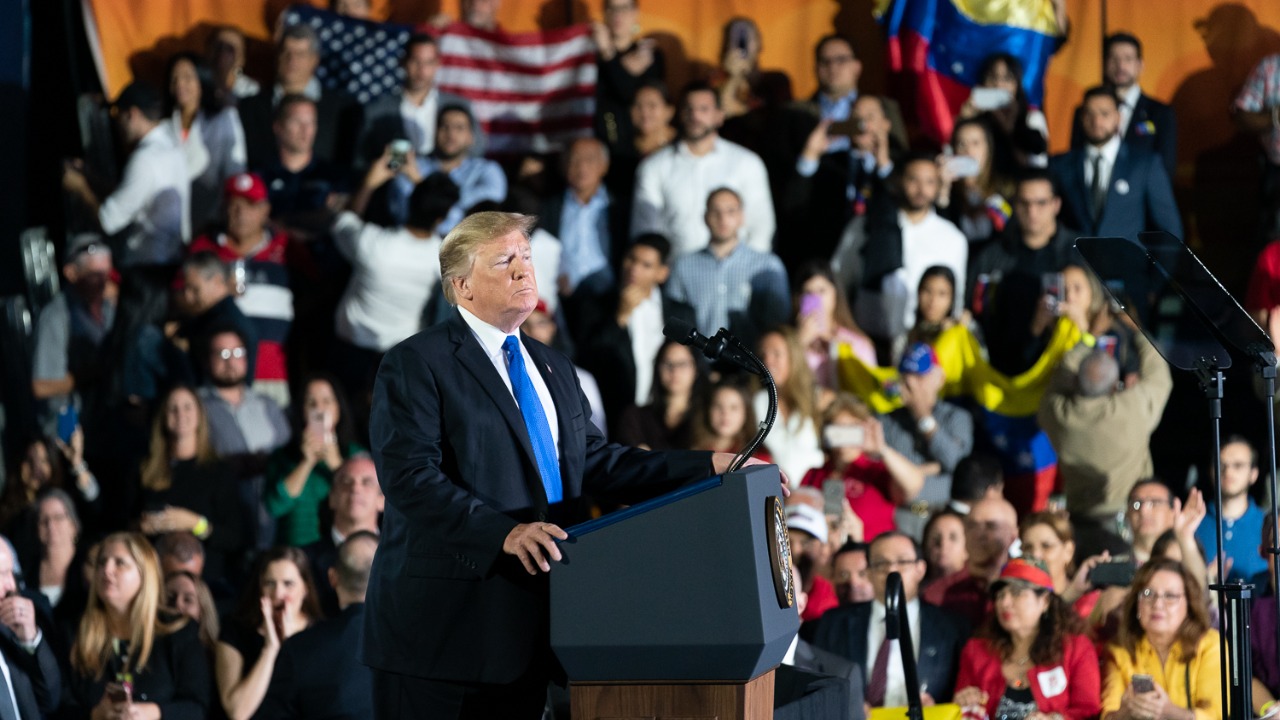
President Trump is promising that once Nicolás Maduro is out of power, American oil giants will flood Venezuela with capital and expertise, turning a battered petrostate into a pillar of U.S. energy security. He has framed the collapse of Maduro’s rule as a prelude to a sweeping reconstruction in which Washington helps “fix” Venezuela’s oil fields and, in his telling, shares the spoils with both countries. I see a far more complicated picture, where legal risks, political backlash and the sheer decay of Venezuela’s industry could slow any rush of U.S. money to a crawl.
Trump’s sweeping pledge to “run” Venezuela’s oil
At the heart of the president’s pitch is a simple, provocative idea: the United States will temporarily “run” Venezuela and its oil sector, then hand back a revitalized industry to a friendly government. In public remarks, President Trump has said that the U.S. will effectively manage Venezuela and sell seized oil, presenting this as a way to stabilize markets and finance reconstruction after Maduro’s fall, a vision that rests on his assertion that Trump’s plan for the oil will benefit both Americans and Venezuelans. He has repeatedly cast this as a temporary trusteeship, insisting that the U.S. would only oversee the country “until a safe, proper and judicious transition” is in place, language that signals a sweeping claim of control over a sovereign state’s most important asset.
In parallel, Trump has wrapped this oil-first strategy in campaign-style rhetoric about making Venezuela prosperous again and boosting America’s own energy leverage. While Trump has talked about how the U.S. would “make Venezuela great again,” he has been far less specific about the legal and diplomatic framework that would allow Washington to manage and market another country’s crude, even as he promises that While Trump will keep America “at a very high level” in global energy. That gap between bold promise and operational detail is where the fate of any future U.S. investment surge will be decided.
Venezuela’s vast reserves and the lure for U.S. drillers
The commercial logic behind Trump’s confidence is obvious: Venezuela sits on some of the world’s largest proven oil reserves, a geological prize that has long tempted international producers. After U.S. military strikes and the capture of Nicolás Maduro and his wife, officials in Washington have openly discussed how the United States will seek to tap Venezuela’s vast oil reserves as part of a broader reset of relations. For American oil companies that have watched production in places like the Permian Basin mature, the idea of reentering a country with such enormous untapped heavy crude is enticing, especially if Washington promises political backing and security guarantees.
Trump has gone further, telling supporters that the U.S. will not only manage the fields but also “fix oil infrastructure,” a pledge echoed in reports that David Goldman has linked to a broader plan to sell Venezuelan oil from facilities as far away as Mar-a-Lago. The president’s allies argue that if Washington can stabilize the country and provide legal clarity, U.S. majors and independents will line up with billions of dollars to rehabilitate refineries, pipelines and upgraders that have been starved of maintenance. In that telling, the combination of vast reserves and U.S. stewardship would unlock a new frontier for American drillers almost overnight.
A “bust” industry that will take years and billions to revive
The reality on the ground in Venezuela’s oil patch is far grimmer than Trump’s optimistic timeline suggests. Years of mismanagement, sanctions and underinvestment have left the sector in what experts describe as a “bust” state, with rusting equipment, chronic power outages and a workforce hollowed out by migration. Analysts who have studied the fields warn that lifting production back toward historic highs would require not just political change but a sustained program of capital spending, with Experts say lifting production will demand billions to revive its fortunes and years of technical work.
Even U.S. officials sympathetic to Trump’s goals acknowledge that ramping up output will not be quick or cheap. Internal assessments note that But ramping up oil production in Venezuela would likely require years of work and sizable investments to modernize its industry, which has been cut off from a variety of trading partners. That means any “billions” from U.S. firms would not be a quick infusion tied to a single political event, but a long, risky bet on a country whose infrastructure and institutions have been badly damaged.
Legal, political and corporate hurdles to Trump’s vision
Even if Maduro is gone, the path from Trump’s rhetoric to actual U.S. control over Venezuelan oil is strewn with legal and political obstacles. The president has said that The US will “run” Venezuela until a transition is secure, a claim that raises immediate questions about sovereignty and international law, especially given that The US has historically recognized that Venezuela is its only leader through constitutional processes, not foreign administration. Any attempt to allocate oil blocks, sign long term contracts or sell state assets under a U.S. caretaker arrangement could face challenges in foreign courts and at home, where Congress would likely demand oversight of how revenues are used.
Corporate caution is another brake on the president’s ambitions. Industry executives and analysts have stressed that American oil companies will want a stable regime in the country before they are willing to invest heavily, and that the political risk premium will remain high until a durable settlement is in place. That means even with White House encouragement, boards in Houston and Dallas will weigh shareholder lawsuits, reputational blowback and the possibility of a future Venezuelan government contesting contracts signed under U.S. control. The result is likely to be a phased, cautious entry rather than the immediate flood of capital Trump has described.
How much “billions” really buys in a shattered petrostate
Trump’s allies often talk as if money alone can solve Venezuela’s oil crisis, but the scale of the damage means even large sums may only go so far. Detailed assessments of the sector suggest that refineries, pipelines and heavy oil upgraders will need to be rebuilt or replaced, not just patched, and that training a new generation of engineers and technicians will take time. Reports on Trump’s plan to seize and revitalize Venezuela’s oil industry note that while he believes production can return to historic levels fairly quickly, specialists caution that the combination of technical complexity and institutional decay makes such a rapid rebound unlikely.
There is also the question of who ultimately benefits from any surge in output. Trump has framed his approach as a way to lower prices for U.S. consumers and help rebuild Venezuela, but he has also spoken about using Venezuelan barrels to strengthen America’s hand in global markets. As he and his advisers sketch out scenarios in which U.S. firms pour capital into fields and refineries, they are betting that the promise of future profits will outweigh the risks, and that a post-Maduro government will honor deals struck under intense geopolitical pressure. For now, I see a gap between the president’s confident assertion that U.S. oil firms will pour in “billions” and the sober assessments that it will take years, vast sums and careful diplomacy to turn a shattered petrostate into the kind of partner he is selling to the American public.
More From TheDailyOverview

Grant Mercer covers market dynamics, business trends, and the economic forces driving growth across industries. His analysis connects macro movements with real-world implications for investors, entrepreneurs, and professionals. Through his work at The Daily Overview, Grant helps readers understand how markets function and where opportunities may emerge.

