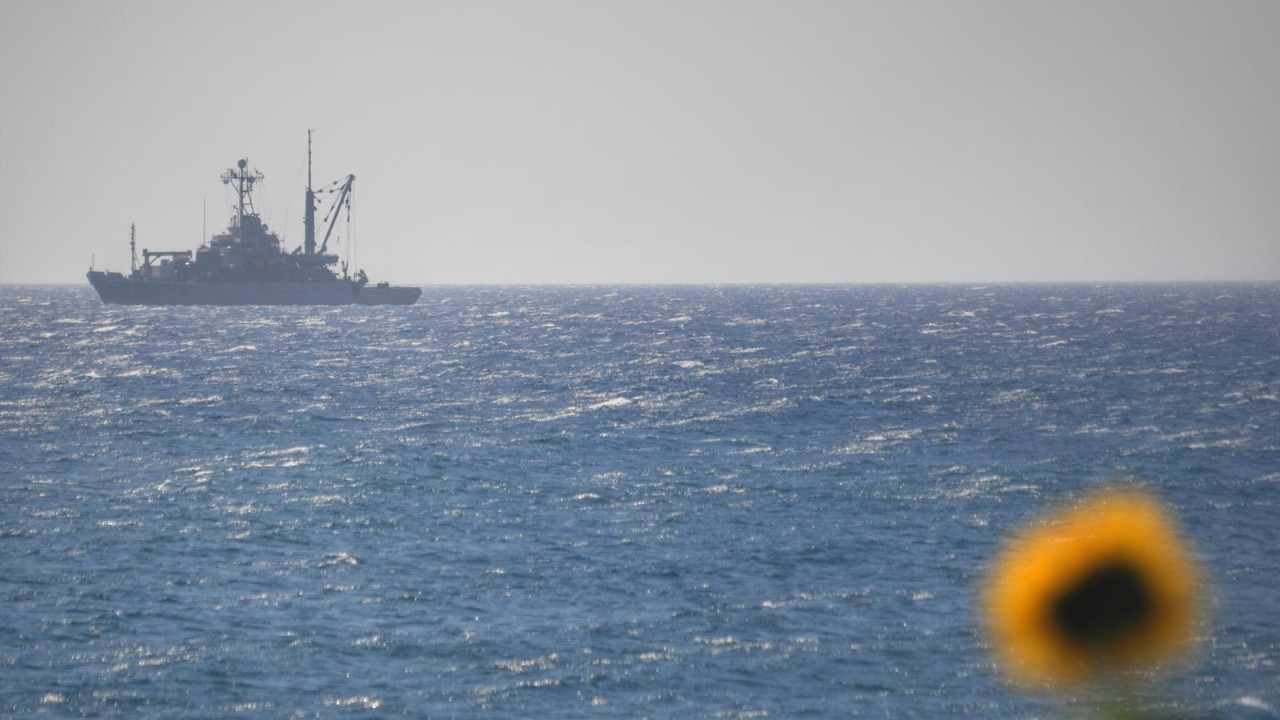
Ukraine’s latest wave of naval strikes has turned a niche innovation into a strategic choke point on the Black Sea, where cheap sea drones are now shredding a Russian “shadow fleet” worth tens of millions of dollars. By crippling tankers that move sanctioned oil, these attacks are no longer just battlefield theatrics, they are a direct assault on the financial arteries that keep Moscow’s war machine running.
I see a clear pattern emerging: a handful of explosive-laden craft are forcing a global rethink of maritime risk, sanctions enforcement, and energy security. The destruction of roughly 70 million dollars in shipping assets is only the headline number, the deeper story is how Ukraine’s sea drones are rewriting the rules of naval warfare and making every unregistered tanker in the Black Sea a liability rather than an asset.
Sea drones move from experiment to economic weapon
What began as an improvisation to offset Russia’s larger navy has evolved into a deliberate strategy to hit the Kremlin’s wallet. Ukrainian engineers took the basic idea of a remote-controlled boat and turned it into a family of “Sea Baby” drones that can travel long distances, carry substantial warheads, and strike with precision against high-value targets. Instead of contesting the Black Sea with frigates and submarines, Ukraine is using these small craft to reach into the heart of Russia’s logistics network and disrupt the flow of oil that funds its invasion.
Analysts in Dec have described this shift as a “first in Naval Warfare,” arguing that Ukraine’s sea drones now put Russia’s oil exports under strain by directly targeting the tankers and infrastructure that move crude out of the Black Sea. One US think tank head in WASHINGTON, DC framed the campaign as a new phase in which Ukraine is no longer just defending its coastline but is “directly targeting Moscow’s economic lifelines,” a judgment that reflects how far these systems have come from their early experimental use to a mature economic weapon backed by combat results, as detailed in Dec analysis.
Inside the $70 million hit on the shadow fleet
The most dramatic proof of concept arrived when Ukraine’s Sea Baby naval drones struck two Russian-sanctioned tankers in the Black Sea, vessels that Western officials had long suspected were part of a covert network moving oil outside formal monitoring. The attack ignited fires on board, damaged critical systems, and forced emergency responses that temporarily removed the ships from service. By targeting these specific tankers, Ukraine signaled that the “shadow fleet” is no longer invisible or untouchable, and that every voyage through contested waters now carries a real risk of catastrophic loss.
Reporting from Dec put the combined value of the damaged Russian-linked tankers at roughly 70 million dollars, a figure that captures only the hulls and not the cargo, future earnings, or insurance fallout. Those same accounts stressed that the Sea Baby drones did more than torch steel, they disrupted logistics and regional energy flows along a key Black Sea oil lane that had been used to move sanctioned crude out of Russian ports. The strike showed how a relatively low-cost unmanned system can inflict outsized financial damage on a sanctions evasion network, a point underscored in video and eyewitness descriptions of how Ukraine’s Sea Baby naval drones crippled that route.
How Sea Baby drones work and why they terrify tanker captains
From a technical standpoint, the Sea Baby platform is designed to exploit every weakness of a large commercial vessel. These drones ride low in the water, present a minimal radar signature, and can be guided along complex routes that hug coastlines or weave through shipping lanes before homing in on a target. Their warheads are engineered to strike at or near the waterline, where a single blast can flood engine rooms, rupture fuel tanks, or start fires that are difficult to control on a fully loaded tanker. For captains used to worrying about storms and mechanical failures, the idea of a small, fast, explosive craft appearing out of the dark is a new and unnerving threat.
Officials familiar with the program say that the upgraded Sea Baby drones are capable of long distances and carry enhanced warheads that increase their destructive potential against large hulls. These systems were used in the attack on the shadow-fleet tankers that had been employed to bypass international sanctions, a detail that highlights how the technology is tailored not just for tactical strikes but for strategic economic disruption. The combination of range, payload, and precision makes each Sea Baby a kind of guided missile on the water, and the fact that they can be launched without risking a crew only deepens the psychological pressure on ship operators who now know that upgraded Sea Baby drones can reach them far from any front line.
Kairos, Vir, and Virat: Gambian flags, Russian interests
The most telling targets in this campaign were not ships flying Russian colors but tankers registered under the Gambian flag. On October 28, Ukrainian Sea Baby drones attacked two such Gambian-flagged oil tankers, the Kairos and Vir, in the Black Sea, after Ukrainian intelligence identified them as part of the network moving Russian oil in defiance of sanctions. The choice of these vessels underscored how the shadow fleet relies on obscure registries and shell companies to disguise ownership, and how Ukraine is willing to strike ships that are legally foreign-flagged if they are effectively serving Russian interests.
Western assessments later clarified that the attacks targeted the Kairos and Virat, both vessels flagged under Gambian registry but identified by Western authorities as components of Moscow’s sanctions evasion fleet. One of the ships suffered significant damage while the other remained afloat, a pattern that suggests the strikes were calibrated to disable rather than sink, possibly to avoid environmental catastrophe while still sending a clear deterrent message. By hitting the Kairos and Virat, Ukraine exposed the role of Gambian registration in this trade and forced insurers, charterers, and port authorities to reconsider their tolerance for vessels that Western officials now see as part of a sanctions evasion fleet.
Legal gray zones and the law of the sea
Every strike on a commercial tanker raises hard questions about international law, and the Sea Baby attacks are no exception. Ukraine argues that these ships are legitimate military objectives because they are directly supporting Russia’s war effort by transporting oil that funds the invasion. Critics counter that hitting foreign-flagged vessels risks undermining long-standing protections for civilian shipping and could set precedents that other states might abuse in future conflicts. The debate is not just academic, it shapes how neutral countries, insurers, and maritime courts will interpret liability and responsibility for any damage or pollution that follows.
Legal scholars examining the October 28 attacks on the Kairos and Vir have noted that the tankers were Gambian-flagged but were described by Ukrainian officials as part of a Russian “shadow fleet” used to bypass sanctions and “funding its war in Ukraine.” That characterization is central to Kyiv’s claim that the vessels were not ordinary commercial traffic but extensions of Russia’s logistics chain, and therefore subject to attack under the laws of armed conflict. The fact that these ships were operating in the Black Sea, a theater of active hostilities, further complicates the picture, but it also strengthens Ukraine’s argument that Ukrainian Sea Baby drones were striking assets that had effectively entered the conflict on Russia’s side.
How the strikes squeeze Russia’s oil exports
Beyond the legal arguments, the economic impact on Russia is already visible. Each damaged tanker reduces the capacity of the shadow fleet to move crude out of Black Sea ports, which in turn tightens the supply of sanctioned oil that can reach buyers willing to ignore Western restrictions. Even when ships are not sunk, the need for repairs, inspections, and rerouting adds cost and delay, eroding the profit margins that made sanctions evasion attractive in the first place. For a Kremlin that relies heavily on hydrocarbon revenue, any sustained disruption to these flows is a strategic problem, not just a tactical annoyance.
Analysts in Dec have argued that Ukraine’s recent Sea Baby drone strike did more than torch two shadow-fleet tankers in the Black Sea, it effectively shut down the shadow fleet behind the Kerch Strait by making the route too risky for operators and insurers. That assessment suggests a cascading effect in which a handful of high-profile attacks force a much larger number of vessels to reconsider their routes or suspend operations entirely. If that pattern holds, the Sea Baby campaign could become a powerful complement to Western sanctions, not by adding new legal restrictions but by making existing ones bite harder through the credible threat that it effectively shuts down the shadow fleet in key choke points.
Global reactions: Erdoğan, the West, and nervous shippers
The international response to these strikes has been mixed, reflecting the tension between sympathy for Ukraine’s position and anxiety about the safety of commercial shipping. Some Western officials have quietly welcomed any move that makes sanctions harder to evade, especially when it targets vessels that have already been blacklisted. Others worry that normalizing attacks on tankers could destabilize global trade routes and invite retaliation in other regions. For shipowners and charterers, the immediate concern is practical rather than political: how to price the risk of sailing through waters where a small unmanned craft can suddenly turn a profitable voyage into a total loss.
Regional leaders have also weighed in, with figures such as President Recep Tayyip Erdoğan condemning the attack on Russian shadow fleet tankers in the Black Sea and warning about the potential for escalation. At the same time, Western officials have emphasized that the two tankers hit by Ukrainian Sea Baby drones were already sanctioned by the West, and that Ukrainian intelligence had tracked their role in moving Russian oil through the Black Sea. That dual narrative, criticism of the method alongside acknowledgment of the targets’ status, captures the uneasy balance that policymakers are trying to strike as they respond to a conflict in which West-sanctioned tankers can be hit by a drone in a matter of minutes.
Insurance, premiums, and the cost of doing business in the Black Sea
For the maritime industry, the Sea Baby campaign is already reshaping the economics of risk. War risk premiums for voyages into the Black Sea were elevated even before these attacks, but the demonstrated ability of Ukraine’s drones to find and hit specific tankers adds a new layer of uncertainty. Insurers now have to factor in not just the general danger of operating near a war zone but the targeted nature of the strikes, which focus on vessels suspected of carrying Russian oil in violation of sanctions. That distinction matters, because it opens the door to differential pricing and coverage terms based on cargo, ownership, and flag.
Shipowners who continue to service Russian exports through the shadow fleet now face a triple squeeze: higher insurance costs, the risk of physical destruction by sea drones, and the possibility of tighter scrutiny from Western regulators who see these vessels as part of a sanctions evasion network. By contrast, operators who avoid such trades can argue for lower premiums and better access to financing, since they are less likely to be caught in the crosshairs of Ukrainian Sea Baby units. Over time, this divergence could push more mainstream players out of the Russian oil trade and leave it to a shrinking pool of high-risk operators, further amplifying the impact of the initial Naval Warfare shift that turned sea drones into an economic weapon.
What Ukraine’s sea drones mean for the future of naval warfare
Looking ahead, I see Ukraine’s Sea Baby program as a preview of how many states, and even non-state actors, will fight at sea. The barrier to entry is far lower than for traditional navies, and the payoff in terms of deterrence and disruption is high. A country that cannot afford a blue-water fleet can still threaten shipping lanes, ports, and offshore infrastructure with a mix of unmanned surface and subsurface systems. That reality will force navies and coast guards to invest in new layers of surveillance, electronic warfare, and close-in defenses designed to spot and neutralize small, fast-moving threats before they reach their targets.
For Russia, the immediate challenge is how to protect a sprawling network of tankers that were never designed to operate under fire. For everyone else, the lesson is that the age of uncontested commercial shipping in conflict zones is over. From the Black Sea to the Persian Gulf and beyond, any state that relies on maritime trade will have to assume that adversaries can field their own version of Sea Baby, tailored to local conditions and political goals. Ukraine’s campaign against the shadow fleet has already shown that a handful of drones can wreck 70 million dollars in assets and choke a vital oil corridor, and I expect that example to echo in war colleges and shipping boardrooms long after the last damaged tanker limps out of the Black Sea.
More From TheDailyOverview

Grant Mercer covers market dynamics, business trends, and the economic forces driving growth across industries. His analysis connects macro movements with real-world implications for investors, entrepreneurs, and professionals. Through his work at The Daily Overview, Grant helps readers understand how markets function and where opportunities may emerge.

