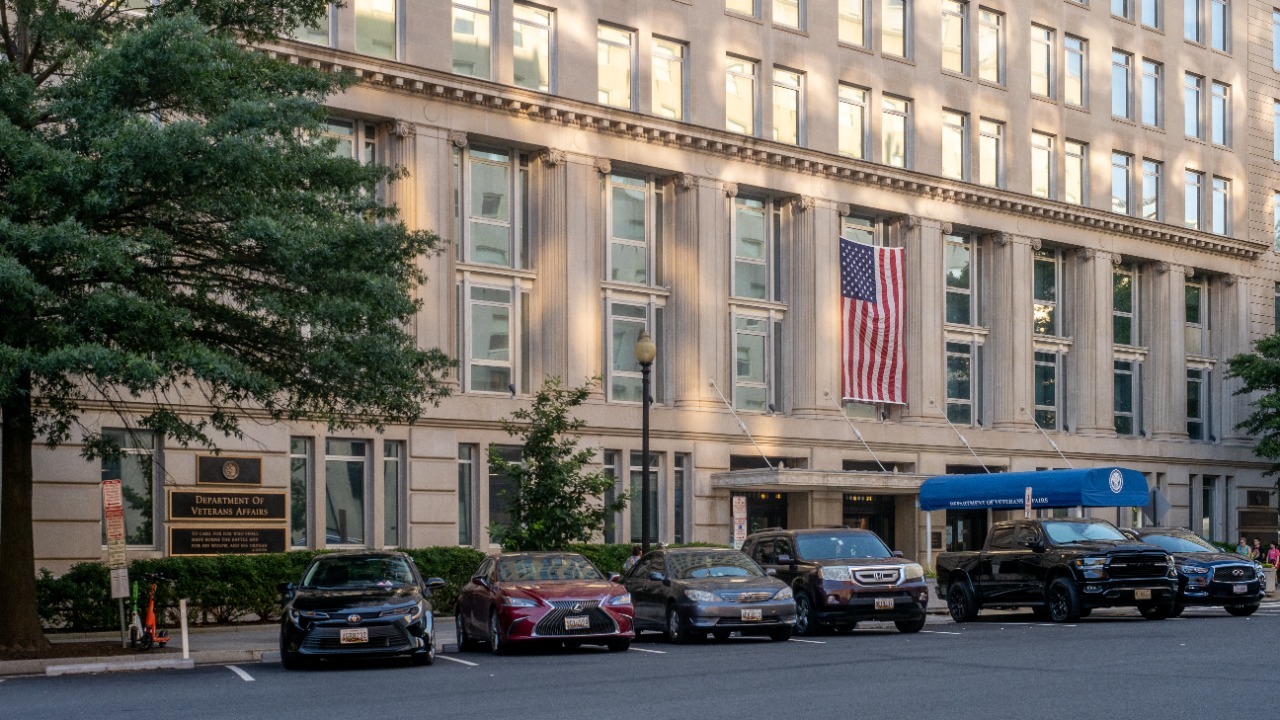
The Department of Veterans Affairs has shed tens of thousands of workers in a single year, and lawmakers now argue that the real cost is being paid in missed appointments, longer wait times, and veterans walking away from the system altogether. A Democratic congressional report portrays a department that cut too deeply, too fast, leaving the people it is supposed to serve struggling to find basic care.
Instead of a quiet internal restructuring, the staffing pullback has erupted into a public fight over whether the Trump Administration’s drive to shrink government has crossed a red line when it comes to veterans’ health. I see a widening gap between the administration’s assurances that “Veterans number one” and the mounting evidence that the safety net around them is fraying.
The scale of the cuts and how they happened
The starting point for the current uproar is the sheer size of the workforce reduction. All told, VA lost more than 40,000 employees in fiscal 2025, a contraction that would be dramatic in any agency but is especially consequential in a system that runs one of the largest integrated health networks in the country. According to the same Democratic analysis, 88% of those departures came from the Veterans Health Administr, the front line for primary care, mental health, and specialty services. When nearly nine out of ten lost positions are clinical or clinical-adjacent, it is not a paper reorganization, it is a direct hit to capacity.
Those losses did not happen in a vacuum. A Democratic congressional report faults the Department of Veterans Affairs for aggressively trimming healthcare staff, including doctors, mental health providers, and appointment schedulers, even as demand for services remained high. Follow Kelsey Baker’s reporting on that document underscores how Jan briefings to lawmakers framed the cuts as efficiency moves, while internal data showed rising workloads. The VA itself has acknowledged that The VA lost over 40,000 positions in that period, a figure that now anchors the political fight over whether the department misread its own capacity.
Veterans left without providers and rising wait times
The most alarming consequence of the staffing collapse is the number of veterans who no longer have a regular clinician. A watchdog assessment cited by lawmakers warns that More than a million veterans have been left without primary care providers because of VA staffing losses, a number that would represent a small city’s worth of patients suddenly cut loose. Lindsay Church, the executive director of Minority Veterans of, puts a sharper point on it, saying 1.2 m veterans have lost their VA providers under the department’s ongoing reorganization efforts. When I look at those figures, it is hard to square them with any claim that the cuts were carefully calibrated.
The strain is especially visible in mental health care, where continuity and timeliness can be the difference between stability and crisis. A Democratic report released by Senator Richard Blumenthal describes Spiking VA mental health care wait times, noting that As of January the national mean for new patients seeking individual therapy had climbed significantly. That same document, part of a broader indictment of the Trump Administration’s approach to veterans’ policy, warns that veterans facing long delays may not even be eligible for care in the community, leaving them stuck between a shrinking VA and a private sector that is not prepared to absorb them.
Inside the political fight over Trump-era policy
On Capitol Hill, Democrats have seized on the numbers to argue that the Trump Administration’s cost-cutting has crossed into negligence. Senator Blumenthal’s Jan report, titled “Cuts, Cover-Ups, & Chaos,” accuses the Trump Administration of an “ongoing assault” on veterans, citing staffing caps, hiring freezes, and opaque internal metrics that masked the real impact on care. A separate Democratic analysis, highlighted by Follow Kelsey Baker, argues that the Department of Veterans Affairs for years has prioritized budget targets over clinical staffing, culminating in the current shortfall. In that telling, the workforce collapse is not an accident but the logical outcome of a political project to shrink the federal footprint.
Republicans and VA leaders counter that the changes are necessary modernization, not sabotage. VA Secretary Doug Collins has insisted that “We’re putting Veterans number one back at the VA,” acknowledging that reforms can generate friction but arguing they will ultimately improve service. From that perspective, the department is trying to rebalance staff, shift some care to the community, and rein in what conservatives see as bureaucratic bloat. The clash between those narratives, one of deliberate assault and the other of tough-love reform, is what now animates oversight hearings and shapes how veterans interpret every change in their local clinic.
Walked-back layoffs, hiring freezes, and staffing caps
The workforce story is not just about attrition, it is also about what almost happened. Over the summer, The Department of Veterans Affairs floated a plan to lay off more than 80,000 employees as part of a restructuring effort, a move that would have more than doubled the already steep losses. After fierce pushback from unions and lawmakers, the department backed down from that specific plan, but advocates warn that workforce cuts continue through attrition and unfilled vacancies. When I look at that episode, it reads less like a one-off misstep and more like evidence of a sustained drive to shrink the payroll.
Even when the VA appears to reverse course, the fine print tells a different story. The department has officially lifted its hiring freeze, but staffing caps remain in place for a shrinking workforce, limiting how many positions can actually be refilled. Reporting on that shift notes that Lindsay Church and other advocates see the caps as a backdoor way to keep the workforce lean even as public pressure mounts. In practice, that means local facilities may be allowed to post some jobs but still operate below previous staffing levels, locking in the service reductions that veterans are already feeling.
What it means for veterans on the ground
Behind every statistic is a veteran trying to refill a prescription, schedule a counseling session, or get a knee replacement approved. The watchdog who warned that more than a million veterans have lost primary care providers tied that disruption directly to the loss of employees at The Department, arguing that the system simply does not have enough clinicians to absorb the caseload. A separate account of VA workforce losses raising alarms over veterans’ healthcare describes how The Department is now scrambling to triage appointments, with some veterans pushed toward community care networks that are themselves uneven and hard to navigate.
For lawmakers who commissioned the Democratic report, the takeaway is blunt: veterans are paying the price for VA cuts. Their findings, summarized by Follow Kelsey Baker, argue that the Department of Veterans Affairs for too long treated staffing as a budget line instead of a lifeline. When I weigh the administration’s assurances against the documented loss of 40,000 employees, the abandoned plan to cut 80,000 employees, and the Trump Administration policies that encouraged aggressive downsizing, it is hard to avoid the conclusion that the system has been pushed past a safe margin. The question now is not whether there was damage, but how quickly the VA and Congress can rebuild enough capacity so that veterans are no longer the ones absorbing the shock.
More From The Daily Overview
*This article was researched with the help of AI, with human editors creating the final content.

Grant Mercer covers market dynamics, business trends, and the economic forces driving growth across industries. His analysis connects macro movements with real-world implications for investors, entrepreneurs, and professionals. Through his work at The Daily Overview, Grant helps readers understand how markets function and where opportunities may emerge.

