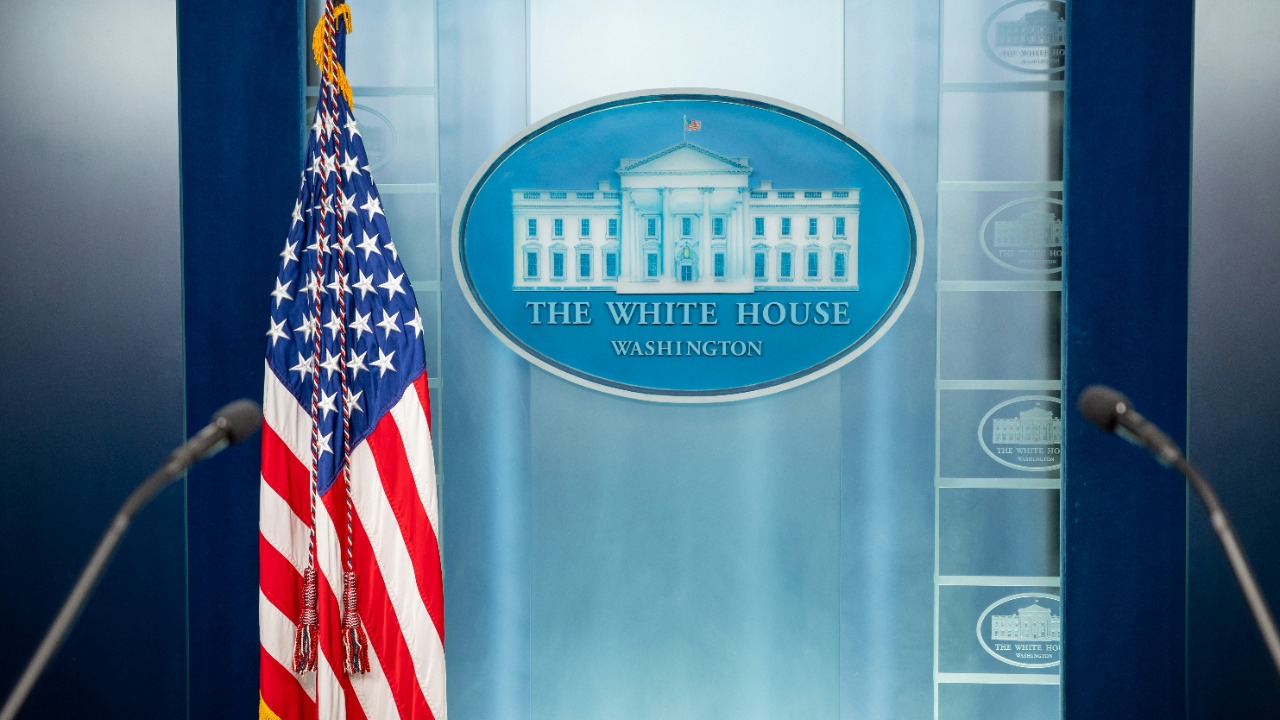
The White House insists President Donald Trump is not trying to “cut off” New York City, even as his administration’s policies keep colliding with the country’s largest urban economy. The clash is less a clean break than a grinding tug-of-war over money, legal authority, and political blame, with billions of dollars and core public services at stake.
From infrastructure funding to disaster aid and courtroom battles, the record shows a pattern of confrontation that stops short of outright abandonment but still leaves New Yorkers living with chronic uncertainty. I see a federal government that alternates between lifeline and lever, using its power to both support and squeeze a city that remains central to the national economy and culture.
Freezing billions while denying a cutoff
When the Trump administration moved to halt a massive tranche of infrastructure money for New York, it undercut any simple claim that Washington is treating the city like business as usual. Officials in the administration froze $18 billion in New York City infrastructure projects, a decision that, according to reporting dated Sep 30, 2025, was described as a deliberate pause in funding rather than a permanent cancellation, but the practical effect was to stall long planned work on transit and other critical systems that millions of residents rely on every day. The move was attributed to budget and policy disputes, yet the sheer scale of the $18 billion freeze made it impossible to separate the decision from the broader political fight between Trump and Democratic leaders in New York City.
Administration budget chief Russell Vought framed the action as a targeted response to local and congressional choices, not a blanket punishment of the city, but the numbers tell their own story. On Sep 30, 2025, reporting on the freeze made clear that the Trump administration had locked up $18 billion in New York City infrastructure projects, with Vought cited as the official explaining the decision and its connection to the president’s broader fiscal agenda, a sequence detailed in coverage of how The Trump administration has frozen the funding. I read that as a classic Washington maneuver: deny any intent to “cut off” the city while using the threat of withheld money as leverage in a larger political and policy confrontation.
Gateway, Mikie Sherrill, and the politics of blame
The infrastructure fight is most vivid in the battle over the Gateway tunnel, a project that has become shorthand for the region’s economic future. When the White House moved to freeze that same $18 billion in New York City infrastructure funding, reporting again dated Sep 30, 2025, captured how the administration tried to pin responsibility on specific Democrats rather than accept that the decision flowed from Trump’s own priorities. In one pointed message, allies of the president declared, “Make no mistake, Mikie Sherrill owns this shutdown and is responsible for any negative impacts on Gateway tunnel projects,” turning a complex funding dispute into a personalized blame game aimed at Representative Mikie Sherrill and the broader coalition backing the tunnel.
That framing matters because it shows how the administration wants to have it both ways, insisting it is not abandoning New York while arguing that any harm from the freeze is the fault of local officials. The White House’s message, as reflected in coverage of how the Trump administration’s decision to halt $18 billion in New York City infrastructure funding was paired with the warning that “Make no mistake, Mikie Sherrill owns this shutdown” and that the Gateway tunnel would bear the consequences, underscores how the president’s team uses the city’s vulnerabilities as a political cudgel rather than a shared problem to solve, a dynamic laid out in detail in reporting on the White House freezes $18 billion in funding. I see that as less a neutral budget choice and more a calculated attempt to shift the political cost of disruption onto the city’s own representatives.
Courts as a brake on federal pressure
New York has not simply absorbed these moves; it has fought them in court, often with success. Earlier this year, state officials joined with other jurisdictions to challenge federal efforts to choke off money that local governments say they need to keep basic services running. On Mar 5, 2025, the New York State Attorney General announced that Attorney General Letitia James and a coalition of states had secured a court order blocking the Trump administration from freezing federal funds that communities depend on, a ruling described in a release titled “Attorney General James and Multistate Coalition Secure Court Order Blocking Trump Administration From Freezing Federal” that underscored how judges can slow or stop unilateral attempts to squeeze local budgets. That legal win did not erase the uncertainty created by the administration’s threats, but it showed that the president’s power to punish cities has limits.
Those limits are also on display in broader litigation over the scope of federal authority. In New York v. Trump, a case now before the First Circuit, the court is weighing whether the Trump administration’s unilateral and categorical decisions to withhold or redirect funds violate constitutional and statutory constraints. Reporting dated Nov 17, 2025, explains that in New York v. Trump, the First Circuit is considering whether the administration overstepped when it tried to impose new conditions on money that Congress had already appropriated, and that a lower court granted a preliminary injunction to stop the policy while the case proceeds, a sequence laid out in analysis of how In New York v. Trump the judges are testing those limits. I read these rulings as a reminder that while the White House can threaten to cut off New York, it cannot always make those threats stick once they collide with the courts.
Disaster aid as counterargument
The administration points to its record on disaster assistance as proof that it is not trying to sever ties with New York. When the state was hit by severe storms and flooding, President Donald Trump approved a federal disaster declaration that unlocked emergency aid and long term recovery support. On Oct 1, 2020, the White House announced that President Donald J. Trump Approves New York Disaster Declaration, a formal step that allowed federal agencies to coordinate relief efforts and fund repairs, as recorded in the archived statement from President Donald, Trump Approves New York Disaster Declaration on The White House site. That decision fits a long standing pattern in which presidents, regardless of party, treat disaster declarations as a basic duty rather than a bargaining chip.
For the administration, this kind of emergency response is central to its argument that it is not cutting New York loose, even as it fights the city on other fronts. I see a strategic contrast at work: when lives and property are at immediate risk, the White House leans on the familiar machinery of federal disaster aid, but when the stakes involve long term infrastructure or policy disputes, it is far more willing to weaponize funding. The disaster declaration shows that Trump is prepared to sign off on help when the cameras are on and the crisis is acute, yet it does not erase the pattern of freezes, legal clashes, and public threats that shape the city’s day to day relationship with Washington.
A relationship defined by confrontation, not severance
Put together, these episodes reveal a relationship that is adversarial but deeply intertwined. The freeze of $18 billion in New York City infrastructure projects, the attempt to blame Mikie Sherrill for any damage to the Gateway tunnel, and the broader pattern of threatened funding cuts all show a White House willing to use the city’s dependence on federal money as a pressure point. At the same time, the court order that Attorney General James and Multistate Coalition Secure Court Order Blocking Trump Administration From Freezing Federal funds, the ongoing scrutiny in New York v. Trump, and the earlier disaster declaration for New York demonstrate that institutional checks, legal challenges, and basic governance norms keep the president from simply walking away from the city, a balance captured in the detailed description of how Attorney General James and Multistate Coalition Secure Court Order Blocking Trump Administration From Freezing Federal funds.
From my vantage point, the White House is technically correct when it says Trump is not “cutting off” New York City in the literal sense, since federal money and support continue to flow in key areas. But that narrow defense misses the larger reality that the administration has repeatedly tried to narrow, condition, or delay that support in ways that inject political risk into everything from subway repairs to social services. New York is not being abandoned, yet it is being treated as a convenient foil, a place where the president can flex his power without fully severing the ties that bind the city to Washington. For millions of New Yorkers, the result is a constant balancing act, living in a city that remains indispensable to the country while navigating a federal relationship that feels less like a partnership and more like a running fight.
More From TheDailyOverview
- Dave Ramsey says these two simple questions show whether you’re rich or poor
- Retired But Want To Work? Try These 18 Jobs for Seniors That Pay Weekly
- IRS raises capital gains thresholds for 2026 and what’s new
- 12 ways to make $5,000 fast that actually work

Grant Mercer covers market dynamics, business trends, and the economic forces driving growth across industries. His analysis connects macro movements with real-world implications for investors, entrepreneurs, and professionals. Through his work at The Daily Overview, Grant helps readers understand how markets function and where opportunities may emerge.

