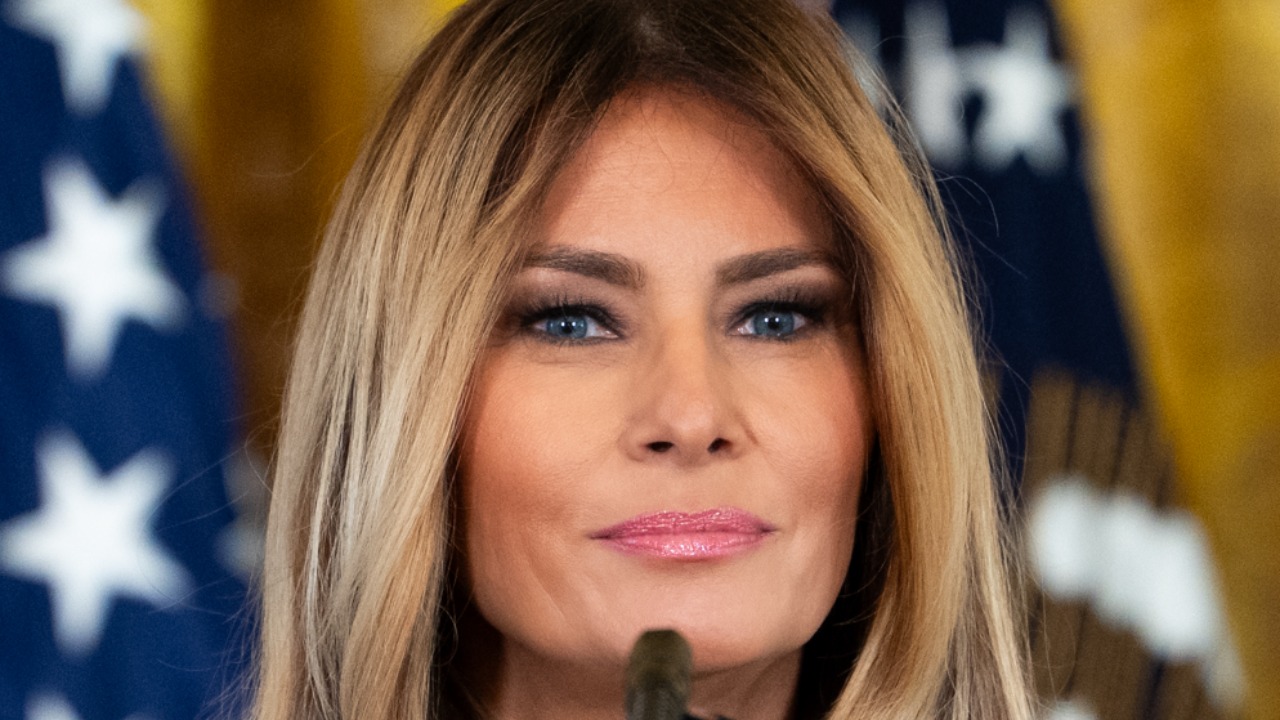
The feature-length portrait of Melania Trump was always going to attract attention, given that she is both first lady and one of the most scrutinized figures in American public life. What has stunned Hollywood, however, is not the subject but the scale of the money behind her documentary, with a $40 million acquisition price and a further $35 million earmarked for promotion. In an era when nonfiction films are struggling to draw theatrical crowds, that kind of spending looks less like a routine release strategy and more like a statement.
The result is a project that has become a referendum on power, platforms, and political proximity as much as on Melania Trump herself. Insiders are asking whether this is a bold bet on a global fashion figure turned first lady, or a lavish gesture toward the White House at a time when streaming companies are fighting for regulatory goodwill. Either way, the monster ad budget has turned a single documentary into a test case for how far studios are willing to go when politics and prestige collide.
The $75 million bet that dwarfs typical documentaries
At the heart of the industry’s unease is the sheer size of the deal. Amazon MGM agreed to pay $40 million to license the Melania Trump film, then set aside another $35 million for marketing, creating a $75 m package that would be eye catching even for a mid-tier superhero movie. For a nonfiction title, those figures are almost unheard of, and executives across town have been quick to note that the $40 m and $35 m commitments instantly catapulted the project into blockbuster territory. One trade breakdown of the arrangement put the total spend around $75 million, with $40 million for the acquisition and $35 million for marketing, promotions, and distribution, underscoring just how aggressively the studio is backing the film through $40 million and $35 million line items.
To grasp why this is raising eyebrows, it helps to remember where the documentary market sits. Theatrical nonfiction is at a low ebb, with even acclaimed titles struggling to break out beyond niche audiences. Veteran producer Mr Erik Nelson, known for work on films such as Grizzly Man, has argued that with the kind of money Amazon MGM is pouring into Melania Trump’s story he could make dozens of smaller documentaries. When a single nonfiction portrait commands a package that size in a depressed market, it is less a normal acquisition than a deliberate outlier, and that is exactly why the town is talking.
Marketing like a Marvel movie, not a vérité portrait
The second shock is how the film is being sold. Amazon is reportedly spending $35 m to promote the documentary, a figure that some insiders say is roughly ten times what comparable nonfiction releases receive. That $35 million is being deployed across an elaborate marketing push that includes saturation advertising, premium placement on the company’s own platforms, and a global awareness campaign more reminiscent of a tentpole than a vérité portrait. One social media breakdown of the strategy noted that Amazon is spending $35 million to promote the “Melania” documentary about the first lady, far more than is typical for documentaries, highlighting how $35 m in ad money is being concentrated on a single title.
Industry comparisons are blunt. Analysts point out that the $35 million promotional budget is 10 times what some other nonfiction films receive, a gap that has fueled chatter about whether the campaign is really about audience demand or about optics in Washington. A widely shared box office discussion cited an assessment that the $35 m for marketing is 10 times what some other documentaries get, and framed the whole rollout as “Amazon’s Promotion of ‘Melania’ Has Critics Questioning Its Motives.” When a studio spends like this on a nonfiction film, it is not just buying ad impressions, it is buying a narrative about how much the story matters.
Politics, proximity, and the Jeff Bezos question
That narrative is where the politics come in. Melania Trump is not just a celebrity, she is the wife of President Donald Trump and the current first lady of the United States, a status that makes any corporate courtship of her image inherently sensitive. The documentary’s trailer leans into that curiosity, opening with her voiceover line, “Everyone wants to know. So here it is,” a promise of access that doubles as a reminder of how tightly controlled her public persona has been. One political analysis of the project highlighted that “Everyone wants to know. So here it is,” framing the film as a key test of how far a first lady will go in opening up on camera, and how far a tech giant will go in amplifying that access through Everyone focused marketing.
Layered on top of that is the role of Jeff Bezos, whose company controls the streaming and retail ecosystem powering the release. Critics have openly wondered whether the $75 m package is less about box office math and more about currying favor with Donald Trump, who has repeatedly clashed with major tech and media companies. One detailed account of the internal backlash asked, “Was it all just a ploy for Jeff Bezos to suck up to Donald Trump,” and quoted one source asking, “How can it not be equated with currying favor or an outright bribe? How can that not be the case?” Those questions, raised in coverage that links the film’s massive marketing budget to Jeff Bezos and again to the blunt “How can it not be” critique, have turned a distribution decision into a broader debate about corporate influence and presidential politics, especially given Donald Trump’s position in the White House.
A struggling genre and a polarizing subject
Even leaving politics aside, the economics look precarious. Documentaries have been under pressure in theaters, with attendance soft and streaming audiences fragmented across endless options. The Melania film is arriving at what one observer called a low ebb for the genre, a moment when even buzzy titles are fighting for screens and marketing dollars. In that context, the idea of spending $40 m on a single documentary, as one early television segment described the project, has struck some insiders as a high wire act, especially when that same segment framed Melania Trump as “first lady of the United States, a global fashion figure, and now the face of a $40 million documentary,” underscoring how much of the bet rests on her personal brand as seen in $40 million coverage.
That brand is polarizing by design. A quick search for Melania surfaces everything from fashion retrospectives to political controversies, a reminder that any film about her is going to be read through partisan lenses. Early reaction to the documentary has borne that out. One entertainment report described the project as a “vanity documentary” and detailed how it was being “brutally review-bombed” by online movie reviewers, with negative ratings flooding in before the film had a chance to find a broader audience. That same account noted that Melania Trump’s name alone was enough to trigger organized backlash, with Melania Trump becoming the focal point for grievances that extend far beyond the film itself.
Hollywood’s skepticism and what comes next
Inside Hollywood, the skepticism has spilled into public commentary. Late night host Kimmel devoted a segment to the project, mocking the idea that Amazon MGM paid $40 million to license the film and is expected to spend another $35 million on marketing, and joking about the total $75 m outlay as if it were a punchline. Industry veterans have echoed that incredulity in private, with one producer telling a newsletter that with the money being spent on this single film he could make 30 smaller pictures, a comparison that has circulated widely among those familiar with the company’s plans. The sense, articulated in coverage that ties the spending to Amazon MGM and amplified by Mr Erik Nelson’s comments in Status, is that the Melania film has become a symbol of how skewed the economics of prestige content can be.
More From TheDailyOverview
*This article was researched with the help of AI, with human editors creating the final content.

Grant Mercer covers market dynamics, business trends, and the economic forces driving growth across industries. His analysis connects macro movements with real-world implications for investors, entrepreneurs, and professionals. Through his work at The Daily Overview, Grant helps readers understand how markets function and where opportunities may emerge.

