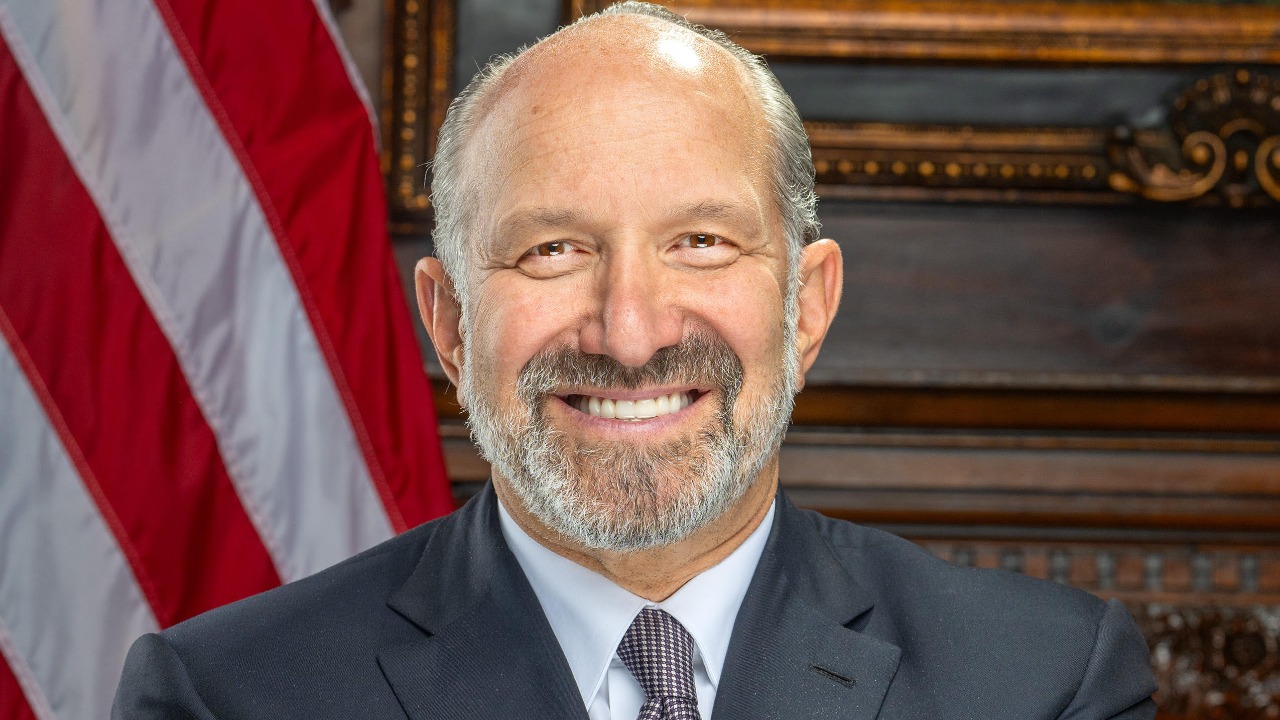
The United States is escalating its industrial policy fight over computer memory just as global prices are already climbing, and the timing could hardly be more sensitive for consumers and allies. Commerce Secretary Howard Lutnick is threatening tariffs of up to 100% on imported DRAM and other memory chips unless leading Asian manufacturers commit to large scale production inside the US, a move that would reshape supply chains and potentially push the current price squeeze into a full blown crisis.
I see a collision coming between Washington’s drive to rebuild semiconductor manufacturing at home and the reality that South Korean and Taiwanese firms still dominate the memory market, from PC RAM to data center modules. How this standoff is resolved will determine not only what Americans pay for a 16 GB stick of DDR5, but also how far President Donald J. Trump is willing to go to enforce a new era of hard edged tech protectionism.
The 100% threat and what Lutnick really wants
Commerce Secretary Howard Lutnick has moved beyond gentle nudges and into outright ultimatums, telling major memory makers that they must either build fabrication plants on US soil or face tariffs of 100% on chips shipped into the country. In public remarks, Lutnick has framed the choice in stark terms, saying that companies can “pay a 100% tariff, or they can build in America,” a line that captures how aggressively the administration is now using market access as leverage over foreign memory suppliers. The US government’s stated aim is to push offshore DRAM production into new American fabs, with officials signaling that the 100% figure is not a negotiating bluff but a concrete policy option now on the table.
Behind the rhetoric is a broader strategy to use tariffs as a stick alongside subsidies and tax credits as carrots, part of a coordinated push to restore domestic semiconductor capacity. Lutnick has warned that South Korean and Taiwanese chipmakers in particular could face a 100% duty on their products if they do not expand manufacturing in the US, describing this approach as straightforward “industrial policy” rather than a traditional trade dispute. The message to South Korean and champions is clear, invest in US fabs at scale or risk being priced out of the world’s most lucrative end market.
Why memory prices were already spiking
The timing of this tariff saber rattling is particularly fraught because DRAM prices were already moving sharply higher before Lutnick spoke. After a long downturn, demand from AI servers, gaming PCs and new phones has collided with constrained supply, pushing up the cost of standard modules such as DDR5 4800 16 GB sticks that sit at the heart of mainstream desktops and laptops. Analysts have warned that any additional shock to imports could send DDR5‑4800 16GB prices into territory that would be felt immediately by PC builders and corporate IT departments alike.
Industry watchers already describe the situation as a “memory price hike crisis,” with spot prices for DRAM rising and retailers adjusting shelf tags on everything from gaming rigs to budget Chromebooks. If the US were to slap a 100% tariff on offshore DRAM, the cost of imported chips from giants like Samsung and SK hynix would effectively double at the border, a shock that would ripple through to finished products. One analysis warns that the DRAM crisis could go into “overdrive” if The US government follows through on a 100% tariff on their chips, a scenario that would leave consumers paying far more for the same amount of DRAM and could slow upgrades across the PC ecosystem.
From Section 232 to DRAM: a harder line on chips
Lutnick’s threat does not come out of nowhere, it builds on a series of moves by President Donald J. Trump to treat semiconductors as a strategic industry subject to special trade protections. Earlier this month, the White House invoked Section 232 of US trade law to impose a 25% tariff on certain advanced computing chips, with an official fact sheet framed under the banner “SUPPORTING AMERICA’S SEMICONDUCTOR INDUSTRY: Today, President Donald J. Trump signed a Proclamation invoking Section 232 of the Trade Expansion Act” to justify the step as necessary for national security and domestic capacity. That proclamation explicitly tied tariffs to a broader effort at SUPPORTING AMERICA SEMICONDUCTOR, signaling that memory chips were likely to be swept into the same logic.
Trade specialists note that the Section 232 proclamation made the new 25% tariff Effective 12:01 a.m. EST on 15 January 2026, underscoring how quickly the administration is willing to move from announcement to implementation. The legal tool, which allows tariffs on national security grounds, has now been extended from steel and aluminum into the semiconductor realm, and officials are openly discussing using it as a template for DRAM and other memory products. A detailed advisory on the measure highlighted that the US Section 232 proclamation imposes 25% tariff on certain semiconductors and warned companies to prepare for compliance and operational changes, a clear sign that the same Section 232 playbook could soon be applied to memory makers that resist US investment demands.
Allies push back, but quietly
For Washington’s closest chip making allies, the rhetoric from Lutnick lands awkwardly, especially as their governments are also pouring money into fabs that serve American customers. South Korea’s President Lee has tried to play down the proposed US chip tariffs, even while acknowledging that such measures could raise prices for US buyers and complicate supply chains. In comments carried by international outlets, Lee said that South Korea’s record exports are being driven by semiconductor demand and that tariffs on memory and chip contract manufacturing would inevitably feed through into higher costs, a warning that Lee Plays Down even as he tries to keep the diplomatic temperature low.
Lee has also suggested that some of Lutnick’s language should be seen as part of tough negotiations rather than a final policy, describing such remarks as “rhetorical statements” that can arise in high stakes talks and urging all sides to stick to established policies and long term cooperation. At the same time, his government is backing its own semiconductor champions with tens of billions in credit guarantees, a reminder that Seoul is not about to cede ground in a sector that underpins its economy. A separate account of his comments noted that Rhetorical statements sometimes arise during negotiations, but it is important to stay focused and adhere to established policies, a line that reads as a gentle rebuke to Washington’s tariff brinkmanship even as South Korea positions itself as a reliable Rhetorical partner in the chip race.
Consumers, chipmakers and the new industrial bargain
For ordinary buyers, the most immediate question is what all of this means for the price of a gaming PC, a MacBook upgrade or a new AI capable workstation. Analysts who track retail channels warn that DRAM prices are already climbing, and some have asked readers to imagine what would happen to DRAM prices if a 100% tariff were suddenly layered on top of existing increases, especially for popular modules used in custom builds and branded desktops. One detailed breakdown pointed to the current cost of DDR5‑4800 16GB sticks and argued that a doubling of import costs would quickly show up on store shelves, particularly for enthusiasts in the market for DRAM who have little ability to delay purchases if a build or upgrade is already underway.
More From The Daily Overview

Julian Harrow specializes in taxation, IRS rules, and compliance strategy. His work helps readers navigate complex tax codes, deadlines, and reporting requirements while identifying opportunities for efficiency and risk reduction. At The Daily Overview, Julian breaks down tax-related topics with precision and clarity, making a traditionally dense subject easier to understand.

