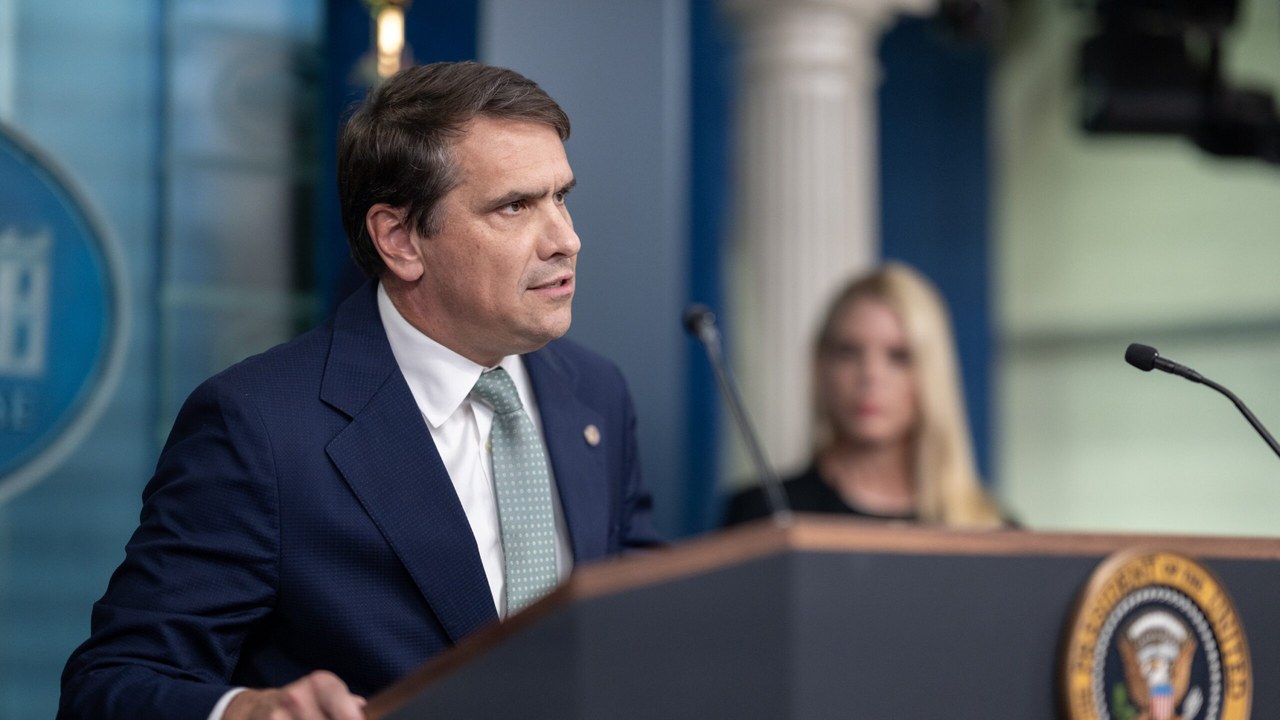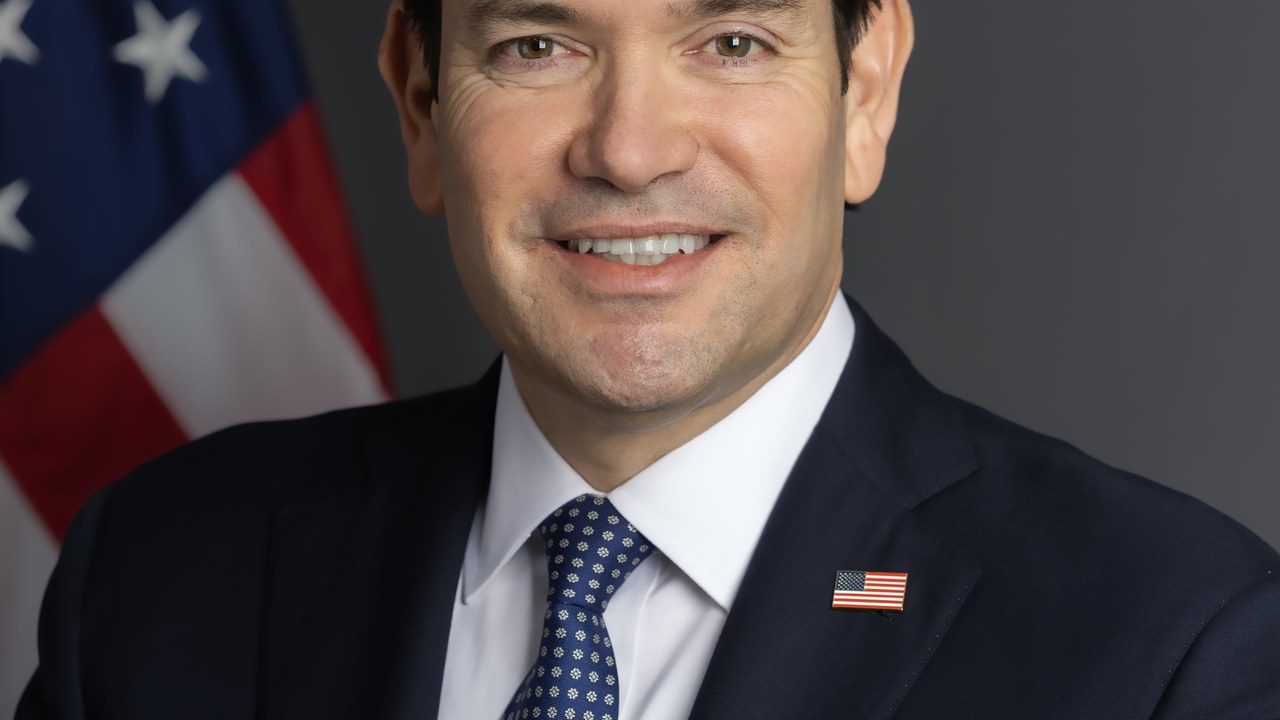
A federal judge in Manhattan erased the Trump administration’s ban on immigrant visas for citizens of 75 countries on Friday, ruling that Secretary of State Marco Rubio had no power to issue it and that the policy violated a nondiscrimination statute Congress wrote in 1965. The countries covered nearly 40 percent of the world. The ruling did not trim the policy or send it back for rewriting. It voided the thing entirely and ordered consular officers to go back to judging applicants one at a time.
What the January Cable Told Every Consulate to Do
The State Department announced the suspension on January 14 and made it effective January 21. The same day as the announcement, Rubio transmitted a cable to every diplomatic and consular post titled “Pausing Immigrant Visa Issuances for Nationalities at High Risk of Public Charge.” The list ran from Afghanistan and Albania to Uzbekistan and Yemen, taking in Brazil, Colombia, Cuba, Egypt, Ghana, Haiti, Iran, Jamaica, Nigeria, Russia, Somalia, Thailand, and Uruguay along the way. The department picked the countries using Council of Economic Advisers data on welfare use by country of origin, drawing the line at 30 percent of households receiving assistance and carving out a handful of nations for foreign policy reasons.
The mechanics are what sank it. Consular officers were told to keep scheduling appointments, keep conducting interviews, and keep evaluating every ground of ineligibility, including public charge. Then they were told to refuse the visa regardless under Section 221(g) of the Immigration and Nationality Act. Even an applicant who defeated a public charge finding with new evidence was to be refused anyway, with the officer instructed to write detailed case notes first. Consulates were further ordered to reopen already-approved cases whose printed visas had not yet left the building, refuse those too, and tell the applicant that additional administrative processing was necessary. Two nonprofits and eleven individuals sued on February 2.
Vargas Called the Policy Patently Unlawful
Judge Jeannette A. Vargas opened her analysis with a sentence that told the government how the rest of it would go. “In many ways, this is not a challenging case,” she wrote. Congress built a detailed scheme for issuing and refusing immigrant visas, and “at the center of the statutory scheme are the consular officers.” The policy, she found, “represents a direct abrogation of this statutory scheme.” Her conclusion: “The Policy is thus patently unlawful and must be vacated under the APA.”
The passage that will get quoted longest concerns what the cable actually did to the officers it left nominally in charge. “While the Policy permits consular officers to exercise their normal functions up to a point, whatever determinations they make as to eligibility for the applicants subject to the Policy are ultimately irrelevant,” Vargas wrote. “The outcome is predetermined. The visa will be refused.” She described the arrangement as a “blatant repudiation of the elaborate statutory scheme enacted by Congress” that “cannot withstand even the most cursory scrutiny.”
She was no gentler with the government’s briefs. Told that a refusal recorded under Section 221(g) counts as a ground “specifically set out in the law,” Vargas answered that “the Government engages in what is best described as an exercise in Orwellian logic,” and noted that it “has not identified any provision of law that permits a consular officer to refuse a visa to an otherwise eligible applicant.” Told that the policy preserved the consular role because officers still pressed the button, she called the argument “perhaps even more disingenuous” and offered an analogy: the government “might as well argue that dropping a rock onto a highway has no consequences because gravity, not the person who dropped the rock, is what sends it crashing into the cars below.” The full 61-page opinion and order was signed and filed on August 21.
A 1965 Statute Written to Stop Exactly This
The statute that did the damage is short. Section 1152(a)(1)(A) of Title 8 provides that “no person shall receive any preference or priority or be discriminated against in the issuance of an immigrant visa because of the person’s race, sex, nationality, place of birth, or place of residence,” subject to four narrow exceptions that nobody argued applied here. It entered the code in October 1965, drafted alongside the Civil Rights Act and the Voting Rights Act to end the national-origin quota system.
Vargas held that the text “leaves no doubt that Congress intended to abolish nationality-based discrimination in the immigrant visa process,” and that the agent of the discrimination and the mechanism used to accomplish it are “of no moment.” The administration’s fallback was Trump v. Hawaii, the travel-ban case, which turned on the distinction between admissibility and visa issuance. Vargas found it did not help, because “there is no question that the Policy at issue here regulates visa issuance.”
The second statutory problem was Rubio himself. Section 1104(a) hands the Secretary of State administration of the immigration laws except for “those powers, duties, and functions conferred upon the consular officers relating to the granting or refusal of visas.” The judge’s finding was blunt: the cable “undeniably flouts Section 1104(a)’s limitation on his authority,” and the policy “exceeds the statutory authority that the INA vests in the Secretary of State.” That is a ruling about a Cabinet secretary’s power, not about immigration sentiment, and it is the part of the decision most likely to matter to the next policy the department writes.
What the Ruling Undoes and What It Leaves Alone
The remedy is vacatur, not an injunction, because the plaintiffs never asked for one. “As these defects are comprehensive, fundamental, and severe, vacatur is the only appropriate remedy,” Vargas wrote, and she declined to remand the policy for further agency thinking because “no amount of further agency deliberation is necessary to decide” the scope of the Secretary’s authority.
The scope is narrower than the headlines suggest, and the carve-out is worth reading closely. The court set aside “any refusal of an immigrant visa that was based solely upon the Policy,” then added that “for the avoidance of doubt, this vacatur does not extend to denial of immigrant visas on any ground other than the Policy.” An applicant whose officer independently found a real disqualification under Section 1182 stays refused, even if the notice also cited the ban. The vacated refusals go back to consular officers for readjudication, and Vargas expressly declined to “direct any particular outcome or process so long as any refusal is not based upon the Policy.” Nobody was handed a visa. They were handed the review they were entitled to in the first place.
The Argument the Administration Actually Won
Two of the government’s positions survived, and the losing side rarely gets credit for them. Vargas rejected the claim that the policy violated the public charge provision at Section 1182(a)(4). The cable, she found, “neither directs consular officers to forgo the individualized assessment required by Section 1182(a)(4) nor instructs them to categorically refuse immigrant visas on public-charge grounds,” and because it routed refusals through Section 221(g) instead, “it is not contrary to that provision.” The administration also defeated the claim that the policy was a legislative rule requiring notice and comment, with the court expressly parting ways with another district decision that had gone the other way.
The practical reading is that the department lost on plumbing, not on premise. Congress has not repealed the public charge ground, and consular officers retain full authority to refuse an applicant they judge likely to become primarily dependent on the government. What the department may not do is decide the answer in Washington and hand consulates a list of nationalities. Six of the nine causes of action are still alive, and the parties owe the court a joint letter by September 11 on how to handle them. A State Department spokesperson said the administration is “protecting the American people by upholding the highest standards of screening and vetting of visa applicants” and declined to comment on the pending litigation.
This article was produced with AI assistance and reviewed prior to publication.

Elias Broderick specializes in residential and commercial real estate, with a focus on market cycles, property fundamentals, and investment strategy. His writing translates complex housing and development trends into clear insights for both new and experienced investors. At The Daily Overview, Elias explores how real estate fits into long-term wealth planning.