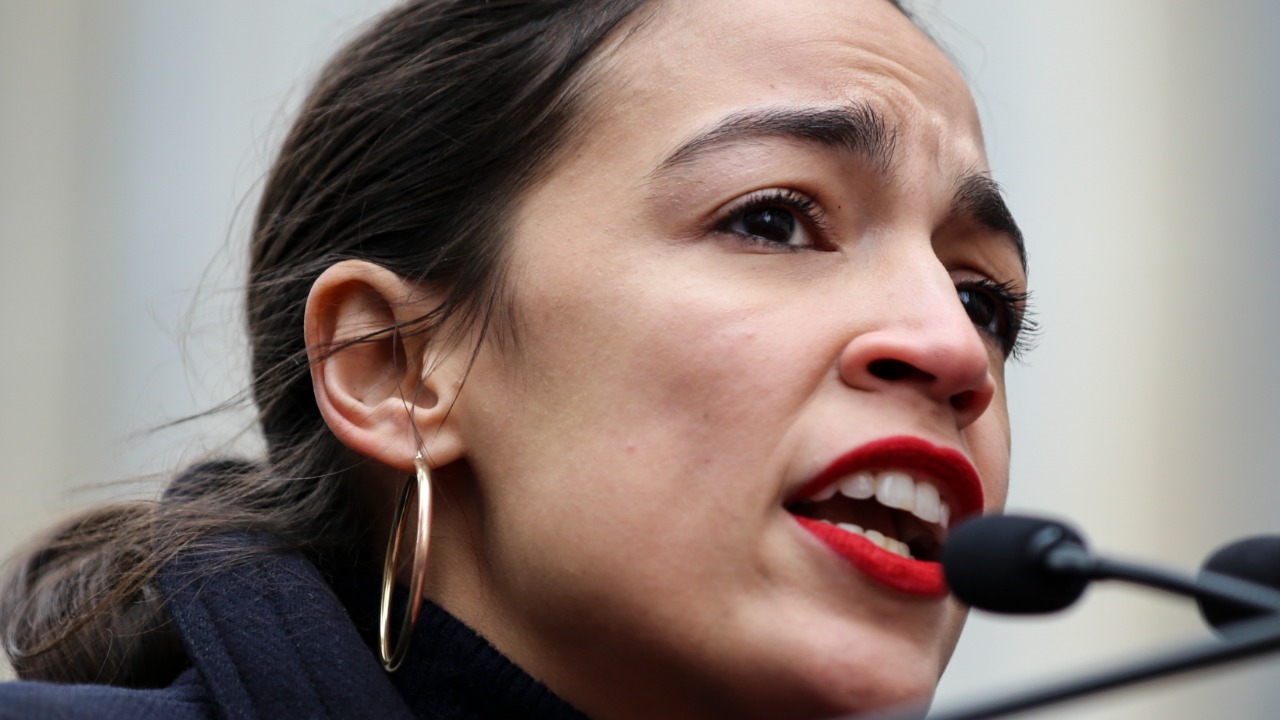
At the 2026 Munich Security Conference, Rep. Alexandria Ocasio-Cortez pitched a progressive economic vision on a global stage, only to face pointed pushback from an Argentine lawmaker who had watched a similar wealth-tax experiment falter in her own country. The exchange between the New York Democrat and Argentine Deputy Daiana Fernandez Molero exposed a fault line in left-wing fiscal policy that rarely surfaces at elite security gatherings. It also offered a preview of how wealth taxation will be debated if Ocasio-Cortez pursues higher office.
Two Panels, One Collision Course
The Munich Security Conference brought together heads of state, defense officials, and legislators across multiple days of programming. The Federal Chancellor of Germany delivered a speech on February 13, 2026, setting the tone for discussions that ranged from transatlantic defense to hemispheric economics. Ocasio-Cortez appeared on a panel about populism that same day, where she accused the Trump administration of trying to usher in an “age of authoritarianism.” Her remarks extended beyond security into economic policy, presenting what observers described as a working-class vision that included stronger taxation of concentrated wealth and a more interventionist state role in cushioning inequality.
Fernandez Molero participated in a separate panel titled “Western Hemisfever: Security in the Americas,” moderated by NPR’s Mary Louise Kelly and featuring U.S. Sen. Ruben Gallego among other officials. The framing of both panels, one centered on populism and the other on hemispheric security, created an unusual overlap in which macroeconomic choices were treated as security questions. Fernandez Molero, who had a front-row seat to Argentina’s own experiment with taxing the wealthy, used the conference setting to challenge the assumptions behind wealth levies. According to reporting on the exchange, the Argentine deputy said she did not agree with the progressive approach, drawing on her country’s direct experience with such policies and warning that good intentions can collide with capital flight and legal complexity.
Argentina’s Wealth Levy and Its Aftermath
The law at the center of Fernandez Molero’s critique is Ley 27.605, formally titled “Aporte Solidario y Extraordinario para Ayudar a Morigerar los Efectos de la Pandemia,” which translates roughly to an extraordinary solidarity contribution to help mitigate pandemic effects. The statute, whose full legal text is published by the Argentine government, imposed a one-time levy on the wealthiest individuals in the country, with rates rising on higher tiers of net worth and special rules for assets held abroad. Argentina’s federal tax authority built an entire administrative hub to handle implementation, covering everything from who qualified to how assets were valued, repatriation procedures, and payment plans, underscoring how resource-intensive such a measure can be even when it is billed as temporary.
The law was designed as an emergency, time-limited response to the fiscal shock of the pandemic, not a permanent annual wealth tax. But critics in Argentina, including lawmakers aligned with President Javier Milei’s libertarian coalition, have argued that the levy signaled hostility toward capital holders and accelerated outflows at a moment when investment was already fragile. Fernandez Molero’s comments in Munich drew on this narrative: that even a one-time extraction from the wealthy can erode investor confidence, push capital across borders, and deepen skepticism about future policy stability. The argument carries weight in Argentina, where currency controls and fiscal instability have long driven wealthy residents to park assets abroad. Whether the same dynamic would apply in the United States, with its deeper capital markets and reserve-currency status, is a separate question, but Fernandez Molero’s point was that the theory behind wealth taxes often collides with messy implementation realities and a long memory among investors.
Why the IMF’s Research Complicates Both Sides
Neither Ocasio-Cortez’s advocacy nor Fernandez Molero’s critique exists in a policy vacuum. The International Monetary Fund published a technical note titled “How to Tax Wealth,” which summarizes approaches including capital income taxation, annual wealth taxes, and inheritance or estate taxes. The IMF analysis does not dismiss wealth taxation outright; instead, it stresses that any attempt to tax large fortunes must grapple with evasion risk, administrative feasibility, and the difficulty of valuing illiquid assets such as private businesses or artwork. These are precisely the problems Argentina encountered with Ley 27.605, where enforcement depended on self-reporting, asset valuations were contested, and legal challenges delayed collection and created uncertainty over how much revenue the government could reliably expect.
The IMF framework suggests that the debate should not be framed as wealth taxes versus no wealth taxes, but rather as which design features make them workable in practice. Annual net-worth levies face the steepest compliance hurdles, while taxes on capital gains at realization or on estates at transfer tend to be easier to administer and less distortionary if crafted carefully. Ocasio-Cortez’s public remarks in Munich did not specify which model she favors, which left her position vulnerable to the broadest possible critique and allowed opponents to conflate different instruments under the same label. Fernandez Molero exploited that opening by pointing to the most politically contentious example available, Argentina’s one-time extraordinary levy, and treating it as representative of the entire concept. The result was a debate that generated heat but left the technical middle ground largely unexplored, even as institutions like the IMF try to map out options that balance equity and efficiency.
The Political Stakes Beyond Munich
The clash carried significance well beyond fiscal policy. The conference framing positioned the panels as a debate over the rules-based international order, with American progressives and Latin American free-market advocates offering competing visions of how domestic economics feed into global stability. Ocasio-Cortez’s presence in Munich itself was notable: her appearance at a premier security conference signaled that progressive Democrats want a voice in defining security not only in military terms but also through inequality, climate, and democratic resilience. For Fernandez Molero and likeminded lawmakers, pushing back on wealth taxes in that setting was a way to argue that growth and open markets are themselves pillars of security, especially in a region where economic crises have repeatedly fueled political unrest.
The optics also mattered for Ocasio-Cortez’s future ambitions. As coverage in outlets like weekly news digests and other international press make clear, her interventions are now consumed by audiences far beyond her Bronx and Queens district. That wider attention brings both opportunity and risk: progressive economic ideas gain global visibility, but missteps or oversimplifications are archived, replayed, and scrutinized by allies and adversaries alike, from European social democrats to Latin American libertarians. How effectively she and other progressives respond to case studies like Argentina’s will shape whether wealth taxation is seen as a serious governing program or a symbolic rallying cry.
Progressive Messaging, Global Audiences
The Munich exchange highlighted a broader challenge for the left: translating domestic policy ideas into a language that resonates in countries with very different histories. In the United States, Ocasio-Cortez can invoke a narrative of entrenched billionaires and stagnant wages, assuming a baseline of institutional stability and dollar dominance. In Argentina, by contrast, Fernandez Molero speaks to voters who have lived through repeated currency crises, emergency taxes, and abrupt policy reversals. For them, a levy on large fortunes is not an abstract fairness measure but part of a pattern in which the state repeatedly turns to private savings to plug fiscal holes. Bridging that gap requires more than citing international research; it demands acknowledging the scars left by previous experiments and explaining why a new design would avoid old pitfalls.
That communication task is complicated by the fragmented media environment in which debates like Munich reverberate. International readers may first encounter Ocasio-Cortez’s remarks through curated summaries that sit alongside prompts to log into news platforms, subscribe, or support specific outlets. Those same sites host commentary from economists, business leaders, and activists who bring their own priors to the question of wealth taxation. In that sense, the policy fight is inseparable from battles over attention and trust: whose interpretation of Argentina’s experience gets amplified, which metrics of success or failure are highlighted, and how readers’ existing skepticism toward elites or institutions colors their judgment of both Ocasio-Cortez and Fernandez Molero.
What Comes Next for the Wealth Tax Debate
Even if no concrete policy emerged from the Munich exchange, it is likely to shape how future proposals are framed. Progressive lawmakers in Washington who look to Ocasio-Cortez as a standard-bearer will have to decide whether to champion broad-based net-worth taxes, narrower surcharges on unrealized gains, or more conventional tools like higher capital gains and estate taxes. Each choice carries different implications for enforcement and for how easily opponents can invoke Argentina as a cautionary tale. For their part, critics like Fernandez Molero may find that pointing only to capital flight is not enough; they will be pressed to show how alternative tax mixes can fund social needs without deepening inequality or eroding democratic legitimacy.
Outside the halls of Congress, the debate will continue in think tanks, multilateral institutions, and even job markets shaped by these policy currents. Media ecosystems that encourage readers to financially support journalism or browse specialized career boards help determine which expert voices gain prominence in that process. As long as high inequality coexists with fiscal strain, the question of how, and whether, to tax large fortunes will resurface at gatherings like Munich. The confrontation between Ocasio-Cortez and Fernandez Molero ensured that when it does, Argentina’s one-time levy—and the lessons drawn from it on both sides—will be part of the argument.
More From The Daily Overview
*This article was researched with the help of AI, with human editors creating the final content.

Grant Mercer covers market dynamics, business trends, and the economic forces driving growth across industries. His analysis connects macro movements with real-world implications for investors, entrepreneurs, and professionals. Through his work at The Daily Overview, Grant helps readers understand how markets function and where opportunities may emerge.