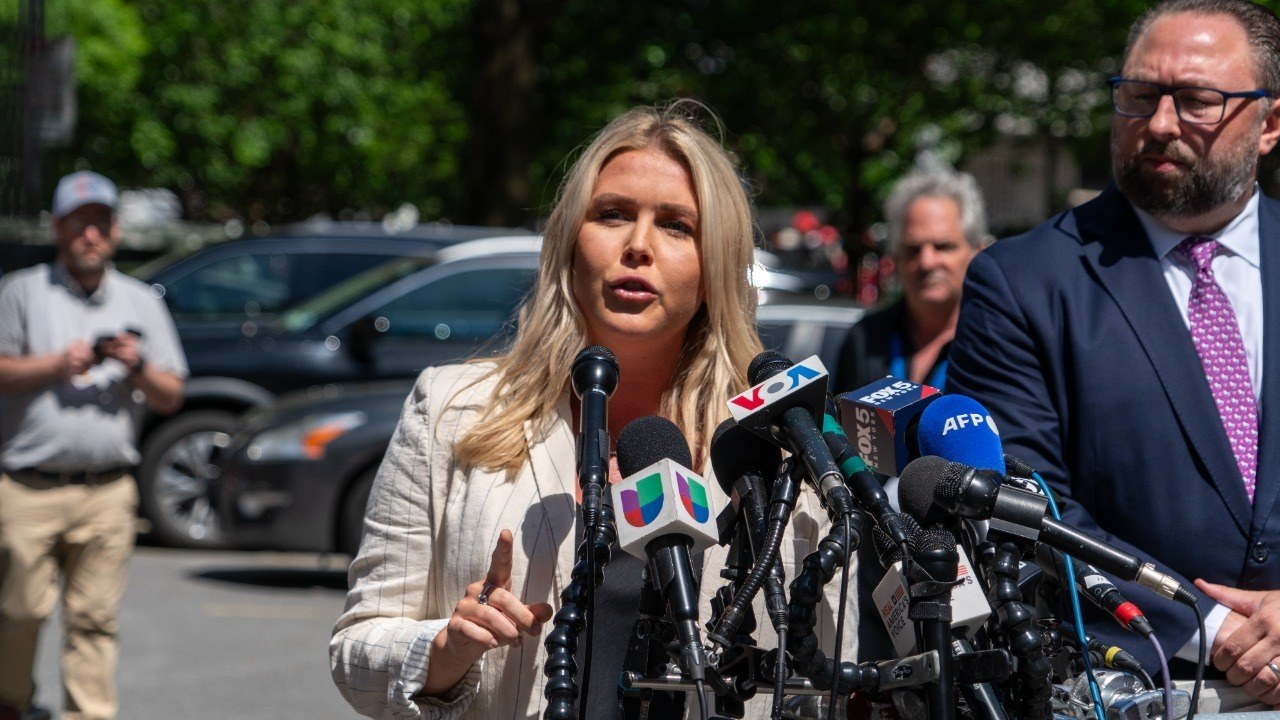
Karoline Leavitt, the fast-talking conservative who turned the White House briefing room into a nightly brawl with the national press corps, is walking away from the most visible communications job in American politics. President Donald Trump announced on Wednesday that Leavitt will leave her post as White House press secretary at the end of August, closing out a run that made her the youngest person ever to hold the title. The move lands with the midterm elections less than three months away, and it pulls one of the administration’s most recognizable faces off the field at the exact moment Republicans are bracing for the fight to hold Congress.
Trump did not frame the departure as a firing or a falling-out. He cast it as a family decision and immediately handed Leavitt a new title, insisting that the 28-year-old is not leaving his orbit so much as moving to a different seat in it. For a White House that has prized message discipline and a permanent posture of combat with the media, losing the person who ran the podium is no small thing heading into an election year.
The Announcement Came From Trump, Not the Podium
The news did not break at a briefing. It came in a post on Trump’s Truth Social account, where the president wrote that his “wonderful White House Press Secretary, and one of my most trusted aides” would be “departing her role at the end of the month so she can spend more time with her beautiful young children and family,” a decision he said he “totally understand and respect.” There was no advance warning to the press corps and no farewell from behind the lectern she had commanded for a year and a half.
Trump went further than a routine send-off. He described Leavitt as “one of the best White House Press Secretaries in the History of the Office” and thanked her for “fighting for Justice, Liberty, and Freedom.” The praise was effusive even by his standards, and it doubled as a signal to the party’s base that Leavitt was leaving in good standing rather than being pushed out. Notably absent from the announcement was any word on who would take over the briefing room.
A Combative Tenure That Started at Age 27
Leavitt has held the press secretary job since the opening days of Trump’s second term, and she became one of its defining personalities almost immediately. From the lectern in the James S. Brady Press Briefing Room, she ran sessions that often turned into open sparring matches with reporters she accused of trafficking in “fake news,” a style that made her a favorite of the MAGA movement and a fixed target of the president’s critics. Where past press secretaries sometimes tried to lower the temperature, Leavitt raised it, treating the briefing as another front in the administration’s war with the media.
She was 27 when she took the job, making her the youngest White House press secretary in history. Her path to the podium ran through Trump’s first term, where she served as an assistant press secretary before a congressional run in New Hampshire and a stint as a leading spokesperson for the 2024 campaign. By the time she returned to the West Wing, she had built a reputation as an aggressive, relentlessly on-message defender of the administration who rarely gave an inch in public and almost never conceded a point to a hostile question.
Her Own Explanation Centered on Two Young Children
In her own statement, Leavitt framed the exit as a personal one. “Since returning to the White House after the birth of my daughter, I have felt in my heart that I cannot be the best mom my two young children deserve while devoting the constant time, energy, and attention required of the White House Press Secretary,” she wrote, calling it a “bittersweet decision.” She had given birth to her second child, a daughter, in May and had returned to the briefing room only weeks before the announcement.
The demands of the job are unforgiving, with the press secretary on call at nearly every hour and answerable for every word the administration puts into the world. Leavitt’s choice to step back while her children are young is the kind of decision that tends to draw sympathy across the political divide. She made clear, though, that she was not stepping out of politics, pledging to “always remain a vocal advocate for MAGA and the Republican Party.”
A Midterm Job Instead of a Clean Goodbye
Rather than a clean break, Trump announced that Leavitt would immediately become “one of my top outside advisors, and an influential voice within the Republican Party, as we work to defy History, and conclusively win the Midterm Elections.” The framing matters. It keeps one of the party’s most effective messengers in the fold at a moment when Republicans are defending narrow majorities and staring down the historical headwinds that almost always batter the party in power during a president’s first midterm cycle.
For conservatives, the arrangement reads less like a loss than a redeployment. Freed from the constraints of a government podium, Leavitt can campaign, raise money, and go on offense in ways a sitting press secretary legally and practically cannot. Whether an outside adviser can match the daily reach of a nationally televised briefing is an open question, but the president is plainly betting that her value to the party does not end when she walks out of the building. In effect, Trump is trading a spokeswoman for a surrogate right as the campaign calendar heats up.
No Named Successor and a Wider Reshuffle
As of the announcement, the White House had not said who would replace Leavitt or who would run the briefing room in the interim. The opening arrives amid a broader shuffle of senior West Wing roles, including Trump’s decision to tap staff secretary Will Scharf as the next White House counsel, a sign that the administration is repositioning its top staff as it pivots toward the campaign season. A vacancy at the podium during that kind of reshuffle only sharpens the sense of a team being reassembled for the stretch run.
Whoever inherits the lectern will step into a job Leavitt reshaped in her own combative image, facing a press corps she spent 18 months battling and a base that came to expect a fighter behind the microphone. The successor will also inherit her central assignment: selling the administration’s record to voters in the closing months before an election that will decide how much power Trump wields for the back half of his term. Leavitt is leaving the room, but by the president’s own design, she is not leaving the fight.
This article was produced with the assistance of AI tools and reviewed by an editor prior to publication.

Julian Harrow specializes in taxation, IRS rules, and compliance strategy. His work helps readers navigate complex tax codes, deadlines, and reporting requirements while identifying opportunities for efficiency and risk reduction. At The Daily Overview, Julian breaks down tax-related topics with precision and clarity, making a traditionally dense subject easier to understand.


