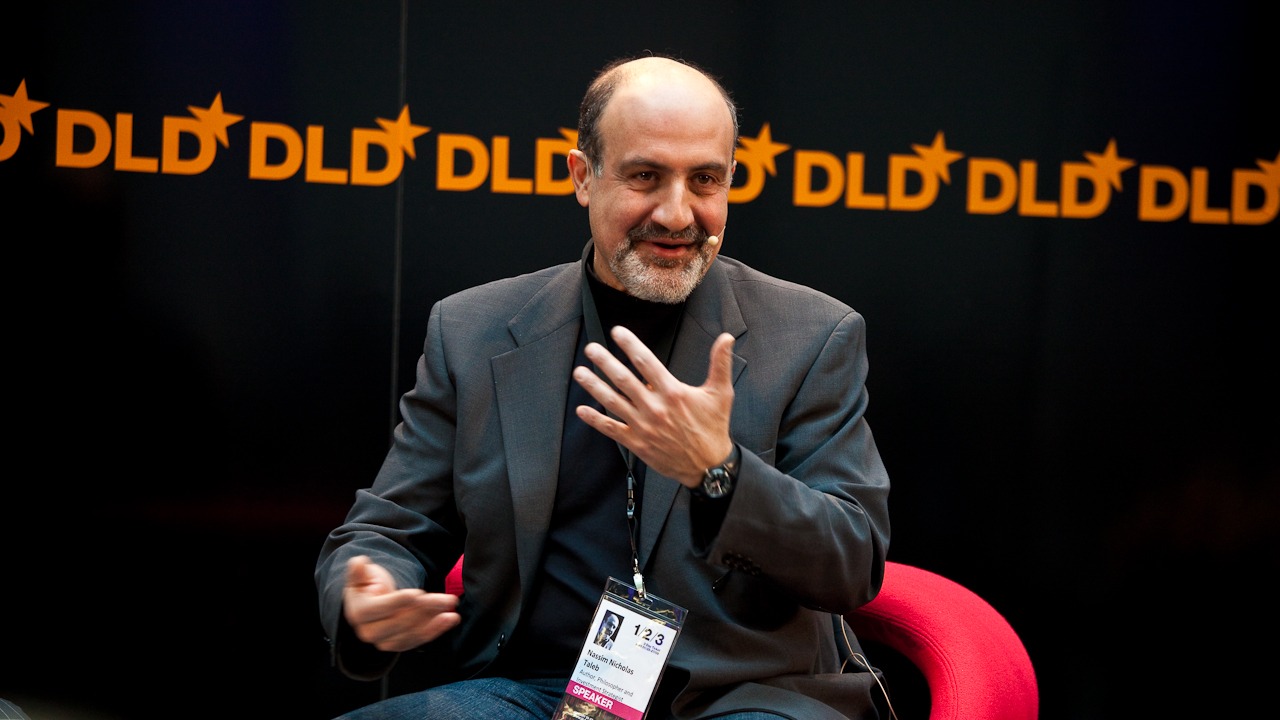
Nassim Nicholas Taleb, the risk analyst and author best known for his “Black Swan” theory of unpredictable market events, told investors on February 23, 2026, to prepare for bankruptcies across parts of the software sector and a sharp increase in volatility. The warning, delivered at a Universa Investments event in Miami, comes as software shares have been under pressure, raising the prospect that some of the market’s recent gains could be erased if failures spread.
Taleb Links AI Disruption to Software Fragility
Taleb’s core argument centers on a vulnerability that many Wall Street analysts have treated as a secondary risk: the very AI systems that drove software valuations higher are now threatening to displace the companies that failed to adapt quickly enough. Speaking at the Universa event, Taleb warned that parts of the software industry face outright bankruptcy as artificial intelligence reshapes how businesses buy and build technology. His remarks tied escalating volatility to what he described as market fragility concentrated in AI-driven sectors, where a handful of dominant players have absorbed capital at the expense of a long tail of weaker firms.
The warning carries weight because Taleb has built his career on identifying fat-tail risks that conventional models miss. His framing suggests that the software sector’s exposure is not simply a valuation problem but a structural one: companies that sold subscription software before generative AI arrived may find their products replaced rather than upgraded. That distinction matters because replacement risk leads to revenue collapse, not just margin compression, and revenue collapse is the fast track to insolvency for firms carrying significant debt loads. Taleb’s comments pointed specifically to dominant AI platforms as a source of concentrated vulnerability, implying that the winners-take-all dynamic in AI could leave dozens of mid-tier software firms stranded without a viable business model.
Trillions Already Lost in the Software Selloff
The market has not waited for Taleb’s thesis to play out in bankruptcy courts. A widely followed software index has lost about $2 trillion in value since its peak in October, according to Reuters data. That decline has hit a wide range of names, from enterprise platforms like Salesforce and Adobe to specialized players such as Atlassian, Intuit, Workday, and CrowdStrike, all of which have posted steep year-to-date losses. The breadth of the selloff suggests this is not a story about one or two missteps but a repricing of an entire category that investors once treated as a near-permanent growth engine.
A separate measure of the damage suggests the pace has accelerated. A software-focused S&P 500 measure lost about $1.2 trillion in weeks, according to Financial Times reporting. That compressed timeline is significant because it indicates selling pressure is intensifying rather than stabilizing. When a sector sheds that much capitalization in weeks rather than quarters, it can reflect institutional repositioning rather than only retail selling. It may indicate some large investors are reassessing the risk-reward profile of software holdings, even before any defaults or credit downgrades become widespread.
Capital Rotates Toward Asset-Heavy Sectors
Some of the money leaving software appears to be rotating elsewhere. In recent market commentary and pricing data, investors have shown interest in more asset-heavy sectors such as energy and real estate, seeking companies whose value is tied to physical infrastructure rather than subscription revenue streams. The Financial Times data service tracks these kinds of cross-sector moves, which reflect a broader rethinking of where durable earnings growth will come from as AI reshapes the technology stack. The logic is straightforward: companies that own pipelines, power plants, or commercial property generate cash flows that AI cannot easily replicate or disrupt, making them a natural destination for capital fleeing software risk.
The shift may also have cross-Atlantic dimensions. Some analysts have pointed to similar risk-on/risk-off rotations in Europe, while others emphasize that shifting rate expectations can change which asset classes look most attractive on each side of the Atlantic. Analysts tracking monetary policy trends often highlight how central-bank expectations can add another layer of complexity for global allocations. For U.S. investors, the practical takeaway is that the rotation is not a short-term trade but a structural reallocation that could persist for quarters if software earnings continue to deteriorate and if higher-for-longer rates keep pressuring long-duration growth assets.
Why This Warning Differs From Standard Bear Calls
Wall Street is never short of pessimists, and bearish calls on technology stocks have been a recurring feature of the post-pandemic market. What separates Taleb’s warning is its specificity. He is not predicting a broad market crash or a recession-driven downturn. He is identifying a mechanism: AI-driven disruption creating bankruptcy risk in a sector that most investors still treat as a growth category. That distinction matters because it implies the damage will be concentrated and sudden rather than gradual and diffuse. A software company that loses its competitive position to an AI-native rival does not slowly decline; it loses customers in bulk as contracts come up for renewal and buyers switch to cheaper, faster alternatives.
Most coverage of the software selloff has focused on valuation multiples compressing toward historical averages, framing the decline as a healthy correction after years of excess. Taleb’s framing challenges that assumption directly. If he is right that actual bankruptcies are coming, then the selloff is not a correction but the early phase of a credit event. Bankruptcies would affect not only equity holders but also lenders, employees, and customers whose operations depend on vulnerable platforms. In that sense, his argument resembles his earlier work on financial derivatives, where hidden interconnections turned what looked like isolated failures into systemic episodes of stress.
What Investors Can Do With a “Black Swan” Style Warning
Taleb has long argued that the correct response to fat-tail risk is not prediction but preparation, and his latest comments on software fit that philosophy. For diversified investors, the immediate implication is to scrutinize exposures to companies whose products are easily replicated by large language models or other generative tools, especially where those firms carry high leverage or depend on a narrow customer base. The combination of technological obsolescence and tight credit conditions can turn a routine earnings miss into a solvency scare, particularly for smaller and mid-cap names that lack the balance-sheet strength of the biggest AI players.
At the portfolio level, the warning reinforces the case for stress-testing scenarios in which software revenues fall sharply while volatility spikes across equity and credit markets. That could mean revisiting hedging strategies, reassessing how much of a portfolio’s risk budget is tied to a single theme like AI, and considering a more deliberate tilt toward sectors with tangible assets and regulated cash flows. None of those steps can eliminate the uncertainty Taleb describes, but they can make portfolios less fragile if his prediction of software bankruptcies and heightened volatility proves prescient. For investors who benefited from the AI-driven boom in software, the message from Miami is clear: the same force that powered recent gains may now be the catalyst for a painful, uneven reset.
More From The Daily Overview
*This article was researched with the help of AI, with human editors creating the final content.

Grant Mercer covers market dynamics, business trends, and the economic forces driving growth across industries. His analysis connects macro movements with real-world implications for investors, entrepreneurs, and professionals. Through his work at The Daily Overview, Grant helps readers understand how markets function and where opportunities may emerge.

