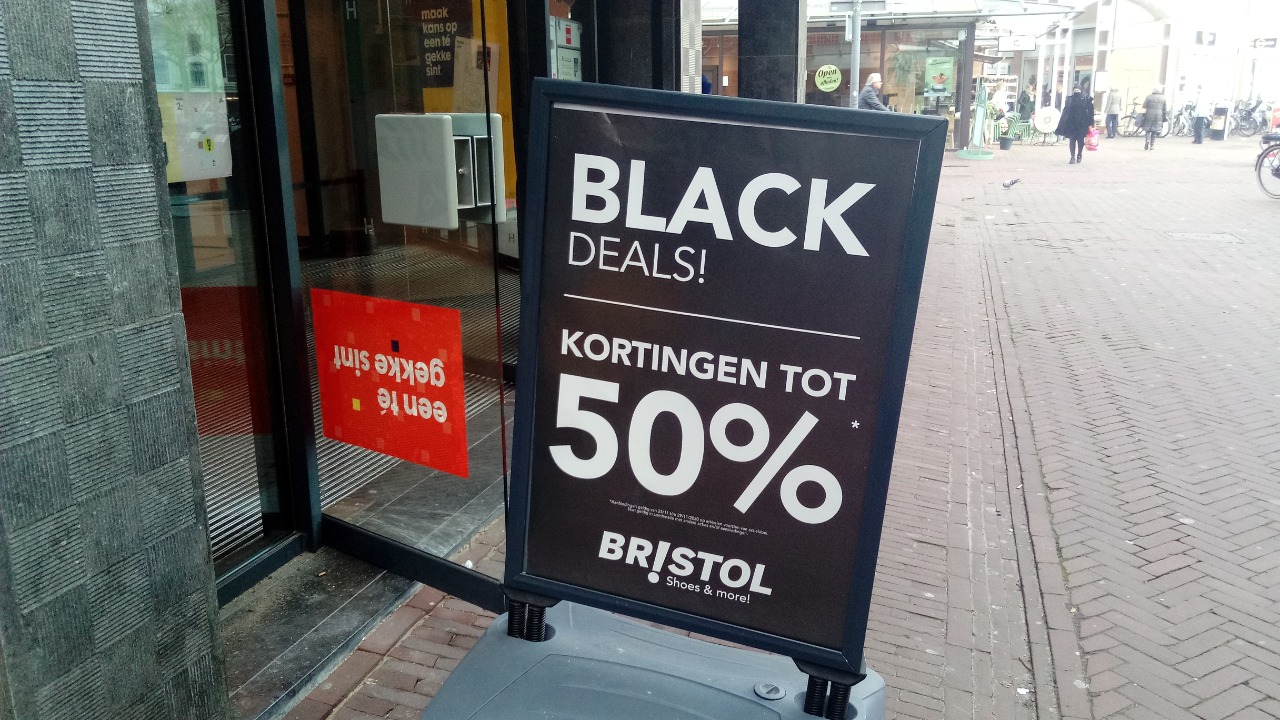
Black Friday has long been sold as the moment when retailers slash prices to the bone, but new research shows that a large share of those eye-catching tags are more illusion than windfall. A detailed study of seasonal pricing found that more than one third of supposed Black Friday bargains were not genuine reductions at all, and many others offered only token savings once you track prices over time. For shoppers, the message is blunt: the loudest “deal” on the shelf is often just the regular price dressed up in holiday marketing.
What the new study actually found about fake Black Friday deals
The central finding is stark: when researchers compared Black Friday prices with the same products’ usual levels, they discovered that over one third of the promoted offers were not real discounts in any meaningful sense. In many cases, the item had been sold at the same price, or even lower, in the weeks leading up to the sale, which means the Black Friday label added hype but not value. The study also flagged a second tier of offers where the reduction was technically real but so small that it barely moved the needle for consumers, especially once shipping costs or add-ons were included, a pattern that undercuts the event’s reputation as a once-a-year chance to save big on big-ticket items like televisions and laptops.[1]
When the researchers dug into specific product categories, they found that electronics, home appliances, and branded gadgets were particularly prone to this kind of “sale in name only” pricing. A popular 55-inch 4K TV, for example, might be advertised as hundreds of pounds off its “original” price, even though the retailer had quietly cut it to the same level weeks earlier and kept it there. Similar patterns showed up in kitchen appliances and smart home devices, where the supposed discount was calculated against a high reference price that had not been charged for months. The study’s authors concluded that shoppers who assume Black Friday is automatically the cheapest time to buy are often paying for timing and marketing, not for a genuine markdown.[2]
How retailers manufacture “deals” with reference prices and timing
Behind those misleading offers is a set of pricing tactics that are perfectly legal in many markets but deeply confusing for anyone trying to shop smart. Retailers frequently lean on inflated “was” prices or manufacturer suggested retail prices that bear little resemblance to what customers actually paid in recent months. By anchoring the discount to a high reference point, a modest reduction can be presented as a dramatic cut, even if the product has been sitting at the lower price for most of the season. The study found repeated examples of items that were advertised as 30 percent or 40 percent off, even though the so-called original price had only been charged for a short window, if at all, before the promotion began.[3]
Timing games compound the problem. Some retailers raise prices in early autumn, then “slash” them back to their previous level for Black Friday, creating the illusion of a bargain without changing the real cost to the shopper. Others run rolling promotions throughout the year, so the Black Friday tag simply coincides with one of many recurring sales rather than a unique low. The research highlighted that many of the products checked were available at equal or better prices in the weeks after Black Friday, particularly in the run-up to Christmas and during January clearance events, which means the calendar hype often benefits retailers more than buyers.[4]
Why shoppers keep falling for non-discounts
Even when the numbers do not add up, the psychology of a limited-time sale is powerful. Retailers design Black Friday campaigns to trigger urgency and fear of missing out, with countdown timers, “only 3 left” stock warnings, and bold graphics that frame the event as a rare opportunity. Behavioral economists have long noted that people are more sensitive to the idea of losing a deal than to the actual pounds or dollars at stake, which helps explain why a 10 percent reduction can feel irresistible when it is wrapped in language about “today only” or “doorbuster” access. The study’s findings fit neatly into that pattern, showing that shoppers often respond to the framing of a discount rather than verifying whether the price is truly exceptional.[5]
Brand loyalty and habit also play a role. Many consumers return to the same big-box chains or major online platforms every November, assuming that scale and reputation translate into the best possible price. The research suggests that this trust is frequently misplaced, with some of the most aggressive marketing campaigns attached to products whose Black Friday prices were no better than their mid-year levels. When people are already primed to believe they are getting a bargain, they are less likely to cross-check prices elsewhere or to remember what the item cost a month earlier, which gives retailers wide latitude to present ordinary offers as extraordinary steals.[6]
Where the real savings tend to be, and where they are not
Despite the high share of non-discounts, the study did identify pockets where Black Friday still delivers meaningful value. Certain categories, particularly older-generation electronics, previous-year smartphone models, and seasonal clothing, showed genuine reductions that were hard to match at other times of the year. A 2023 flagship phone might barely budge in price, for instance, while the 2022 version sees a substantial cut as retailers clear inventory. Similarly, mid-range laptops and gaming consoles bundled with extra controllers or games sometimes offered real savings once the total package was compared with buying each component separately outside the sale period.[7]
On the other hand, the research found that some of the most heavily advertised categories were among the worst value. Big-screen TVs, premium headphones, and branded kitchen appliances often featured headline-grabbing percentage cuts that masked the fact that the same prices had been available during summer sales or back-to-school promotions. In homeware and furniture, the pattern was even more pronounced, with many items cycling through near-constant promotions so that the Black Friday tag simply marked one more entry in a long list of “events.” For shoppers, the lesson is not that all Black Friday shopping is a mistake, but that the best opportunities are usually in less glamorous corners of the catalog rather than the splashiest front-page offers.[8]
How to spot a genuine bargain before you click “buy”
Given how many offers turn out to be smoke and mirrors, the most effective defense is to treat Black Friday like any other shopping decision and focus on the underlying price history. I recommend that readers track the cost of big purchases for several weeks or months using price comparison tools and browser extensions that log historical data for sites like Amazon, Walmart, and Best Buy. If a 65-inch TV has hovered around £799 for most of the autumn and suddenly appears at £799 with a “was £1,199” label, the chart will make clear that the only thing that changed is the marketing. The study’s authors repeatedly stressed that shoppers who checked previous prices were far less likely to be misled by inflated reference points or short-lived pre-sale hikes.[9]
It also helps to decide in advance what you actually need and what a fair price looks like, rather than letting the sale dictate your wish list. By setting a target budget for a specific model, such as a Lenovo IdeaPad 3 laptop or a Samsung Galaxy S23, you can judge each offer against your own benchmark instead of the retailer’s framing. I advise readers to compare at least three retailers for any major purchase, to factor in shipping and return policies, and to be wary of “bundle” deals that add low-value accessories to justify a higher headline price. When a discount is real, it will usually stand up to that kind of scrutiny, and you will see that the Black Friday price is meaningfully lower than both recent history and competing offers.[10]
What regulators and platforms are doing about misleading discounts
The scale of misleading promotions has not gone unnoticed by regulators. Consumer protection agencies in several countries have issued guidance warning retailers that fake reference prices and short-lived “was” labels can cross the line into deceptive advertising. In the United Kingdom, for example, pricing rules require that a higher comparison price must have been charged for a meaningful period before it can be used as the basis for a discount claim, and enforcement bodies have brought cases against companies that used inflated figures to exaggerate savings. The study’s findings have added fresh pressure on authorities to scrutinize Black Friday campaigns more closely, particularly where the same patterns repeat year after year.[11]
Major online platforms are also under pressure to clean up how deals are presented. Some have introduced clearer labeling for “limited time” offers, while others now display price history graphs or badges that flag when a discount is based on a short-lived previous price. I see these steps as a partial response to mounting evidence that shoppers are being nudged toward purchases that feel like bargains but are not. However, the study makes clear that platform tweaks alone will not eliminate the problem, because retailers can still manipulate list prices and promotion timing within the rules. Until enforcement tightens and transparency tools become standard, the burden will remain on consumers to question the story behind every supposed steal.[12]
More From TheDailyOverview
- Dave Ramsey warns to stop 401(k) contributions
- 11 night jobs you can do from home (not exciting but steady)
- Small U.S. cities ready to boom next
- 19 things boomers should never sell no matter what

Cole Whitaker focuses on the fundamentals of money management, helping readers make smarter decisions around income, spending, saving, and long-term financial stability. His writing emphasizes clarity, discipline, and practical systems that work in real life. At The Daily Overview, Cole breaks down personal finance topics into straightforward guidance readers can apply immediately.