The clash between the White House and Big Oil over who gets paid to rebuild Venezuela’s shattered energy sector has moved from quiet lobbying to an open confrontation. President Donald Trump is promising a bonanza of investment and cash flow while threatening to sideline some of the industry’s biggest players, turning a foreign policy gamble into a domestic power struggle. At stake is not only control over Venezuela’s oil revival but also who captures the political and financial dividends of that risky bet.
Trump has framed the push as a way to secure revenue for both Americans and Venezuelans while punishing the remnants of President Maduro’s regime, yet the emerging deal structure has infuriated executives who see the administration picking winners and losers. The result is a rare moment when oil majors, usually aligned with Republican energy priorities, are openly pushing back against a Republican White House.
The $100 billion promise meets boardroom skepticism
From the start, Trump has sold his Venezuela plan in superlatives, telling audiences that “Our giant oil companies will be spending at least $100 billion” to rebuild the country’s industry, a figure that instantly set expectations for a historic corporate cash surge into Caracas-linked projects. That $100 billion pledge became the political centerpiece of the initiative, a shorthand for jobs, contracts, and leverage over a key crude supplier. Inside the West Wing, officials have paired that rhetoric with a legal architecture designed to “PROTE” what they describe as Venezuelan assets, with a White House Fact Sheet titled “President Donald Trump Safeguards Venezuelan Oil Revenue for the Good of the American and Venezuelan People” casting the controls as a shield for both countries’ interests. In parallel, Trump signed an executive order blocking courts from seizing Venezuelan oil funds held in United States accounts, a move his allies tout as proof that the administration is, in his words, “WERE DOING TREMENDOUS THINGS” to manage the transition, as reflected in his remarks highlighted by President Trump.
Inside the Cabinet, Energy Secretary Chris Wright has tried to translate that political vision into industry enthusiasm, telling reporters that “They’re going to be blowing in with hundreds of billions of dollars,” even as he acknowledged that only a handful of firms, including Chevron, have the experience to rebuild Venezuela’s oil infrastructure. Yet when executives gathered at the White House, Trump’s $100 billion goal ran into hard-nosed skepticism about timelines, security, and returns, with some leaders warning that the fields cannot be restored on a political calendar. Outside government, analysts such as Brad W. Setser, the Whitney Shepardson senior fellow at the Council on Foreign Relations, have underscored that increasing Venezuela’s output will take several years and “billions” of dollars, not just a single wave of capital, a point he laid out in an expert brief for the Council. That reality check has deepened the rift between Trump’s political timetable and the industry’s engineering math.
Exxon frozen out, Chevron courted
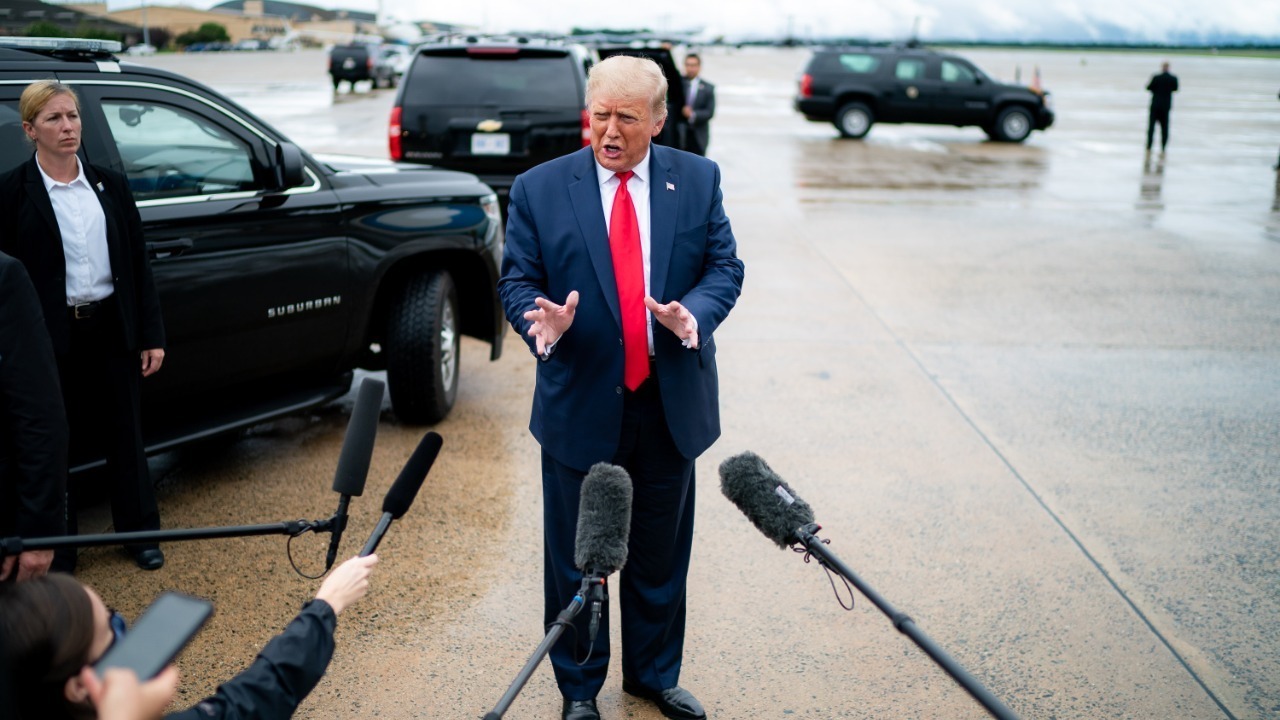
The most explosive element of the standoff is Trump’s threat to punish ExxonMobil for what he sees as disloyalty. After a tense White House session where ExxonMobil chief executive Darren Woods reportedly questioned the assumptions behind the Venezuela push, Trump told reporters he was “inclined” to keep ExxonMobil out of the country’s new oil activities, a stance he reiterated in an interview from HUNT VALLEY, Md., where he said, “I think we are probably going to keep Exxon out,” according to President Donald Trump. That threat carries real weight for a company whose trailing twelve month revenue is enormous; According to Exxon Mobil’s latest financial reports the company’s current revenue (TTM) is $324.92 Billion Billion USD, a scale that would normally make it a default partner in any major upstream revival. Trump has gone further in private conversations, signaling he is leaning toward excluding ExxonMobil from the first wave of Venezuela contracts, a posture described in reporting that quoted Tony Czuczka and Simon Casey and detailed how the president is weighing whether Exxon should be sidelined in the country’s oil revival, as captured in a Bloomberg-linked account.
While ExxonMobil is put in the penalty box, Chevron is being positioned as the preferred partner. Investors have been told that Chevron Bets on Venezuela Oil to Unlock Up to $700M in Cash Flow, with the company projecting that its projects could Unlock Up to $700 Cash Flow if sanctions and logistics align. At the same time, coverage of Trump’s meetings has noted that Trump’s $100 billion goal is being used to pressure executives to “get on” board, with Wright pointing to “tremendous interest” from companies eyeing Venezuela even as some balk at the political strings. One analysis has suggested that President Donald Trump could be poised to hand Chevron (CVX) its second win in South America in six months over rival suppliers, with the Venezuela play framed as another potential South American victory for Chevron and CVX. The perception that the White House is rewarding one major while punishing another has turned a policy debate into a corporate grudge match.
War, revenue controls, and the fight over who gets paid
The oil fight is inseparable from the broader U.S. intervention in Caracas. In the early hours of Jan. 3, U.S. forces moved to capture President Maduro, an operation the administration has justified as a response to drug trafficking and security threats, and the White House has since said it expects Venezuelan output to climb back toward around 240,000 barrels per day as fields are stabilized, according to a detailed explainer on Why the United States moved against President Maduro. That military backdrop explains why Trump has insisted on tight control over oil cash flows, casting the revenue as a tool to stabilize “Venezuela and” its politics rather than a free-for-all for foreign shareholders. The administration’s own fact sheet on “President Donald Trump Safeguards Venezuelan Oil Revenue for the Good of the American and Venezuelan People” spells out how new accounts and trustees will manage proceeds, reinforcing that the White House intends to decide which companies and factions get paid, as laid out in the Trump Safeguards Venezuelan document. That same instinct drove the executive order highlighted by Fox News, where Trump’s allies celebrated that “Trump signed the order Friday” to keep Venezuelan funds out of reach of creditors tied to the old regime, a step described in coverage of how the president moved to protect Venezuelan oil revenue.
Inside the industry, that level of micromanagement has sharpened concerns that the Venezuela push is less a market opening than a White House-run concession system. One report noted that Also on Friday, Trump signed the order tightening control over funds just as he was privately venting about ExxonMobil’s resistance, a sequence that underscored how policy and personal pique are intertwined, as described in a Sunday account of his comments. At the same time, Chevron’s projected $700 million windfall and the administration’s insistence that “Our giant oil companies” will pour in $100 billion have raised questions about whether the spoils will be concentrated among a few favored firms rather than spread across the sector. For markets trying to price that risk, tools like Google Finance are already reflecting how traders view the balance sheets of companies with Venezuelan exposure, while geopolitical analysts point out that the country’s reserves, cataloged in resources such as Venezuela’s country profile, remain among the world’s largest. For now, the only certainty is that the fight over who controls that future cash is no longer confined to Caracas; it is raging in the Oval Office and the C-suites of the world’s biggest oil companies.
More From TheDailyOverview

Silas Redman writes about the structure of modern banking, financial regulations, and the rules that govern money movement. His work examines how institutions, policies, and compliance frameworks affect individuals and businesses alike. At The Daily Overview, Silas aims to help readers better understand the systems operating behind everyday financial decisions.