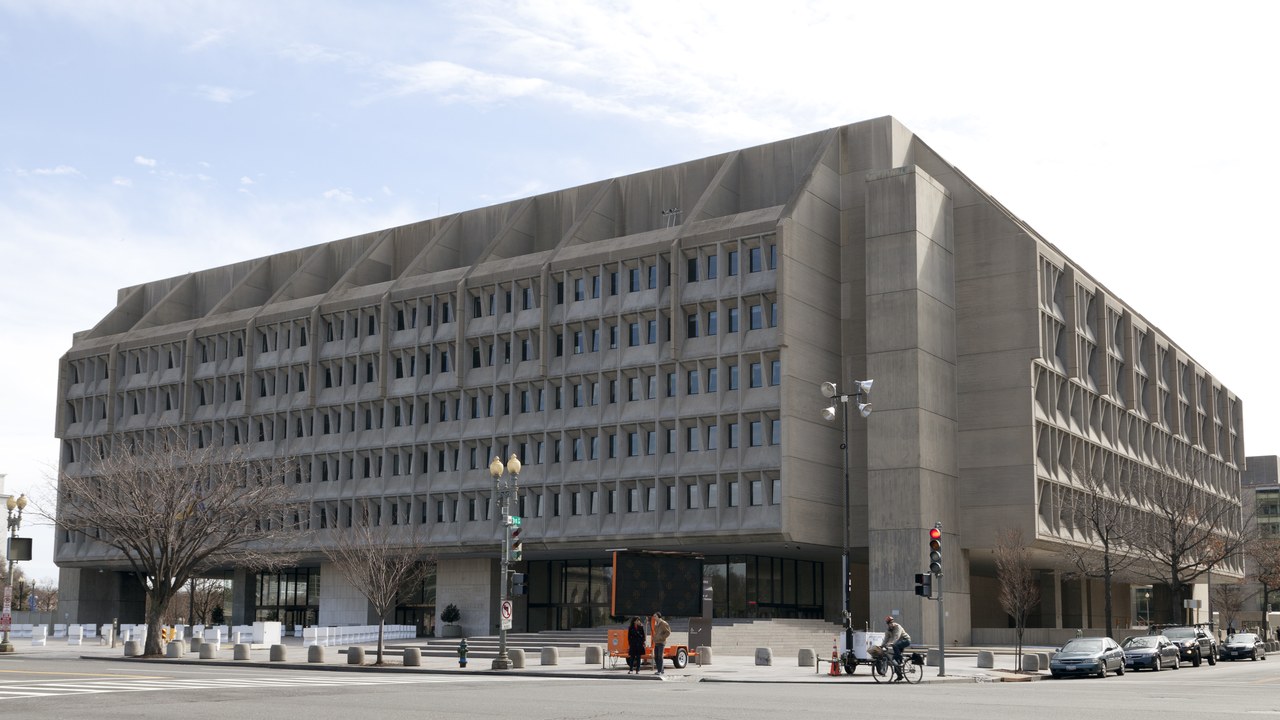
A federal contract quietly reached its expiration date on Friday, and with it went the funding that pays for attorneys to represent children who crossed the border without a parent. The network it supported covers roughly 26,000 children, most of them facing removal proceedings, some of them young enough to need cartoons to understand what a courtroom is. Attorneys who work in that network say the practical effect begins this week, when children start appearing before immigration judges without anyone standing beside them.
The November payment freeze and the records the government demanded
The lapse did not happen suddenly. The Office of Refugee Resettlement stopped paying for these legal services back in November, after the lawyers declined to hand over confidential information the agency had requested about individual children. The attorneys say that information is covered by attorney-client privilege and is not the government’s to take.
Acacia Center for Justice, the nonprofit that manages the contract, put the dispute bluntly in a statement quoted by NPR: the government “is withholding payment for work that has already been performed in order to extract confidential information about kids, information the government has no right to.” Acacia says the unpaid balance now stands at roughly $65 million. The agency did not renew the contract when it expired on July 31, and neither ORR nor the White House responded to requests for comment on the story.
Nine months without payment has already reshaped the network. ProBAR, an American Bar Association project serving children in ORR care, laid off more than 20 percent of its staff last week. On July 29, Acacia received notice that ORR was weighing a new contract, possibly with different legal providers, but the organization said the agency has not answered its questions about who that contractor would be or when the work would resume.
What the Wilberforce Act obliges the HHS secretary to do
The obligation at issue is statutory, not discretionary policy. Section 1232 of Title 8, enacted as part of the William Wilberforce Trafficking Victims Protection Reauthorization Act of 2008, directs that the Secretary of Health and Human Services “shall ensure, to the greatest extent practicable” that unaccompanied children in federal custody “have counsel to represent them in legal proceedings or matters and protect them from mistreatment, exploitation, and trafficking.”
The same statute supplies the mechanism. Its final subsection authorizes the secretary to “award grants to, and enter into contracts with, voluntary agencies to carry out this section.” The contract that expired Friday is the instrument Congress contemplated when it wrote that sentence. The law also tells the department to make every effort to use pro bono counsel, which is the administration’s strongest textual argument that the duty can be met without a funded network, and the reason the phrase “to the greatest extent practicable” has been litigated repeatedly since 2025.
The practical difficulty with the pro bono reading is scale. The funded network runs through nearly a hundred legal service organizations spread across the country, and it does more than argue cases: it delivers legal orientations, conducts one-on-one screenings that identify which children qualify for trafficking or abuse-based protections, prepares children to face an immigration judge, and places a trusted adult beside those who remain unrepresented. Volunteer attorneys can absorb individual cases. Replacing an intake and screening operation that touches tens of thousands of children a year is a different problem, and it is the part that disappears first when the invoices stop clearing.
Congress already appropriated the money through September 2027
This is not a case of an expired appropriation. According to the litigation record in Community Legal Services in East Palo Alto v. HHS, filed in the Northern District of California in March 2025 as case 3:25-cv-2847, Congress funded the Unaccompanied Children Program through September 30, 2027. That case has already produced a temporary restraining order in April 2025, a district court order later that month compelling the government to resume funding, and a Ninth Circuit ruling upholding that order in May 2025.
Lawmakers had also warned this was coming. In a letter to Secretary Robert F. Kennedy Jr. on February 2, Representatives Dan Goldman and Jason Crow, joined by more than a hundred colleagues, objected that the administration had replaced a stable contract with “a series of short-term, 3-month extensions that have continuously thrusted legal service providers and unaccompanied children in a state of instability and uncertainty.” They asked for a response by February 6. Six months later the extensions stopped instead.
The agency’s own placement rules assume a contracted lawyer exists
The gap is visible inside ORR’s own rulebook. The bureau’s policy guide on placement instructs that when a child challenges being held in a restrictive facility and “does not have an attorney, ORR must encourage the care provider facility to seek assistance for the child from a contracted legal service provider or child advocate.” Elsewhere the same guide requires that a placement notice go to “the child’s attorney, if they have one,” within 48 hours of admission to a restrictive setting.
Those provisions were written on the assumption that a contracted legal service provider is standing by. The guide also builds legal providers into transfer decisions, giving them fourteen days to recommend placement locations based on a child’s eligibility for immigration relief. Remove the contract and the procedural machinery still runs, but the party it routes information to no longer reliably exists.
The arithmetic, and the attorneys showing up unpaid
Representation is the variable that decides these cases. Acacia’s program description reports that 94 percent of children with counsel attend their immigration hearings, a figure that matters to a court system straining under its own backlog. On the other side of the ledger, Alexa Sendukas of the Galveston-Houston Immigrant Representation Project told NPR that without a lawyer, unaccompanied children win the right to stay in the United States less than 1 percent of the time.
The children in question are staying in federal custody far longer than they used to. ORR’s published data shows an average length of care of 30 days across fiscal 2024. In the most recent month posted for fiscal 2026, the agency reported an average of 2,244 children in care, an occupancy rate of 24 percent against 9,625 operational beds, and an average length of care of 166 days for children still in custody. The agency cautions that its fiscal 2025 and 2026 figures are unreconciled and subject to change, but the direction is not ambiguous: fewer children, held roughly five times longer, during the same period the legal contract was being renewed three months at a time.
Some attorneys intend to work through the lapse regardless. Mickey Donovan, director of legal services at Immigrant Defenders Law Center, told NPR his organization cannot simply abandon a case because payment stopped, and that its lawyers would be in court this week to introduce themselves to children and try to prevent deportations. That is a professional obligation, not a funding plan, and it does not scale to 26,000 children across nearly a hundred organizations that have gone unpaid since November.
Free retirement updates: Want plain-English help keeping more of your money in retirement? The free Retirement Shield newsletter covers scams, benefits, and money many retirees may be owed, a couple times a week. Subscribe free.
This article was researched and written with AI assistance and reviewed against primary sources before publication.

Cole Whitaker focuses on the fundamentals of money management, helping readers make smarter decisions around income, spending, saving, and long-term financial stability. His writing emphasizes clarity, discipline, and practical systems that work in real life. At The Daily Overview, Cole breaks down personal finance topics into straightforward guidance readers can apply immediately.