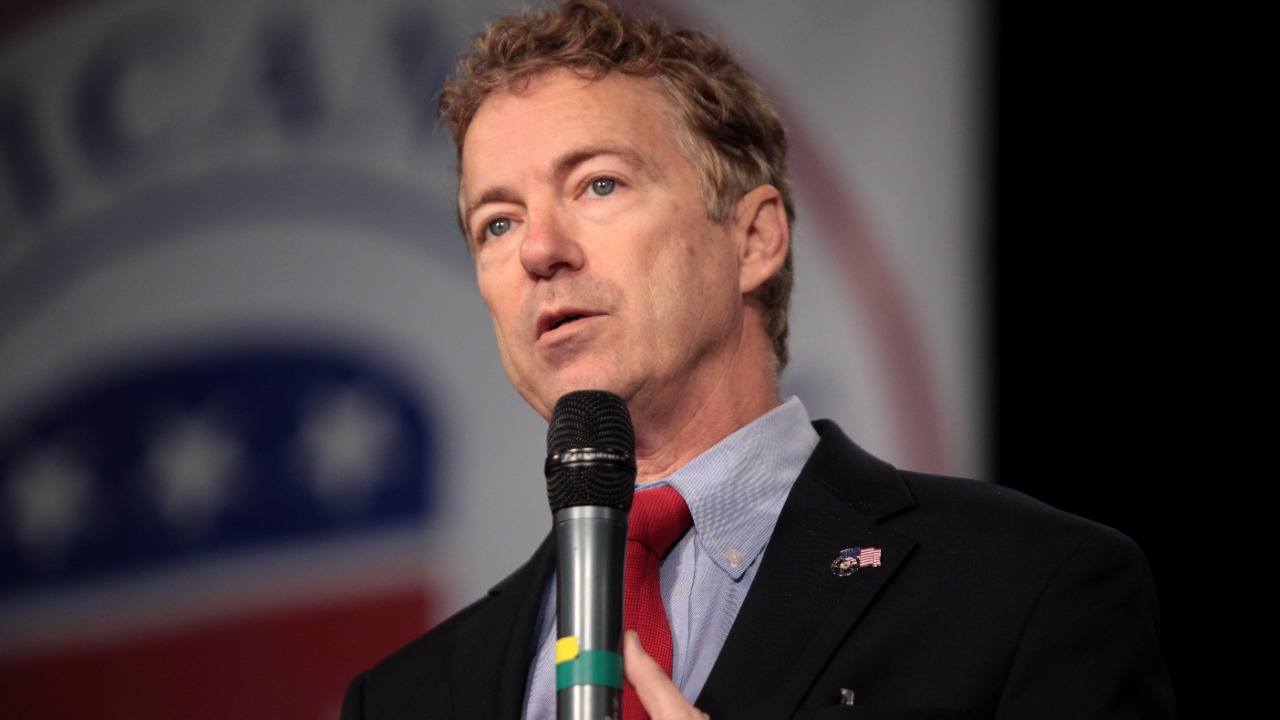
Rand Paul was left completely alone inside the Republican conference as the Senate approved a sweeping Russia sanctions bill, 86-11. Forty-nine Republicans voted yes. The Kentucky senator supplied the only GOP no.
The lopsided result handed Paul one of the starkest defeats of his noninterventionist career and put the rest of his party behind a new economic weapon against Vladimir Putin’s war machine. Yet the vote did not make the proposal law. Because the Senate replaced the House bill’s text with its own sanctions package, the House must act again before anything reaches President Donald Trump.
Paul Becomes the Lone Republican No
The official Senate roll call records 86 yeas, 11 nays and three senators not voting on August 7. Paul opposed the bill alongside 10 members of the Democratic caucus, including independent Sen. Bernie Sanders. Every other Republican who voted supported it.
That split matters because Paul’s objections to sanctions, tariffs and foreign-policy escalation normally attract at least a small Republican bloc. This time the coalition ran in the other direction. National-security hawks, Trump allies, institutional Republicans and a large majority of Democrats converged on the same vote.
Paul did not merely lose a close procedural argument. He lost final passage by 75 votes. The Senate had already shown the bill’s strength when it moved toward consideration with an overwhelming cloture tally. By the time the final vote arrived, opponents had no realistic path to stop it.
The result also made the party’s center of gravity unmistakable. Senate Republicans chose a punitive economic campaign against Russia over Paul’s warnings about expanding presidential tariff power and deepening American involvement in the Ukraine war. His no vote preserved his position, but it did not bend the legislation.
The Senate Replaces H.R. 5334 With a Sanctions Package
The procedural vehicle was H.R. 5334, a House-passed tax measure. The Senate adopted a substitute that struck the earlier text and inserted the Lindsey O. Graham Sanctioning Russia and Iran Act of 2026.
That distinction is crucial to the bill’s status. The Senate passed a bill, not a final law and not a payment or sanction already in force. The House must agree to the Senate’s new text, amend it again or let the measure stall. The title’s word “bill” carries that limitation, and the 86-11 number describes Senate passage only.
The package bears the name of the late South Carolina Sen. Lindsey Graham, who made pressure on Russia a defining foreign-policy cause. A bipartisan group of senators said the legislation was designed to stop purchasers of Russian energy from financing Putin’s war while extending authority that restricts funding for Iran’s energy and weapons sectors.
The bill’s 61-page substitute text reaches far beyond a symbolic rebuke. It orders reviews and sanctions involving Russian officials, oligarchs, banks, defense suppliers and vessels used to move sanctioned energy. It targets the shadow fleet that carries Russian oil through opaque ownership, insurance and shipping arrangements.
Tariffs Up to 100% Target Buyers of Russian Energy
The most explosive provision does not stop at Russia’s border. The bill would direct the president, after enactment, to raise duties on goods from certain countries that keep buying Russian oil or natural gas.
The tariff can reach up to 100 percent. The covered group is limited to the five largest importers of Russian crude oil, the five largest importers of Russian natural gas and the top five countries facilitating Russian oil-sanctions evasion. That is still a massive weapon because the duty would apply broadly to goods imported from a covered country, not only to the Russian energy transaction that triggered it.
The text also allows duties of up to 500 percent on goods imported directly from Russia. Both tariff authorities would sit on top of other applicable duties and charges. The size is designed to make continued business with Moscow commercially painful, not merely embarrassing.
A late effort to strip the third-country tariff authority failed. The Senate rejected that amendment, leaving the central leverage intact before final passage.
The proposal gives the president flexibility but not silence. The United States Trade Representative can adjust rates within the statutory range, and the executive branch must provide Congress with written justification and methodology before imposing or changing certain duties. A national-interest waiver also requires certification and an explanation to Congress.
That structure creates a Republican tension. The bill arms Trump with an enormous trade weapon while Congress defines the targets and requires paperwork around its use. Most Republican senators accepted that arrangement. Paul did not.
The Shadow Fleet and Iran Provisions Widen the Fight
Tariffs grab attention, but the financial and maritime provisions may do just as much work. The bill directs sanctions against Russian government figures and foreign actors supporting Russia’s defense base. It reaches banks, investment, sovereign debt, energy exports and services for sanctioned financial institutions.
It also targets vessels used to move Russian oil and other goods around sanctions. Ships that lack adequate insurance, evade price caps or engage in deceptive transfers can fall within the package. Owners, operators, managers and service providers can be swept in as well.
The senators behind the compromise said the package would hold the largest Russian-energy buyers accountable and restrict the regime’s access to money. Their joint announcement also emphasized Iran. Section 201 would extend the Iran Sanctions Act from 2026 to 2031, preventing that authority from expiring at the end of this year.
Humanitarian transactions involving food, medicine and medical devices are excepted. The bill also contains waivers and exceptions for intelligence, law enforcement, official government business and some nuclear-related activity. Those boundaries do not make the package weak. They show that senators tried to build a sanctions system that can survive contact with diplomacy, emergency needs and existing licenses.
The House Now Owns the Next Move
An 86-11 Senate vote creates momentum, but it cannot erase bicameral procedure. The House passed the original H.R. 5334, not the substitute the Senate approved. The amended bill must therefore return across the Capitol.
That leaves three live possibilities. The House can accept the Senate text and send it to Trump. It can amend the package and force another round of negotiations. Or it can do nothing, leaving the sanctions proposal short of enactment despite the huge Senate margin.
The distinction is especially important because the legislation uses mandatory verbs that apply only after enactment. No 100 percent third-country tariff starts because 86 senators voted yes. No five-country list becomes operative yet. No new sanction takes effect until the House agrees and the president signs, or Congress overrides a veto.
Still, Paul’s isolation is already final as a Senate fact. Republicans did not splinter over the bill, and the usual procedural caution did not save him. They joined an overwhelming coalition that wants to squeeze Russia’s energy revenue, punish sanctions evasion and keep Iran sanctions authority alive through 2031.
The next battle belongs to the House. The Senate battle ended with Rand Paul standing by himself on the Republican side of an 86-11 scoreboard.
This article was produced with AI assistance and reviewed prior to publication.

Grant Mercer covers market dynamics, business trends, and the economic forces driving growth across industries. His analysis connects macro movements with real-world implications for investors, entrepreneurs, and professionals. Through his work at The Daily Overview, Grant helps readers understand how markets function and where opportunities may emerge.